

Of the nearly 150 attacks that have taken place in Paris since 1974, only a few have left a mark on its ‘urban memory’. Why do so many attacks remain absent from the public sphere?
Articles on Paris attacks 2015
Displaying 1 - 20 of 108 articles

Justices are weighing the arguments in two cases that have the potential of changing the way social media platforms operate.
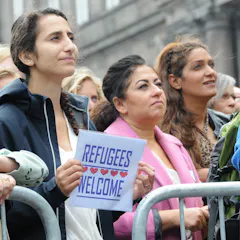
How can a hashtag supportive of refugees be hijacked by those opposing them? An empirical study explores the process.

The question is no longer how to repel all threats. Instead, it’s how can we organise ourselves as a society to remain ourselves in the face of these multiple threats.

Weakening the institutional as well as the symbolic functioning of the rule of law has the consequence of introducing new “risks”, and thus creating more insecurity.

While France and the US both guarantee individual religious freedom, the two nations’ approach to religion in the public sphere and the separation between church and state are profoundly different.

Nothing displays the ethical superiority of one’s values better than to treat a foe with the respect due another human being.
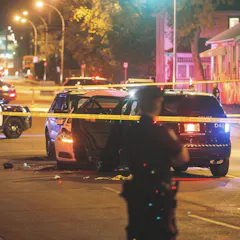
The recent Edmonton attack raises questions about a new type of terrorism and the different methods required to stop it. Labelling such attacks as the work of a “lone wolf” obscures a larger problem.

Despite the recent terrorist attacks in Spain, the European Union has dramatically improved its counterterrorism efforts. Here’s how.

Research shows that people often become more tolerant.
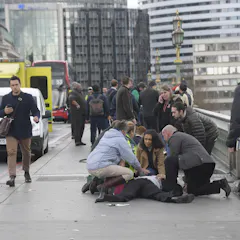
Was the London attacker acting alone? Was he really a soldier of the Islamic State? Research on the nature of jihadism in the West reveals possible answers.
Boots on the ground, schools on high alert and more hostility toward Muslims and migrants – this is daily life for Parisians.

Many Australians are frightened by the prospect of terrorism on home soil, but statistics show they don’t have much to fear.
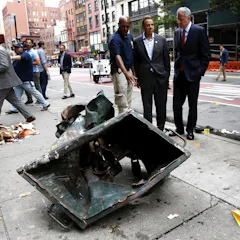
A year of violence continues with bombs in NYC and a stabbing in Minnesota, leaving many asking, why? A psychologist explains what research has revealed about the minds of violent extremists.

How literary analysis led one scholar to develop a theory of how immigrants become connected to their host society – and therefore unlikely to attack it.

Local collaborations between the fiercely secular state and religious groups have a long history.
Viral posts don’t always tell the truth -– so how can we stop them spreading?

While the French public comes to terms with a series of appalling attacks, politicians seize the opportunity to position themselves ahead of next year’s Presidential election.

The people who killed a priest in Rouen were driven by a warped agenda, not their social and economic backgrounds.

After a question from a Muslim audience member, Senator-elect Pauline Hanson said “your Grand Mufti won’t even come out and condemn the terrorist attacks that’s happened overseas”. Is that right?
Top contributors
-

Professorial Fellow, University of Canberra
-
Senior Lecturer in International Relations and Politics, Aston University
-
Professor in The Division of Global Affairs and The Department of Political Science, Rutgers University - Newark
-
Senior Lecturer in Politics, University of Bath
-
Professeur, philosophe et politologue, École normale supérieure (ENS) – PSL
-
Professeur en Information-Communication à l’Institut Français de presse (Université Paris-Panthéon-Assas), Université Paris-Panthéon-Assas
-
Professor of Contemporary European History, University of Oxford
-
Honorary Research Fellow, University of Exeter
-
Professor of Contemporary History, University of Edinburgh
-
Research Fellow, Melbourne Sustainable Society Institute, The University of Melbourne
-
Lecturer in International Relations, University of Iowa
-
Professor of Electrical and Electronic Engineering and Director of Electronic Warfare Research, City St George's, University of London
-
Professor of Humanities and Professor of Law, Vanderbilt University
-
Professor of Human Centred Computing, University of Oxford
-
Research fellow, Université Côte d’Azur