
In some cases, it can be difficult for academics to know which journals are not credible – but other times, people feel pressure to publish in these publications.
Articles on Peer review
Displaying 21 - 40 of 110 articles
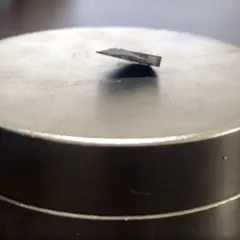
Room-temperature superconductors could transform technology – but the latest, much-hyped claims should be approached with caution.
The open-access service PCI has opened the door for researchers to take charge of the review and publishing system, and move toward greater transparency in knowledge production.
Preprints are often free to use, making them more accessible for journalists to report on. However, as they have yet to undergo peer review, science journalists take a gamble on their accuracy.

Some open access journals — those that don’t charge their readers a fee — require that researchers pay to publish with them. Removing author fees helps more researchers to publish their work.

Tough feedback can shake our confidence. But there are healthy, helpful ways to process it. And yes, venting is one of them!

Not all Alzheimer’s research has been compromised by allegations of scientific fraud. But we should interrogate whether the governing bodies of research and drug approvals are truly effective.

Peer review is an essential part of academic publishing, but it can be exploitative, opaque and slow. There’s plenty journals, publishers and universities can do to make the system work better.

Blogs can be useful sources of data for the urban planning research community if the researchers know how to assess them critically.

Peer review of research sounds like it should be a conversation between equals. Instead, it can be patronizing, demanding and simply unkind. A group of journal editors thinks this should change.
Preclinical studies are an important part of biomedical research, often guiding future trials in humans. Failure to replicate research results suggests a need to increase the quality of studies.
In most countries, ignorance about how to use evidence properly to inform decision-making has led to missteps during the COVID-19 pandemic. Here’s how to do better.

Preprints are scientific papers made available before being published in a peer-reviewed journal. The Australian Research Council has banned researchers from citing them in grant applications.
If we want real public understanding of new findings, we must also open up peer review.
Mainstream academic publishing presents many obstacles to Indigenous authors, especially the conventional peer review process — but there are ways to overcome this.
Whenever you hear about a new bit of science news, these suggestions will help you assess whether it’s more fact or fiction.

Across our global network we are employing guidelines that we hope will allow readers to understand this approach we take to the reporting and analysis of research.
The reason the vaccine appears to have worked better in participants who initially received only half a dose is still somewhat of a mystery.

If expert advice on the pandemic turns out to be wrong, it will have dire consequences for how reliable scientific evidence is treated in other policy areas, such as climate change.

Scientific results are being rushed out quicker than ever to fight coronavirus. Here’s what you need to know about preprints, peer review and the difference between the two.
Top contributors
-

Senior Lecturer, Australian National Centre for the Public Awareness of Science, Australian National University
-
Professor, School of Psychology, University of Sydney
-
Editor in Chief, Medical Journal of Australia, Queensland University of Technology
-
Programme leader, MRC Cognition and Brain Sciences Unit, University of Cambridge
-
Senior Research Fellow, Max Planck Institute for Innovation and Competition
-
Professor of Pharmaceutical Sciences, University of Iowa
-
Professor of Belonging Science, School of Educational Psychology and Inclusion, Faculty of Education, Monash University
-
Professor of Organisational Behaviour, Bayes Business School, City St George's, University of London
-
Senior Research Fellow, Uehiro Centre for Practical Ethics, University of Oxford
-
Senior Lecturer, Management, University of Tasmania
-
Lecturer in History of Medicine/Life Science, The University of Melbourne
-
Professor of Organisational Sociology and Leadership, Cambridge Judge Business School
-
Distinguished Professor of Marine Science, King Abdullah University of Science and Technology
-
Williams Memorial Professor of Law, Northwestern University
-
Professor of Sociology, University of Nottingham