
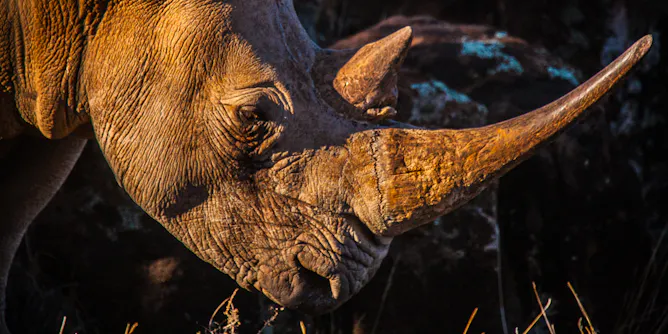
Exporting rhino horn could generate funds for conservation – but also lead to more poaching.
Articles on Poaching
Displaying 1 - 20 of 100 articles
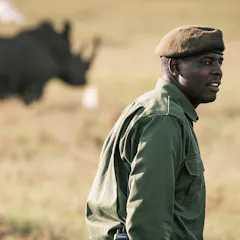
This documentary misses the opportunity to discuss why some local people feel threatened by rhino conservation.

A new report shows rhino numbers are now stable – but still only a fraction of what they once were.
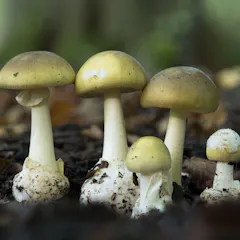
iNaturalist might turn out to be an important part of the murder trial, but how else can observations of plants and animals be used?

Overfishing, disease and environmental crimes cause social and political instability, economic strife and strained international relations.
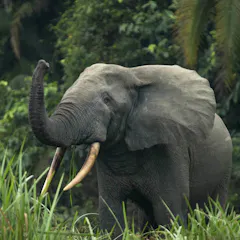
Nigeria has only a few hundred elephants left. They are worth saving, for several reasons.
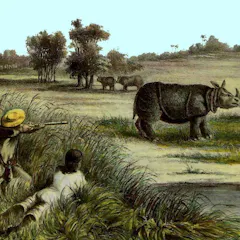
Poaching may have killed more than a third of the world’s Javan rhino in five years.
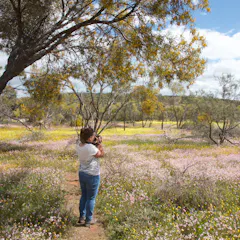
It feels harmless to share a photo of a rare species. But social media can drive great damage to nature, from poaching to baiting to trampling.
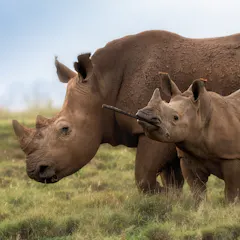
In South Africa, huge stockpiles of rhino horn are kept, even though there’s a global ban on trading it.
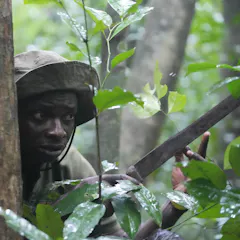
Interventions to prevent crime against wildlife can be effective, but significant gaps in our knowledge remain.

Pangolins are among the most trafficked and poached mammals in the world.
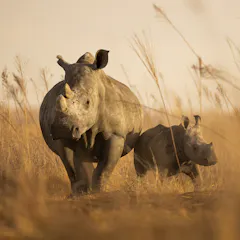
What would you do with 2,000 farmed rhinos? An African charity wants them to help their wild cousins.
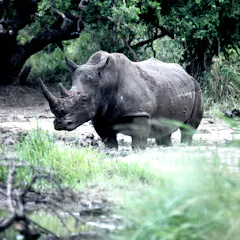
To what extent should the costs of protecting globally valued rhinos be carried by their local custodians?
The findings suggest that poaching rates are lower where there is strong national governance and levels of local human development are higher.
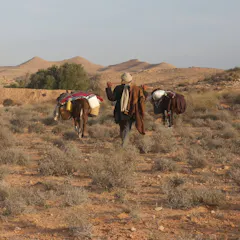
Pastoral communities should be included in conservation initiatives – but the ecology of pastoral lands has long been misunderstood.
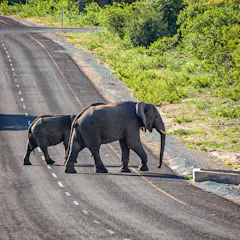
A study of tweets posted in 2019 found that tweets about elephant conservation didn’t align with the actual greatest threats to the animals, creating the risk of misdirected funding.
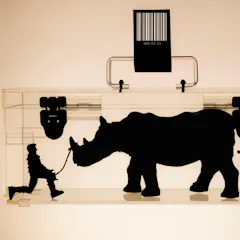
Money pouring into conservation has funded drones and military-style training for rangers.
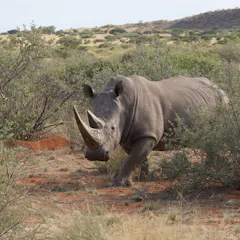
Legal hunting helps rhino conservation for biological and socio-economic reasons.

This was the first national DNA-based assessment of any free-ranging large mammal in Africa.
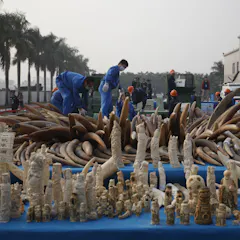
A new study reveals the major players and routes involved.
Top contributors
-

Lecturer in the School of Applied Sciences, Edinburgh Napier University
-
Research Associate, Department of International Relations, University of the Witwatersrand; Chief Research Officer, Good Governance Africa; Managing Director, Harvey Economics Pty Ltd.
-
Visiting Professor, University of Kent
-
Professor of Conservation and Applied Resource Economics, University of Kent
-
Professor of International Politics, University of Sheffield
-
Professor and Chair, Southwestern Environmental Science and Policy, Northern Arizona University
-
Professor, Forest Resources Management, University of Ilorin
-
Postdoctoral Researcher in Conservation Biology, University of Reading
-
Postdoctoral research fellow, Northumbria University, Newcastle
-
Environmental Social Scientist, Newcastle University
-
Postdoctoral Research Fellow, University of Cape Town
-
Vétérinaire, expert CITES, Muséum national d’histoire naturelle (MNHN)
-
Director, Environment Institute, Adelaide University
-
Lecturer, Course Convenor and Postdoctoral Researcher, University of Cape Town
-
Professor of human resource development, University of Auckland, Waipapa Taumata Rau