
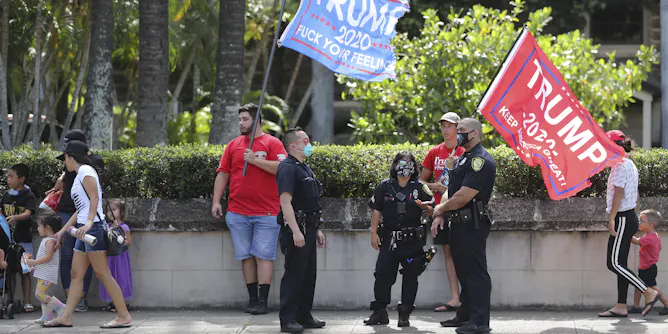
Police organizations in the United States have become political players in the election. This is due to politicians’ responses to the Black Lives Matter and anti-police brutality movements.
Articles on Policing
Displaying 181 - 200 of 381 articles
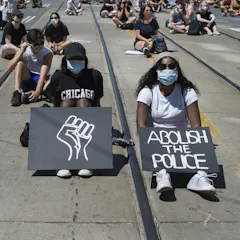
Reforming the police is possible, but it depends on applying pressure on politicians.
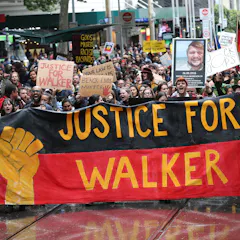
Warlpiri people in Yuendumu have been strident in their demands for justice for Walker and protections from ongoing police violence.

Other agencies or officials can do much of what police do now. So let’s disband police forces and replace them with local community organizations.
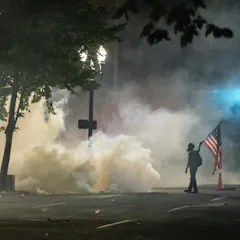
Kenosha is the latest US city to see federal agents patrolling its protests. History suggests that supplanting the local police with a militarized national force rarely works out well.
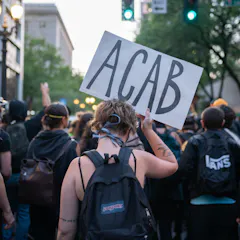
Trust, accountability and communication are key.

In the absence of serious efforts by mental health centres, shelters and youth group homes to prevent people from running away from their facilities in the first place, police involvement is necessary.

Amidst calls to defund the police, political leaders are increasing police budgets, arguing — incorrectly — that increasing police surveillance capacities will help provide accountability.
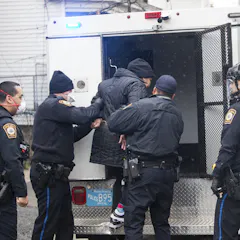
When police arrest a suspect who is then convicted of the crime, it is a rare exception rather than the rule in the US.
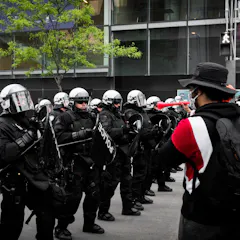
Around the world, policing — as an institution — is being challenged. But calls to defund the police will fall short if they do not address the history of policing.
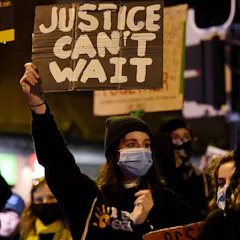
There has been some progress on judicial reform in Australia since the protests began, but structural change requires a truth-telling process and a real commitment from government for action.

Facial recognition algorithms will always make mistakes. But how can we make them less discriminatory?
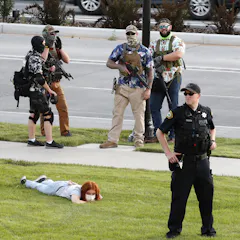
For many Americans, law and order has long been as much a private matter as something for the government to handle.
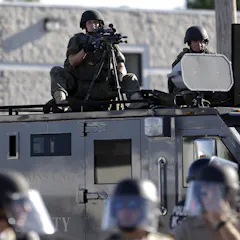
Giving police military gear doesn’t reduce crime or keep officers safer – but it does hurt citizens’ trust of the police, and for good reason.
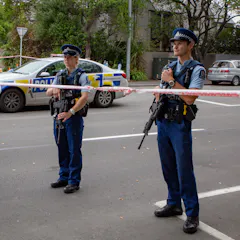
As a former NZ Police sergeant, I know firsthand how police fatalities shape one’s behaviour. The recent shooting of two officers in Auckland cuts to the heart of NZ’s trust-based policing policies.

Police played a unique role in many settler colonies executing assimilationist policies designed to dismantle First Nations families.

To use body cameras effectively, police need to be guided by law, not policy.
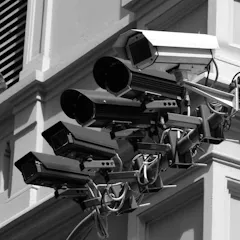
Police forces across the country now have access to surveillance technologies that were recently available only to national intelligence services. The digitization of bias and abuse of power followed.
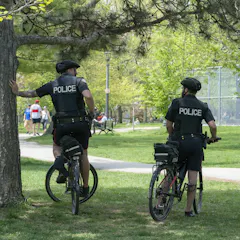
The provincial government has funding to support non-police safety and well-being initiatives — but 99 per cent of it just supplements police budgets.
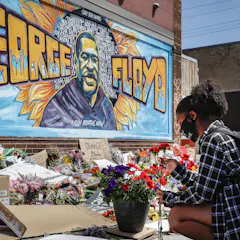
Recording and bearing witness to a Black person’s death from police violence is in itself traumatizing.
Top contributors
-

Associate Professor in Criminal Justice and Criminology, Bond University
-
Professor of Law, University of Technology Sydney
-
Assistant Professor of Criminal Justice and Criminology, Georgia State University
-
Emeritus Professor in Law and Criminal Justice, Adelaide University
-
Senior Lecturer in Law, UNSW
-
Associate Professor, UNSW
-
Assistant Professor, Augusta University
-
Professor (Practice), Faculty of Business and Economics, Monash University
-
Professor Emerita of Criminology, UNSW
-
PhD Candidate in Social Work and Criminology, UNSW
-
Professor, Sociology, University of Alberta
-
Professor of Criminology, University of Leeds
-
Eleanor Rathbone Chair of Sociology, University of Liverpool
-
Assistant Professor of Criminology and Criminal Justice, University of South Carolina
-
Associate Professor in Law, University of Canterbury