
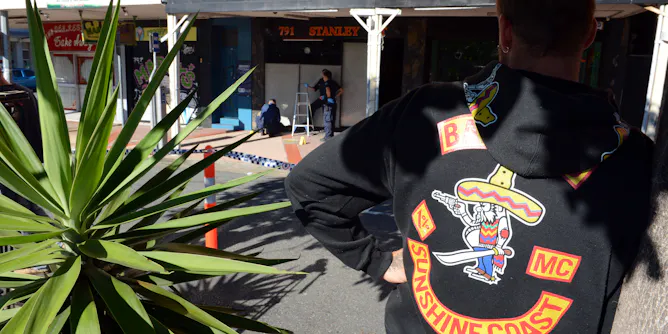
What will Queensland’s new laws to combat the bikie ‘menace’ actually achieve?
Articles on Policing
Displaying 301 - 320 of 381 articles
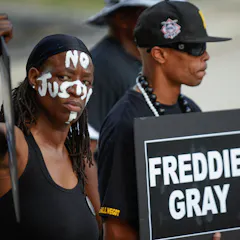
Violent cops are just playing by the rules American society has created for them. It’s time to change the rules.

To say a workplace problem is systemic means that its underlying causes are deeply embedded in the structures and everyday practices of an organisation.

No federal database provides reliable info on deaths that occur in police custody. It’s the same situation in 48 states. But now California and Texas are offering new models of accountability.
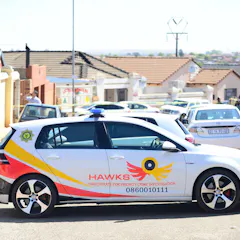
The main criticism leveled at the body that oversees the work of South Africa’s elite police unit, the Hawks, is that it lacks the power to initiate investigations, making it ineffective.

The Baltimore Police Department is found to have violated the civil rights of poor blacks. A historian explains why those findings are eerily similar to how the city treated blacks in the 1800s.
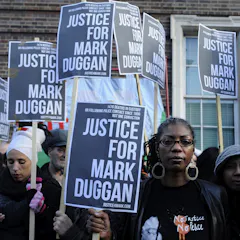
Mark Duggan was shot by the police in 2011, but it took two-and-a-half years to complete an inquest into his death.

Think it’s stressful visiting a police station? Try doing it when you can’t hear.

In what circumstances can police search your phone? Must they obtain a search warrant? And what will happen if you refuse to provide your passcode or fingerprint required to access your phone?

The movement was on the offensive. Then two men changed the game by killing cops.

France has been in a state of emergency since November 2015, and yet a man was still able to plough a truck through a huge Bastille Day crowd.
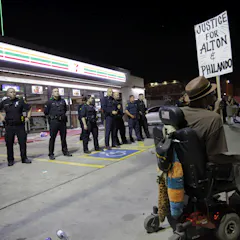
The gap between American police departments and the black communities they’re meant to protect is huge – but it can be closed.

Technology poses a challenge to how we treat suspects and police society.
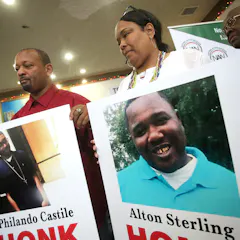
Video of Philando Castile’s death has been seen around the world – and it’s all the more powerful because of who shot it.
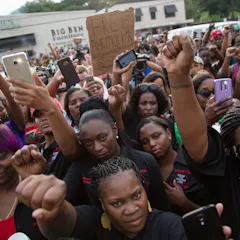
For 50 years, we have worked to make U.S. police more diverse and less intrusive. Why haven’t we made more progress?
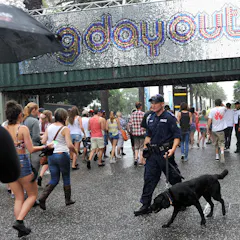
Drug-detection dogs don’t stop most drug use. And they have been shown to encourage more dangerous practices, criminalise and traumatise marginalised groups, and render all as potential suspects.

In response to high levels of crime, South Africans have turned their homes into fortresses, seeking security behind high walls. But doing so might be counter-productive.
Government agencies are turning to social media as a new way to engage with their constituencies. Practitioners in the trenches are excited about the possibilities – while some academics are less so.

With the Scottish government’s reputation for policing and justice charred from nine years in office, here’s what the future looks like.
Australia has become less compassionate, more punitive and more ready to blame individuals for their alleged failings since the Royal Commission into Aboriginal Deaths in Custody.
Top contributors
-

Associate Professor in Criminal Justice and Criminology, Bond University
-
Professor of Law, University of Technology Sydney
-
Assistant Professor of Criminal Justice and Criminology, Georgia State University
-
Emeritus Professor in Law and Criminal Justice, Adelaide University
-
Senior Lecturer in Law, UNSW
-
Associate Professor, UNSW
-
Assistant Professor, Augusta University
-
Professor (Practice), Faculty of Business and Economics, Monash University
-
Professor Emerita of Criminology, UNSW
-
PhD Candidate in Social Work and Criminology, UNSW
-
Professor, Sociology, University of Alberta
-
Professor of Criminology, University of Leeds
-
Eleanor Rathbone Chair of Sociology, University of Liverpool
-
Assistant Professor of Criminology and Criminal Justice, University of South Carolina
-
Associate Professor in Law, University of Canterbury