
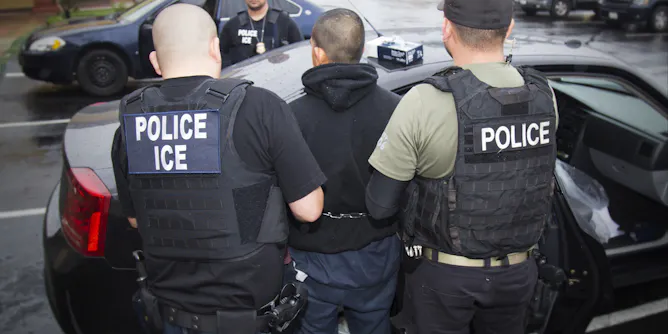
You often hear police express a concern that their jobs will become more difficult if they are forced to work with ICE. We look at the evidence.
Articles on Policing
Displaying 281 - 300 of 381 articles

Portugal won the war on drugs by giving up. What lessons can South Africa learn from their approach?
Brazilian state governments increasingly use the military for services they should provide themselves.
All sexual offenders should be investigated and prosecuted equally.
The DOJ has found excessive use of force in the Baltimore, Ferguson and Chicago police departments. Could a solution be found by seeing the police as victims of violence as well?
Banning orders can encourage personal responsibility and demonstrate that anti-social behaviour will not be tolerated.
Despite the growth in darknet drug trading in Australia, there are important reasons why it is less harmful than street drug dealing.

But can they improve pupils’ behaviour?
Police remain critical in the effort to tackling family violence in all its forms. But more than just a commitment to extra police and training is needed to improve outcomes for victim-survivors.
Any policy governing police pursuits must balance the need to apprehend offenders with the safety of the community.

Some people have a remarkable aptitude for recognising a face – are you one of them?
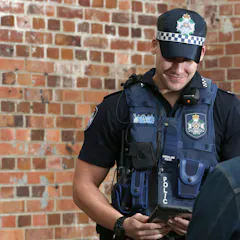
Body-worn cameras may seem to be a boost for policing and criminal justice, but they raise a host of issues around admissibility, privacy and fairrness.
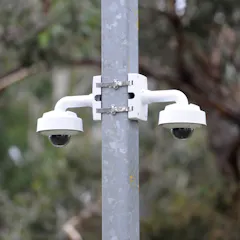
While potentially helpful in resolving extraordinary cases, an over-reliance on CCTV images to tell ‘the truth’ risks perpetuating certain myths regarding violence against women.

Cases of homicide by falling are rare. But the Gable Tostee case is not the first instance of a fall from a building causing death being linked to criminal conduct.
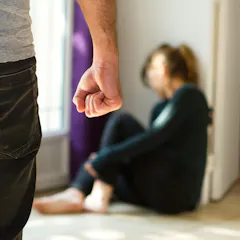
A domestic violence disclosure scheme does not in itself assist people to achieve safety from an abusive partnership.
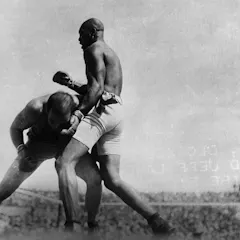
The controversy over Kaepernick’s refusal to stand for the National Anthem isn’t a watershed moment. It’s only the latest chapter in a long history of people trying to control how black people behave.
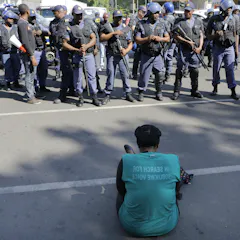
Clashes between student protesters and armed security (whether public or private) compel South Africans to consider the role of use of force in the context of protests.
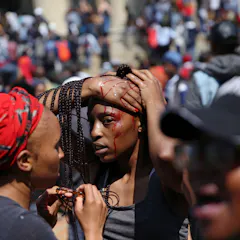
Protest movements become radicalised by two factors: escalating policing and competitive escalation between political adversaries and other protesting groups.
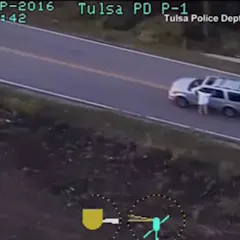
A scholar of visual culture sees a transition happening online as the alt-right reinterprets images of police shootings to push back against the gains made by Black Lives Matter.
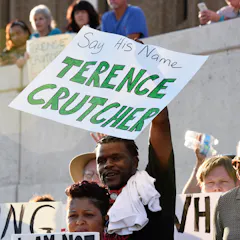
Protests erupted against the killing of black men by police in Tulsa and Charlotte. This roundup looks at research on racial violence and explains where there might be potential solutions.
Top contributors
-

Associate Professor in Criminal Justice and Criminology, Bond University
-
Professor of Law, University of Technology Sydney
-
Assistant Professor of Criminal Justice and Criminology, Georgia State University
-
Emeritus Professor in Law and Criminal Justice, Adelaide University
-
Senior Lecturer in Law, UNSW
-
Associate Professor, UNSW
-
Assistant Professor, Augusta University
-
Professor (Practice), Faculty of Business and Economics, Monash University
-
Professor Emerita of Criminology, UNSW
-
PhD Candidate in Social Work and Criminology, UNSW
-
Professor, Sociology, University of Alberta
-
Professor of Criminology, University of Leeds
-
Eleanor Rathbone Chair of Sociology, University of Liverpool
-
Assistant Professor of Criminology and Criminal Justice, University of South Carolina
-
Associate Professor in Law, University of Canterbury