

Classroom assessment is a major source of student stress. Research suggests redesigning assessments around psychological needs may improve well-being.
Articles on Post-secondary education
Displaying 1 - 20 of 96 articles

The very tool that generates disinformation and slop could also, when used well, be a catalyst for teaching youth to listen.

A study of more than 750,000 student records from four Toronto universities finds that living in residence is linked to better grades and higher satisfaction, especially for first-year students.

Announcing ambitious education policy goals is easier than ensuring institutions, employers and educators have the resources necessary to achieve them.

For experiential learning to remain vital, it must engage communities to improve social outcomes.

AI fluency implies a deep and critical understanding of emerging AI concepts and applications to equip students to innovate and create alongside AI systems.

Diary-writers across history have expressed the sense of relief that writing from the heart can bring. Could English essays have the same benefits?
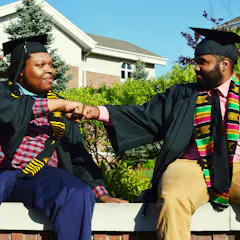
Black graduations are optional celebrations complementary to faculty-based convocation ceremonies, and they remind graduates they are powerfully supported.

As U.S. president from 1981 to 1989, Ronald Reagan’s appetite to curb public spending grew, leading him to expand the role of loans and limit the availability of grants.

A survey found second-language instructors are using generative AI primarily as an administrative efficiency tool, for work like generating lesson plans.

Craft practices are not supplemental to human survival: they enable it, and have always been at the centre of technological innovation.

Alternative educational movements offer insights about how to help university students find purpose and hope as they navigate an increasingly complex world.

Whether you’re walking into a performance appraisal or anticipating a grade, recognizing that feedback is valuable is the first step towards growth.

A look at the 1960s founding vision for Ontario’s college system should inspire calling on leaders to support a truly public system of higher education, accessible in all regions.

As universities retreat, platforms like YouTube have increasingly stepped in as a political educator.

Is Canada’s current approach to building human capital fit for the challenges ahead? A new report finds this isn’t the case.

Research into autistic students and post-secondary education yields insight into how institutions and faculty can foster more welcoming spaces, and tips for students navigating campuses.

Decolonizing our understandings of how western institutions have positioned English writing will help universities revisit writing as thinking and invention.

Without sustained support for education, housing and mental health, many former youth in care become involved in the criminal justice system.

As labour shortages deepen across sectors, the disconnect between formal education and real-world job requirements is becoming harder to ignore.
Top contributors
-

Full Professor and Associate Vice-President, Research, Mount Saint Vincent University
-
Innovation Lab Director and Professor, Educational Technology and Innovation Mindset, Concordia University
-
PhD candidate (health), Dalhousie University
-
Professor, Faculty of Education, Memorial University of Newfoundland
-
Professor, Urban and Regional Planning, Toronto Metropolitan University
-
Architecture and Urbanism Researcher, Toronto Metropolitan University
-
Professor, Department of Communication Arts, University of Waterloo
-
Associate Professor of Psychology and Clinical Director, Regional Assessment & Resource Centre, Queen's University, Ontario
-
Professor, School of Public Policy and Administration, York University, Canada
-
Associate Professor, Educational Technology, Université Laval
-
BCL/JD Candidate, McGill University
-
Post-Doctoral Fellow, Johnson Shoyama Graduate School of Public Policy, University of Saskatchewan
-
Associate Professor, Department of Psychology; Director, Trent Centre for Aging & Society, Trent University
-
Associate Professor, Psychology, Acadia University
-
Canada Research Chair in Occupational Health Psychology and Professor of Psychology, Saint Mary’s University