
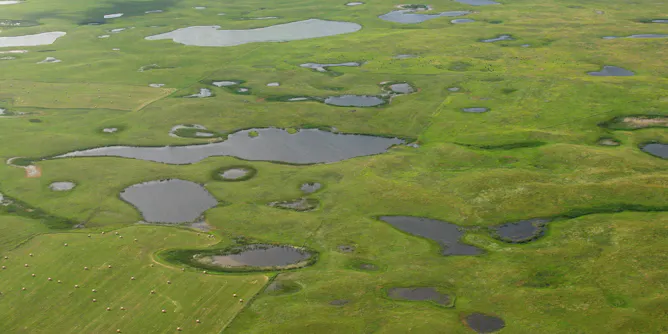
In the Prairie Pothole Region, millions of wetlands fill, spill and connect in ways that defy prediction. Combining hydrology with AI offers a path forward.
Articles on Prairies
Displaying 1 - 20 of 26 articles
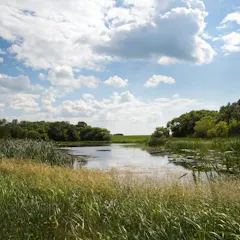
Some tout wetland drainage as providing numerous benefits, including reducing emissions. This assertion is not supported by science.
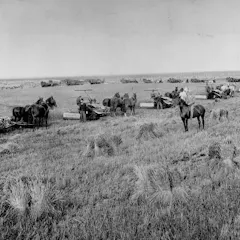
The Treaty 4 Agricultural Benefits Settlement aims to address unmet Crown promises, but tensions over governance, transparency and leadership could undermine its potential for Indigenous communities.

Agroecology could be an effective way to address food insecurity and respond to the climate crisis. However, significant hurdles remain.

For centuries, colonial powers have used starvation as a tool to control Indigenous populations and take over their land and wealth. A look back at two historic examples on two different continents.
Declining precipitation, climate change and governance failures will drive water flow scarcity in 2024 with serious implications across Western Canada.
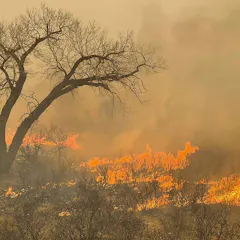
The state’s largest wildfire on record tore across the heart of Texas cattle country, and more days of strong winds were forecast. A rangeland ecologist explains why the flames spread so fast.
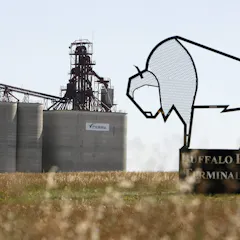
One hundred years after the founding of the once-mighty Saskatchewan Wheat Pool, the time might be ripe for a revival of Prairie farmer co-operatives.

Research finds that police officers engage in discriminatory behaviours towards 2SLGBTQ+ survivors of intimate partner violence.

Governments and wildlife advocates are working to protect 30% of Earth’s lands and waters for nature by 2030. An ecologist explains why creating large protected areas should be a top priority.
Amid ecological and social change and economic instability, theatre artists in Saskatchewan, Alberta and Manitoba are mapping possible outcomes and goals.

Farm consolidation, increasing land concentration and expanding investor ownership of farmland is leading to growing land inequality in the Canadian Prairies.

Reckoning around colonialism, anti-Black racism, and inequality is immense across different fields in our society. The Future Prairie Theatre project is addressing these urgent social struggles.

Noise created by the oil industry impacts songbirds. Research found that constant noises, like those produced by oil wells, are less disruptive than the shorter bursts of noise produced by drilling.
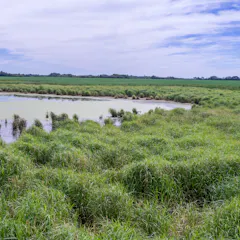
More than 40 per cent of natural wetlands in the Canadian Prairies have been lost due to drainage, and the impacts associated with this are largely unmitigated.

Ancient cultures that flourished in arid climates developed low-tech solutions to manage water scarcity.

Cross-partisanship co-operation among political leaders doesn’t neatly translate into a similar consensus among the Canadian public, including those with disabilities or chronic health conditions.
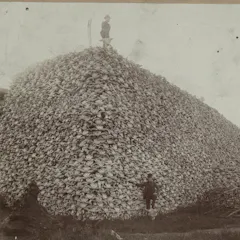
Historical photographs of bison extermination are a window into a history of relationships between humans, bison and the environment.
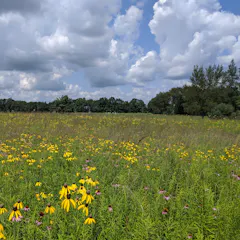
Restoring former prairies that have been plowed under for farming delivers land, wildlife and climate benefits. But a new study finds that the weather plays a surprising role.

Insect populations are falling as what they eat becomes more like iceberg lettuce and less like kale.
Top contributors
-

Community research partner and theatre practitioner
-
Associate Professor, School of Creative and Performing Arts, University of Calgary
-
Adjunct Professor, School of Environment and Sustainability, University of Saskatchewan
-
Full Professor/CRC in Socially Engaged Theatre; Director, C-SET, University of Regina
-
Associate Professor, School of Environment and Sustainability, University of Saskatchewan
-
Associate Professor, Sociology, University of Toronto
-
Executive Co-Director, UNU Hub on Empowering Communities to Adapt to Environmental Change, United Nations University; University of Calgary
-
Professor, Department of Civil, Geological and Environmental Engineering and School of Environment and Sustainability, University of Saskatchewan
-
Associate Professor, Sociology and Social Studies, University of Regina
-
Professor of Wildlife Ecology, Clemson University
-
Associate Professor in the Faculty of Kinesiology and Health Studies, University of Regina
-
Research Scientist, Knowledge Mobilization, Global Insitute for Water Security, Global Water Futures Program, University of Saskatchewan
-
Distinguished Professor and Director, Global Water Futures Programme, University of Saskatchewan
-
Postdoctoral Fellow studying ornithology and conservation biology, University of Alberta
-
Chair in Water and Climate Security, Institute for Water, Environment and Health (UNU-INWEH), United Nations University