

Psilocybin falls into a regulatory gray zone, with strict limitations around how it can be studied. As a result, very little is known about its health risks, despite its surging popularity.
Articles on Psychedelics research
Displaying all articles
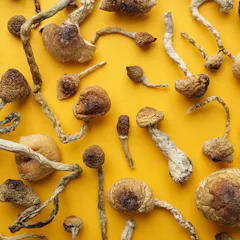
There are fundamental flaws in psychedelics research. But I’m still intrigued by their potential.

Change in the brain usually comes with plenty of effort over time. Neuroscientists are working to understand how psychedelic drugs provide a shortcut that seems to rely on existing brain systems.

This latest research provides hope for people whose symptoms are harder to treat.

From July 1, authorised psychiatrists will be able to prescribe MDMA and psilocybin in some circumstances. Here’s what we’re excited and concerned about.

Today’s psychedelics researchers still have to deal with the fallout of the decadeslong freeze on research. Listen to ‘The Conversation Weekly’ podcast.

Pinpointing the molecular targets behind the subjective effects of psychedelic drugs could help clinicians and researchers better treat psychiatric conditions.
Research shows therapeutic psilocybin to be a safe and effective antidote to end-of-life anxiety and depression. Does prohibition therefore violate our right to “life, liberty and security?”

To know the real promise of psychedelic substances like LSD, mushrooms and MDMA, researchers must embrace the principles and practise of ‘open science.’
Top contributors
-

PhD student in Clinical Psychology, York University, Canada
-
PhD Candidate, Congnitive Neuroscience, University of Toronto
-
Adjunct Professor in the School of Child & Youth Care, University of Victoria
-
Psychiatrist and Clinical Associate at The Centre of Mental Health, Swinburne University of Technology
-
Host, The Conversation Weekly Podcast, The Conversation
-
Professor of Psychiatry, UNSW & Black Dog Institute, UNSW
-
Enterprise Fellow (Senior Research Fellow/Senior Lecturer), Adelaide University
-
Associate Professor, Cognitive Psychology, Leiden University
-
Associate Science Editor & Co-Host of The Conversation Weekly Podcast, The Conversation
-
Resident in Psychiatry, SUNY Downstate Health Sciences University
-
Professor, School of Medicine, The University of Queensland
-
Emeritus Professor, National Centre for Youth Substance Use Research, The University of Queensland
-
Affiliate Associate Professor of Psychiatry & Family Medicine, Medical University of South Carolina
-
Chair of Psychiatry, The University of Melbourne
-
Distinguished Professor of Neurology and Psychiatry, Director of Psychedelics Division at Neuroscape, University of California, San Francisco