

Public interest technology ensures that public policies are implemented in ways that change people’s lives.
Articles on Public good
Displaying 1 - 20 of 26 articles

Public investment in food retail, distribution and wholesale infrastructure could add urgently needed diversity to Canada’s food landscape.

Can you support The Conversation in 2026?

Colorado’s minimum wage has increased, but not nearly enough to cover the rising cost of food.

A New South Wales senate enquiry into public toilets is underway. Now’s our chance to talk about how public toilets communicate social values.

Canada needs the arts, with its insights into human behaviour and thinking, more than ever. But governments and funding agencies should shift funding models for arts graduate education.

Green reforms are piling additional pressure on farmers struggling to make ends meet.

If public administration education is designed and delivered poorly, it sets a course for the systematic destruction of state capability.

Why is there such a great discrepancy between what scholars of education have been telling us and what happens in the classroom?

Students learn the art of dealmaking can involve much more than money.

Offering ‘carrots’ like biodiversity credits to landholders won’t stop natural collapse. Banning land clearing and stronger environmental laws are much more likely to work.
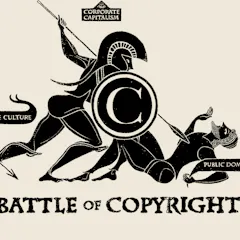
Canada’s extension of copyright might be good for corporations that hold copyrights, but it’s bad news for creators and the public.

Profit-friendly data privacy laws in the U.S. are out of step with public sentiment and hinder uses the public supports, from reducing opioid overdose deaths to curbing the COVID-19 pandemic.

The way in which Australians think about leadership in the education sector has changed throughout the pandemic. It’s seen as a public good, with ethics and accountability gaining in importance.

In ancient Athens, the richest people paid taxes to support what the residents considered the salvation of the city. These taxes earned them social and political clout more valuable than money.

There is outrage over government funding to a private school, but what if the money is used to benefit the wider community?

There is concern over the growing influence of non-regional players in decision making at the regional bank.

Billboards spreading misinformation on the risks of vaccination have popped up around American cities. A bioethicist explains why decisions not to vaccinate children are indefensible.

A peaceful society requires us to trust our public institutions, but in order to do so, we must question them. Questions are a healthy and necessary response to a world filled with uncertainty.

Companies are flush with cash and profits and soon will have even more once the tax cut takes effect. So they can afford to be good again.
Top contributors
-

Professor of Business Administration and Public Policy, University of Michigan
-
Lecturer in Philosophy, University of Cape Town
-
Researcher: Teacher Development and Sociology of Education, University of Cape Town
-
Adjunct professor, Carleton University
-
Assistant Professor of Philosophy & Disability Studies, Georgetown University
-
Professor of English Language Teaching and Literacy Development, Rhodes University
-
Associate Professor of Public Policy and Women's Studies, University of Michigan
-
Economics lecturer, The University of Western Australia
-
Professor of Higher, Adult, and Lifelong Education, Michigan State University
-
Professor of Finance & Deputy Head of School, Wits Business School, University of the Witwatersrand
-
Professor of Practice, North-West University
-
Associate Professor of Leadership, Swinburne University of Technology
-
Professor of Classics, College of the Holy Cross
-
PhD Candidate in Geography, Lancaster University
-
PhD Candidate in Economics, The University of Western Australia