
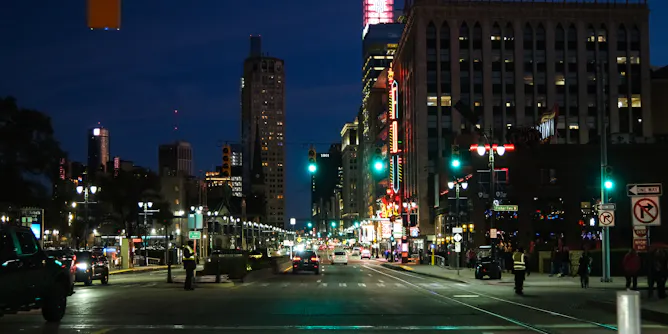
Building relationships and creating equitable opportunities are critical to engaging Detroit’s young people in safe and positive activities.
Articles on Public spaces
Displaying 1 - 20 of 29 articles
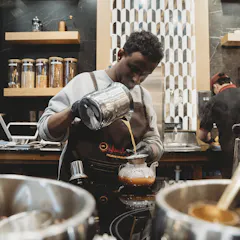
Yemeni coffeehouses have gained culinary prominence in recent years, offering brews of coffee and tea seasoned with cardamom, ginger, cloves and other ingredients.

Urban design depends heavily on human judgment and field-based understanding.

Indigenous elements can be thoughtfully integrated into modern open spaces to evoke a sense of place and support everyday use.

Anti-camping laws are the centerpiece of the ‘hostile design’ strategies cities use to push the unhoused out of public spaces.
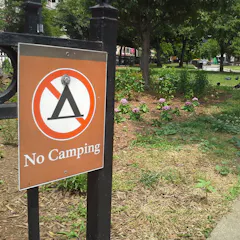
Anti-camping laws are the centerpiece of the ‘hostile design’ strategies cities use to push the unhoused out of public spaces.

The construction of hundreds of fountains was a social movement that transformed London’s public spaces.

Roadsides have long been reserved for parking cars, but the pandemic led to many experiments with other ways of using scarce and valuable public space. We can put it to better and more flexible uses.

Nicknaming a lake, planning your route or simply seeing a ‘Welcome to your park’ sign can help visitors feel more like a public place is their own to some degree.

The provision of recreational activities and access to public space have always been underpinned by moral and class values. Planning the post-pandemic reopening should address these inequities.

Containment during the pandemic has contributed to a recognition of the importance of public space as a gathering place and an essential tool to meet the needs of the population.
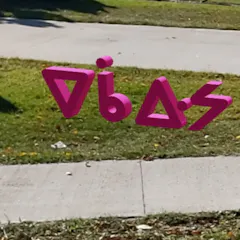
Both the COVID-19 pandemic and urgent debates around public heritage and monuments shape how Nuit Blanche Toronto is seeking to engage artists and viewers in remapping cities.
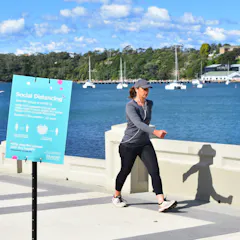
The Gender Equality Act in Victoria creates an obligation to understand how gender affects needs and experiences, and to design, assess and manage public spaces so women feel safe in those places.
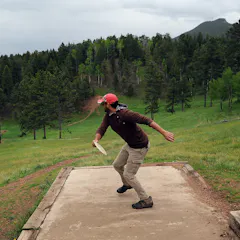
Long after a crisis recedes, residual anxiety can remain and become calcified in cultures, customs and institutions.

When urban spaces work well they are highly social spaces. How do we safely manage them and people’s fears about mingling when ‘being together but apart’ is the norm?

Temporary and tactical urbanism offers simple, low-cost solutions to make streets and other public spaces both safe and sociable during this time of physical distancing.
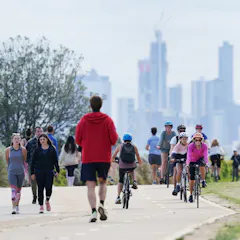
COVID-19 has upturned uses of public spaces that we took for granted. Will shifts in the regulation of these spaces lead to a change in thinking about who “owns” the city?

Current restrictions remind us of the value of access to public space and one another. Yet even before COVID-19 some people were excluded and targeted, so a return to the status quo isn’t good enough.

Most of the activities that define city life we do together. Now that we are having to get used to more isolated lives, will this have lasting social impacts or will city life resume as before?
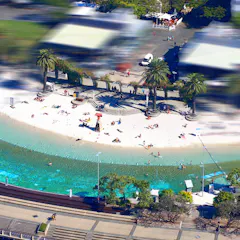
As you walk about a city are you in public or private space? The line is often blurred.
Top contributors
-

Lecturer and Researcher, Urban Design and Town Planning, University of the Sunshine Coast
-
Professor of Architecture and Urban Design, The University of Melbourne
-
Professor, School of Public Policy, Georgia Institute of Technology
-
Associate Professor, School of Architecture and Urban Design, RMIT University
-
Research Officer, Faculty of Architecture, Building and Planning, The University of Melbourne
-
Professor, Southern Cross University
-
Research Fellow, The University of Melbourne
-
Professor in Law, UNSW
-
Professor of Urban Geography, University of Sydney
-
Director, XYX Lab, and Professor, Faculty of Art, Design and Architecture, Monash University
-
Professor of Architecture and SARChI: DST/NRF/SACN Research Chair in Spatial Transformation (Positive Change in the Built Environment), Tshwane University of Technology
-
Lecturer in Spatial Design, Auckland University of Technology
-
Researcher, School of Architecture and Urban Design, RMIT University
-
Professor of Urban Economics & Real Estate, University of Manchester
-
Lecturer in Global Urbanism, University of Glasgow