

There’s a separate justice system for people under 18 because their brains are still developing. Treating them as adults can turn them into repeat offenders.
Articles on Racial justice
Displaying 1 - 20 of 39 articles

‘40 acres and a mule’ never happened. Now governments and communities across the US are redistributing land and wealth, from Evanston, Illinois, to Athens, Georgia.
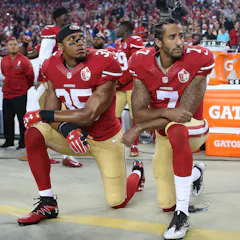
For some Americans, athletes can and should be role models, according to a study. For others, athletes should only express their views under certain conditions.
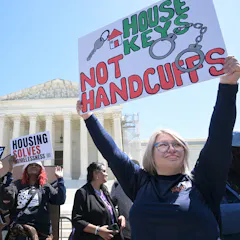
In a major homelessness ruling, the Supreme Court holds that cities and municipalities can punish people for sleeping outside, even when they have nowhere else to go.
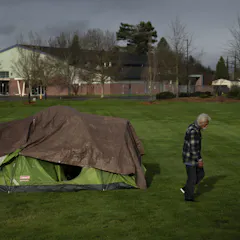
Legal precedents hold that criminalizing someone for their status, such as being homeless, is cruel and unusual punishment. But what if that status leads to actions like sleeping in public spaces?

For some teens on social media, TikTok and Twitter aren’t all about selfies or the latest craze in online “challenges.” Some teens are using social media to advocate for social justice.

A new study shows how brands can successfully change racist brand names and logos to stand up for racial justice in the marketplace.

The number of immigrant voters is on the rise – and research shows that for young immigrants, social media is where they are primarily wading into politics.

In this era of racial reckoning, words such as ‘white privilege’ have played a significant role in defining social problems plaguing America. But those words also have a downside.

A cornerstone of the First Step Act, passed with bipartisan support, is the PATTERN risk-assessment tool.

The murder of Ahmaud Arbery exemplifies the racial, often violent barriers still remaining in the US. The 25-year-old Black man was out for a jog. But three white men thought he was a criminal.

Johnson’s victory, in the manliest of sports, contradicted claims of racial supremacy by whites and demonstrated that Blacks were no longer willing to acquiesce to white dominance.

Government investment in roads, railroads and other public services has always involved social programming, both for good and for ill.

Her giving style is unusual for a billionaire donor.
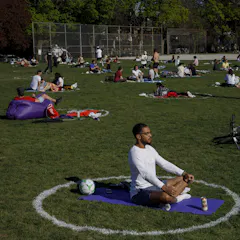
Green spaces can be part of the plan to ‘build back better’ after COVID-19. But city officials and policy-makers must address systemic racism for urban green spaces to benefit public health.

Many Americans first heard of Elizabeth City, North Carolina, when protests began after Andrew Brown Jr. was killed by sheriff’s deputies. But the city has a long history of fighting racial injustice.
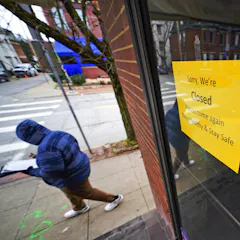
Most pandemic policies have benefited those already best off in US society and ignored people for whom neither mass shutdowns nor reopening offer relief.

There’s a divergence in how a trial is conducted, what rules govern it – and the larger issue of racial justice. That divergence affects the legitimacy of any verdict.

Are reparations for slavery enough for colleges to make amends? A scholar argues that access and student loan debt must also be addressed.

While support for social services and historically black colleges and universities rose sharply, these donors spent a tiny fraction of what the government distributed to people who needed help.
Top contributors
-

Frey Foundation Chair for Family Philanthropy, Grand Valley State University
-
Professor of the Practice of Law, University of Southern California
-
Professor of Communication and Journalism, Texas A&M University
-
Professor of Public Administration, Binghamton University, State University of New York
-
Professor of Philosophy, University of Connecticut
-
Professor of History, Arizona State University
-
Assistant Professor of History, Elizabeth City State University
-
Postdoctoral Scholar, University of California, San Francisco
-
Associate Professor of History, The University of Texas at Austin
-
Assistant Professor of English Education, Kennesaw State University
-
Lecturer in Law and Justice, Indigenous Academic Fellow, Charles Sturt University
-
Professor of Urban and Environmental Policy and Planning, Tufts University
-
Postdoctoral Scholar in Epidemiology and Biostatistics, University of California, San Francisco
-
Professor of Landscape Architecture, College of Design, North Carolina State University
-
Professor of Politics and Global Studies, Arizona State University