

Whether about a comet hitting the Earth or a virus infecting the world, fear-based messages often do not succeed at changing people’s behaviors.
Articles on Remote work
Displaying 61 - 80 of 117 articles
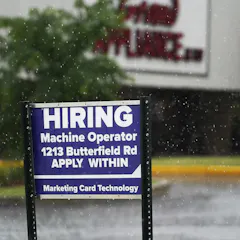
While the uptick in the unemployment rate in January may seem like bad news, the reason it rose actually shows the labor market returning to normal.

Many scientists stuck at home during university closures dealt with increased domestic responsibilities. But some groups had it worse than others.

It appears that the rhythms of your brain waves get in sync with the speech patterns of the person you’re conversing with. Videoconferencing throws off that syncing process.

The right to disconnect can be the catalyst an organization needs to review its workplace policies. But what’s really needed is a cultural shift that gives workers more control over how they work.

October’s employment report was rosy, with more than 500,000 jobs added in the month. There were also signs that the American workforce was heading back to the old normal.

Even when the pandemic ends, the vast majority of US companies are expected to let many employees continue to work at least part time from home.
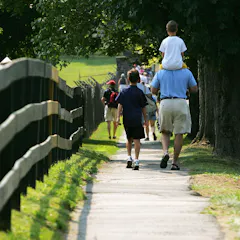
If rural communities plan carefully – and some already are – they can reinvent themselves as the perfect homes for people fleeing wildfire and hurricane zones.

With the rise of remote and hybrid work, employees are more isolated than ever. Here’s how ‘deliberate listening’ can help create a foundation for collaboration in this changing world of work.
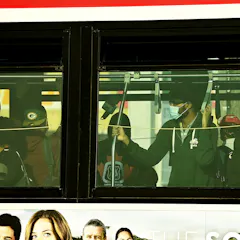
Increasing even part-time remote work disrupts public transit revenue. Agencies need to adapt fare structures and business models to meet the changing work market.

The potential benefits of telecommuting could quickly be erased because of the behavioural changes it brings about in the medium and long term.

The post-pandemic return to work will provide an opportunity for employers and employees to reconsider relationships. Here’s how organizations can build morale and stop valued employees from leaving.

Post-pandemic, the world of work will probably never be the same again. And that’s probably a good thing. We now have an opportunity to make it better.

If work doesn’t need to be done in Ottawa-area offices, does it need to be done in Ottawa at all?

A divide is growing between workers and management over the return to the office and other issues.

In a context where physical presence is still highly valued, employees are extending their working hours to gain the trust of their superiors.

As remote work continues through the pandemic, workers are experiencing burnout and fatigue brought on by excessive periods of time spent online.

A transcript of episode 8 of The Conversation Weekly podcast, including new research on why people react to cold temperatures differently.

Plus why your genes determine how you deal with cold temperatures. Listen to episode 8 of The Conversation Weekly.

The responsibility should not simply lie with employees who are working even harder.
Top contributors
-

PhD Candidate in Anthropology, UCL
-
Professor of Information Management and Business Analytics, Drake University
-
Management Professor, McGill University
-
Professor of Management and Organizational Leadership, Drake University
-
Assistant professor in leadership, IÉSEG School of Management
-
Professeur titulaire, Université du Québec à Montréal (UQAM)
-
Professeur au département d'études urbaines et touristiques, Université du Québec à Montréal (UQAM)
-
Assistant Professor, Smith School of Business, Queen's University, Ontario
-
Senior Lecturer, Organisational Behaviour & Management, Adelaide University
-
Postdoctoral Research Fellow, Muscle Physiology, Karolinska Institutet
-
Associate Professor of Organisational Behaviour, Bond Business School, Bond University
-
Professor of Economics, University of Nebraska Omaha
-
Associate Professor of Economics, Carleton University
-
Postdoctoral Research Fellow, Sustainable Urban Precincts Project, RMIT University
-
Research Associate in the School of Education, Communication and Society, King's College London