

Iranian artists are showing renewed determination to promote freedom as a cultural necessity in Iran, even in the face of a government crackdown.
Articles on Repression
Displaying 21 - 40 of 52 articles

Nelson Chamisa defines himself as a social democrat who believes in providing substantial welfare to support healthcare and basic education.

Opposition activists have previously been accused of treason and unpatriotic behaviour for expressing concerns about human rights abuses.

When I began stripping off in the form of naked protest, I presumed there were no puritans left to object. I was wrong.

A 1971 law, and the parallel growth of an illegal economy, shaped South Africa’s unique cannabis landscape.

The app best known for kids sharing video clips of themselves singing and dancing has become a powerful tool for activists speaking out against repression in Iran.

Women have long demanded change in Iran. In the aftermath of the death of a woman for a hijab violation, women protesters may be leading their country to a freer and more just society.

Angola’s 2022 election is the first in which citizens born after the war are old enough to vote.
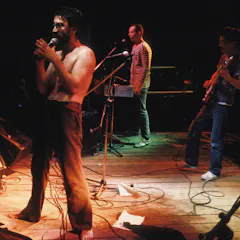
Can social media posts sustain Russia’s endangered dissident cultures?

Four scholars of race, religion and immigration explain how US refugee and asylum policy has long been racially and religiously discriminatory in practice.
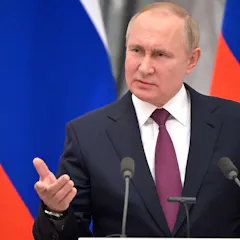
In recent years, Western governments have, in effect, aided the rise of personalist dictators in Russia, Iraq, Libya, North Korea and Venezuela.

When Russia invaded Ukraine, its leader was immediately labeled “fascist” by Ukrainians and others. A political scientist explains why that label fits.

The focus on building democracy should be on more intermediary outcomes, which can serve as building blocks for longer term democratic renewal.

The Indonesian government is criticised for using the pandemic as an excuse to repress.

Nine months into the pandemic, Indonesia has seen serious threats to civil liberties, involving not only privacy but also freedom of expression and of the press in the digital realm.

Academic freedom is under assault around the world. Academics and students are being killed, injured, detained and disappeared in a pattern of disturbing increases in state repression.

New research investigates how music helps healing from trauma and dealing with violence and repression in Papua and West Papua.

Forty years ago this shocking event paved the way for a 24-year rule of fear that saw Iraqi citizens repressed, tortured and murdered.

Today’s urban public spaces tend to represent governments and cities rather than people and citizens. Architects and urban designers should contribute to shaping spaces for freedom and interaction.

The debate about the nature of early trauma memories and their recovery isn’t new.
Top contributors
-

Assistant professor, University of Sussex
-
Research fellow, Thammasat University
-
Professor of History, Carnegie Mellon University
-
Director, International Development Department, University of Birmingham
-
Distinguished Reserach Professor, Southern Centre for Inequality Studies, University of the Witwatersrand
-
Professor of Law, Conflict and Global Development, University of Reading
-
Senior Lecturer in Media&Communication, University of Huddersfield
-
Professor of Economics, University of Warwick
-
SNF Eccellenza Professor, University of Basel
-
Professor of Law, New York Law School
-
Vising Researcher, Global Governance Unit, WZB Berlin Social Science Center.
-
Senior Lecturer in Anthropology, University of Johannesburg
-
Academic Fellow & Lecturer in Architecture and Cultural Heritage, Nottingham Trent University
-
Researcher, Université de Genève
-
Professorial Fellow in Psychiatry, The University of Melbourne