

Recent research finds that becoming too psychologically entangled with your followers can make success feel like a trap.
Articles on Screens
Displaying 1 - 20 of 30 articles

Like many other countries, Canada wants to restrict young people’s access to social media. Can Bill C-34 achieve its intended goals?

A new study spoke to first-time parents about ‘screen rules’ and how they apply in the chaos of family life.

Research suggests that how often people check social media − and how emotionally engaged they are with it − can influence sleep even more than how much time they spend online.

Screens might buy peace in the short term. But returning to the real world can be overwhelming for children.

Research on children’s safety online stresses the importance of parents involving kids in family screen use and explaining what is happening.

Parents are regularly told to limit their children’s screen time during the evening. But new research suggests it is using digital devices while in bed that is the bigger problem.
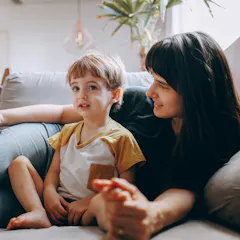
Many parents worry about screen use and their children. Research shows it helps if you watch with your kids and talk about the program.

We tend to think when children are using screens, they are passive and sitting still. But they can move in response to what they watch. Or get inspiration for what to play next.

Hours of screen time causes eye damage among millions of people worldwide, but it can be avoided by taking these precautions.
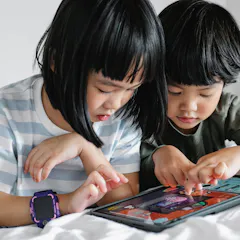
For many families, there is a daily battle around getting kids off their screens and back into real life.

A major study of screen use found it’s not the screen itself that really matters but what’s on it and the way kids use it.
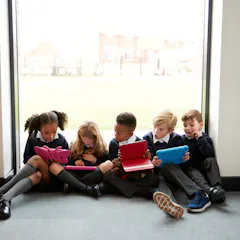
Parents should keep an eye on how screen-based activities influence their child’s development and behaviour.

Screen addiction is already a household term, but is there any scientific basis for this phenomenon? We take a look at the methods used to measure it and its actual hold on the population.

A big study accounting for genes and socioeconomic background suggests that video games actually cause children’s intelligence to grow.

A widely reported study didn’t ring any alarm bells for children’s increasing screen time, but neither did it give heavy use of devices the all-clear.
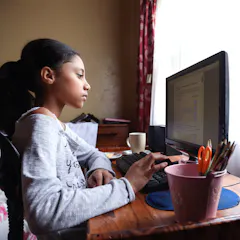
Whether they’re in a classroom or online, students should be encouraged to move around. An expert on learning with technology explains why.

Understanding others’ emotions is a crucial social skill. Counter to concerns about screen time stunting kids’ development, one study suggests they’re getting better at recognizing emotion on screen.

Excessive screen use has been linked to addictive behaviours, changes in mood, increased stress and difficulty sleeping - here’s how to take a break.

We have transitioned from a literate culture to one that values speed, immediacy and the decoding of small grabs of words in search for information. But old and new ways of reading can co-exist.
Top contributors
-

Associate Professor, Education, University of Canberra
-
Professor of Education, Australian Catholic University
-
Associate Professor of Education, Charles Sturt University
-
Research Fellow, Curtin University
-
Professor of Physiotherapy, Curtin University
-
Research Officer, Leeds Beckett University
-
Director, Appleton Institute, CQUniversity Australia
-
Principal Academic in Psychology, Bournemouth University
-
Professor in Psychology, Bournemouth University
-
Professor of Medicine, Flinders University
-
Research Associate in Physical Activity and Public Health, Loughborough University
-
Associate Professor in Clinical Sleep Health, Flinders University
-
Lecturer, Edith Cowan University
-
Principal Fellow, Department of Paediatrics, The University of Melbourne
-
Assistant Professor of Cybersecurity Education, University of South Florida