

Sigmund Freud’s 800-page book on dreams introduced a new way of thinking about the mind that reverberated through the 20th century.
Articles on Sigmund Freud
Displaying 1 - 20 of 41 articles
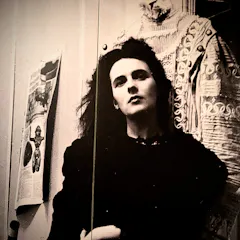
The Freud Museum is a perfect fit for the story of Carrington’s confinement and the creativity which ensued.

An early figure in the psychoanalytic movement, Jung is often written off. But his ideas of the collective unconscious and emphasis on archetype and myth resonate.

Freud’s insights into trauma, repression and the unconscious are finding new relevance and millions of followers.

Is Kiran Desai’s The Loneliness of Sonia and Sunny the great American–Indian novel?

For the original surrealists, dreaming was not a matter of idle fantasy but a tool for political and social transformation.

Without critical humanistic reflection, it’s possible that AI will fail to contribute to a good society for all.

Researchers have found dreams are most likely to occur during the stage of sleep known as rapid eye movement, or REM.

Ten comedians, one room, last comic to laugh wins. But what makes comedy – and not laughing – so funny?

Sigmund Freud originally developed the idea of repression and actually revised his definition later in life.

We live in anxious times. But there is a long tradition of philosophical thought that addresses the problem of anxiety.
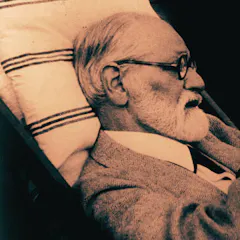
Some of Sigmund Freud’s ideas are now ridiculed. Others are on shaky scientific ground. But psychoanalytic theory can help us live authentic lives in an age of technological dominance.
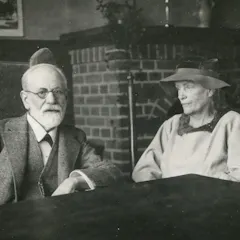
Modern artworks are strikingly introduced into the carefully preserved spaces of Freud’s former home.

Freud wanted to know how da Vinci combined supreme artistic accomplishments with a technological imagination that seemingly anticipated modern science and engineering.

Writer and psychotherapist Adam Phillips is often hailed as one of the world’s great essayists. His new book – exploring the topic of giving up, among other things – is both erudite and slippery.
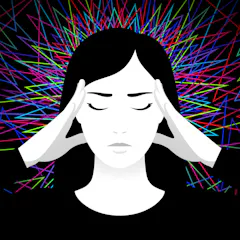
Research decisions made by clinical psychologists in the 1970s can help explain why so many people, myself included, struggle to make sense of our obsessional thoughts.
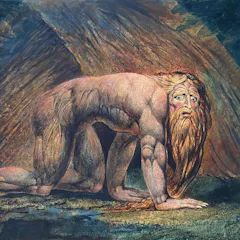
Humans have attempted to understand and treat mental illness for centuries – from ancient Greek medicine, Middle Ages exorcisms and the rise of asylums, to modern medical breakthroughs.

A new theory of desire bridges the gap between psychoanalysis and queer theory on a quest to make a science out of sexuality.

Though we desire the Succession ending we want, we long for something that violently prevents us from getting it at the exact same time.

Marina Benjamin’s essays investigate the social and philosophical dimensions of housework and ‘femininity’. Maxine Fei-Chung’s book gives an often-harrowing account of eight women who struggle.
Top contributors
-

Professor of Psychology, The University of Melbourne
-
Emeritus Professor in Psychiatry, The University of Melbourne
-
Fellow, Keele University
-
Lecturer in Law, Sydney Law School, University of Sydney
-
Professor of Psychology, Indiana University
-
Animal Geographer, Keele University
-
Professor of Cognitive Neuropsychology, University of Hertfordshire
-
Director, Appleton Institute, CQUniversity Australia
-
Psychology PhD Student, University of Sussex
-
Head of Department of Psychosocial and Psychoanalytic Studies, University of Essex
-
Associate Professor at Turner Institute for Brain and Mental Health, School of Psychological Sciences, Monash University
-
Professor, Research School of Social Sciences, Australian National University
-
Visiting Research Fellow in Anomalistic Psychology, and Personality and Individual Differences, Adelaide University
-
Professor of Neurology, Trinity College Dublin
-
Senior Lecturer in Psychology, University of Sussex