

How indoor solar cells could help power the Internet of Things.
Articles on Solar power
Displaying 181 - 200 of 390 articles

The US is gradually shifting to lower-carbon energy sources, but the COVID-19 pandemic, an oil price crash and a likely recession are big speed bumps.

New lightweight, efficient and ultra-thin solar technologies show promise, but it may be too soon to abandon conventional solar photovoltaics.
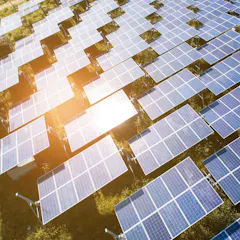
Sun Cable could provide Australia an alternative to the export business of coal and gas, and even reduce our export dependence on China.
Pumped thermal electricity storage turns electricity into heat and back again – which can compensate for the intermittent supply of renewables.
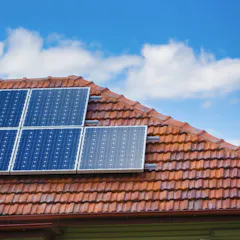
A technological arms race in the 80s resulted in a world-first solar cell, that today underpins half the world’s solar power.
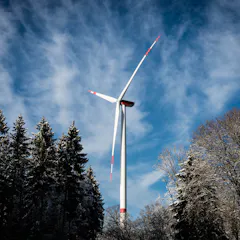
Nuclear power isn’t needed to meet Ontario’s electricity needs. And the absence of nuclear power won’t have any impact on emissions in Ontario’s energy sector.
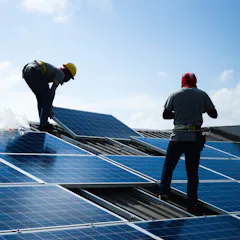
Solar cells make electricity directly from sunlight, but how do they do it?

Long before Apple vs. Microsoft or Facebook vs. Google, there was Edison vs. Westinghouse.

Don’t expect the new technology to become solar’s dark twin just yet, but it could play an important role in energy demands of the future.
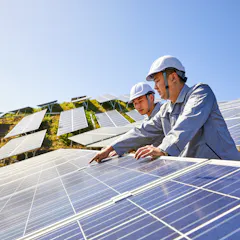
Tapping just 3.7% of solar potential in countries in China’s intercontinental infrastructure programme could power the entire region.

Australia is installing renewable energy at more than ten times the global average. This is excellent news, but raises serious questions about integrating this electricity into our grids.
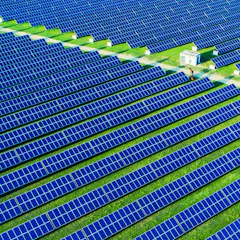
The design of the global money game is the real antagonist in the fight against climate change. But the call to arms tends to be directed at the players who have had best luck with the dice.
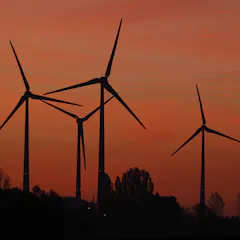
The federal government this week heralded Australia’s renewable energy performance. But the outlook leaves little cause for celebration.
We have all the technologies needed to make the electric grid run on renewables and lower pollution. What are they and what are the barriers to adopting them widely?
An eight year study of half hourly prices finds that wind and solar generation have been pushing wholesale electricity prices down.
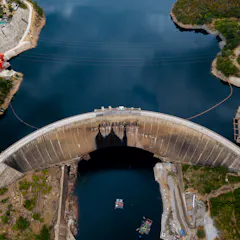
Zimbabwe has a severe energy crisis because its major sources of electricity are struggling to keep up with demand.

Japan’s global influence has waned in recent years. Showing that renewables can decouple emissions from economic success could help the country find its niche and spark a race to power the Earth.
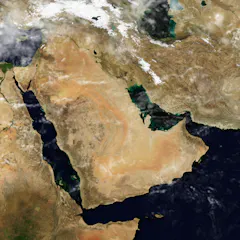
A legacy in fossil fuels is likely to help even in the era of renewable energy.

The vast desert could potentially produce more than seven times the electricity requirements of Europe, with almost no carbon emissions.
Top contributors
-

Professor of Engineering, Australian National University
-
Professor Emeritus, Macquarie Business School, Macquarie University
-
Senior Research Associate, Renewable Energy & Energy Systems Analyst, UNSW
-
Honorary Associate Professor, UNSW
-
Professor of Physics, University of Johannesburg
-
University of Southern Queensland
-
John M. Thompson Chair in Information Technology and Innovation and Professor, Western University
-
Senior Industry Fellow, Environment and Planning, RMIT University
-
Professor of Sustainability, Curtin University
-
Emeritus professor, Australian National University
-
Lecturer in Energy Storage Systems Dynamics, Lancaster University
-
Research Fellow, Stephenson Institute for Renewable Energy, University of Liverpool
-
Professor in International Relations / International Political Economy, UNSW
-
Research Scientist, The University of Texas at Austin
-
Associate Professor, Renewable Energy, Monash University