
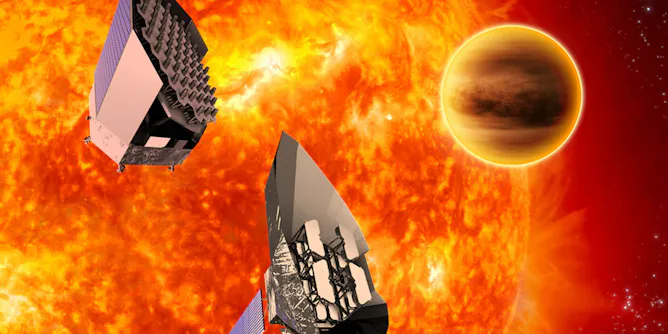
While we on Earth are familiar with our own star, the Sun, the European Space Agency’s PLATO mission will explore solar systems similar to ours as well as those that are more exotic.
Articles on Solar system
Displaying 201 - 220 of 293 articles
Ten new remote cameras will soon be scouring the British night skies for meteorites.
The Voyager space probes sent back some amazing images of the planets in the outer Solar System, and they’re still talking to Earth every day via Australia’s tracking station.
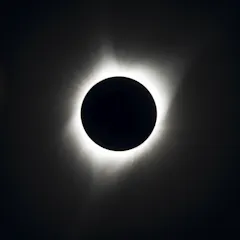
An astronomer explains how. why and when eclipses happen, what scientists can learn from them, and what they would look like if you were standing on the Moon.
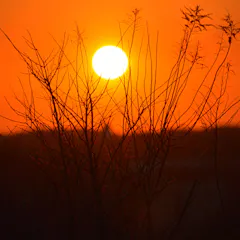
In five or seven billion years time, the Sun’s life will come to an end. And it will be really spectacular - if you’re watching from far enough away.
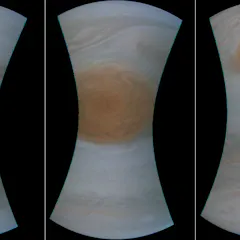
The images are in from the Juno probe’s closest flyby so far of Jupiter’s Great Red Spot. Citizen scientists are now getting involved in processing those images.
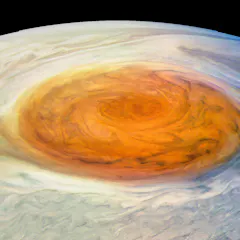
Juno has flown closer to the solar system’s most famous storm than any other spacecraft to take the most detailed images to date. They may help scientists reveal some of the spot’s best-kept secrets.
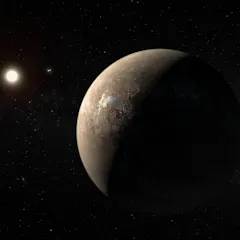
You may even be able to find other planets around the star closest to our solar system.
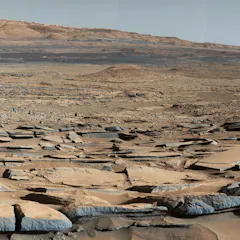
We could learn a lot from any mission to send people to Mars, such as whether there’s life elsewhere in the universe or even the technology for new household appliances.
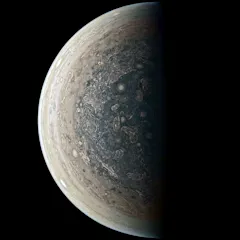
We may need to re-think our models of Jupiter’s formation thanks to the first results from Juno probe orbiting the planet, and new observations from Earth.
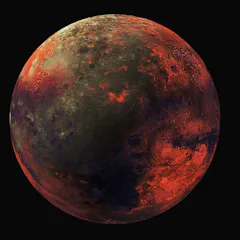
The planet is more similar to Earth than any other – except when it comes to supporting life.
There remain many mysteries that are beyond science. Does that mean that a God truly exists? A scholar gives reasons for this possibility.
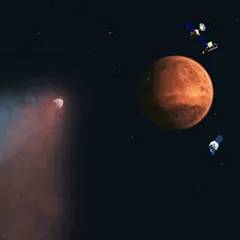
JAXA has announced a mission to visit the two moons of Mars and return a rock sample to Earth.
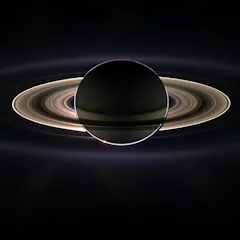
With the probe now on its ‘Grand Finale,’ a Cassini team member describes the amazing discoveries it made about the ringed planet and its many moons.
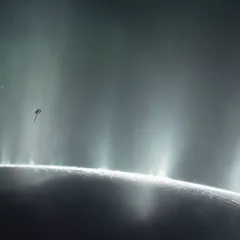
Earth is a relatively dry planet compared to some of the other ocean worlds in our Solar system. Life needs water so what about life on these other places?
To help find Planet 9, you just need a computer and a little astronomy knowledge. Already, 120,000 images have been processed by citizen scientists in just 3 days.
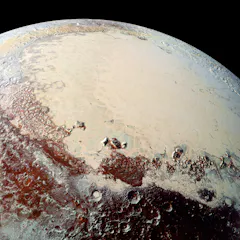
A group of astronomers are trying to reclassify Pluto as full ‘planet’. But there are good reasons to leave our classification system alone, and this doesn’t mean Pluto is any less interesting.
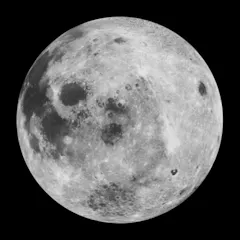
The moon may be slightly older than previously thought, suggests a new study.
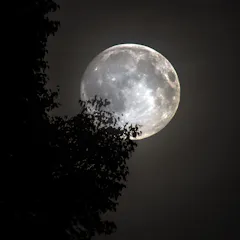
Full moons are good reason to look up – and the one on Nov. 14 is no exception. But here’s why you likely won’t see something shockingly different from other full moons you’ve observed over the years.

Sonification is a technique for converting data into sound. It could transform the study of distant worlds.
Top contributors
-

Professor (Astrophysics), University of Southern Queensland
-
Professor of Planetary Geosciences, The Open University
-
Senior Curator (Astronomy), Museums Victoria Research Institute; The University of Melbourne
-
Associate Professor in Archaeology and Space Studies, Flinders University
-
Professor of Planetary and Space Sciences, The Open University
-
Associate Professor in Astronomy, Monash University
-
Program Manager / Adjunct Research Fellow, Swinburne University of Technology
-
Postdoctoral Researcher in Radio Astronomy, University of Sydney
-
Postdoctoral research associate, University of Oxford
-
Scientist, Max Planck Institute for Solar System Research
-
Senior Instrument Scientist, Australian Nuclear Science and Technology Organisation
-
Lecturer, School of Science, Computing and Engineering Technologies, Swinburne University of Technology
-
Associate Dean of Innovation and Engagement, Swinburne University of Technology
-
PhD Candidate, University of Southern Queensland
-
Research Associate, Curtin University