
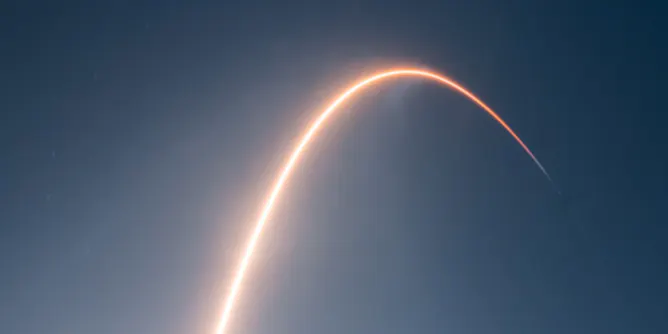
As the Moon starts getting crowded, questions of safety and responsibility are becoming hard to ignore.
Articles on Space junk
Displaying 1 - 20 of 73 articles
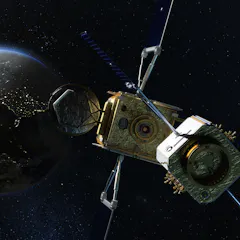
A new mission to save NASA’s Swift observatory shows why catching a satellite that was never designed for rescue is one of the hardest jobs in spaceflight.
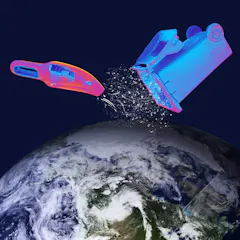
Properly addressing the problem of space requires work across three fronts: technology, policy and philosophy.

Astronomers will investigate this fireball to help disentangle the heritage and history of the Solar System’s formation.
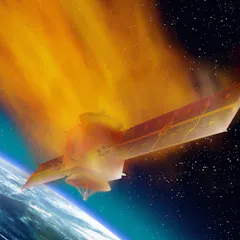
Some engineers are prioritizing ‘design for demise’ and planning satellites that are more likely to completely burn up in Earth’s atmosphere at the end of their lifespan.

A new study provides the first evidence that re-entering space debris pollutes Earth’s upper atmosphere.

Google’s Project Suncatcher would need sophisticated collision avoidance capabilities to navigate a junk-filled landscape.
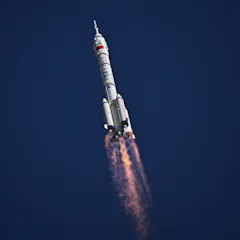
China has created more space debris than any other country. But as its space program grows, it has more to lose from a collision than ever before.
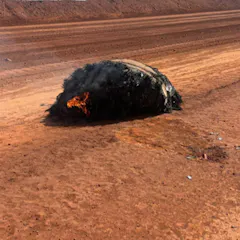
A piece of a suspected rocket found on fire in Western Australia highlights the growing problem of space junk – and how humanity is dealing with it.
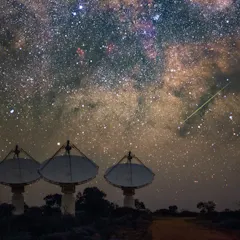
The quest to pin down the source of the burst led to a derelict 60-year-old satellite.
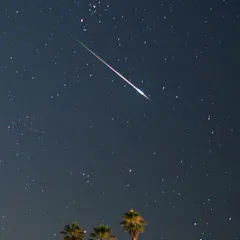
There are telltale clues to help you work out what just blazed overhead.
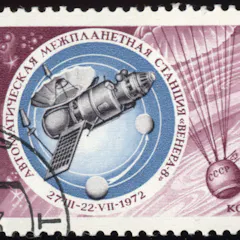
The Soviet Union launched Kosmos 482 towards Venus in 1972. But all didn’t go to plan.
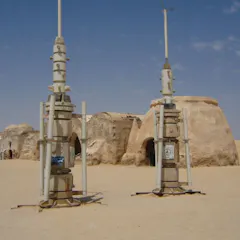
There are elements of these ancient, distant George Lucas stories that might seem like science fiction but are, in fact, science reality.
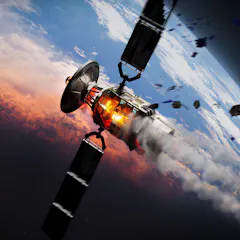
The number of satellites is exploding, and we still don’t have a fully safe way to dispose of them.
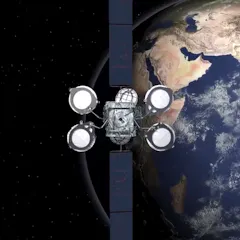
The Intelsat 33e communications satellite unexpectedly broke up in orbit, creating at least 20 fragments. How do we track the growing amounts of orbital debris?

As the number of satellites and rocket launches increases, so does the amount of discarded rockets and components. This space junk risks falling to Earth, as it did in Saskatchewan this spring.
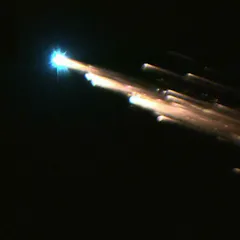
Burnt-up satellites could dump hundreds of tonnes of aluminium in the stratosphere every year. An atmospheric chemist explains what that might mean
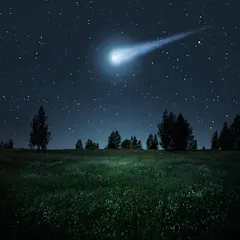
The amount of space junk will increase as we continue to launch objects into space, but there are ways to curb damage on the ground.
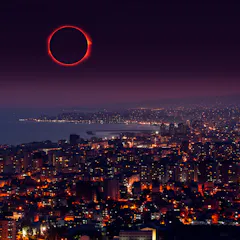
The sky is becoming more cluttered with satellites and space junk. This is affecting astronomical study, but will only have a minor effect — if any — on the viewing of the solar eclipse.
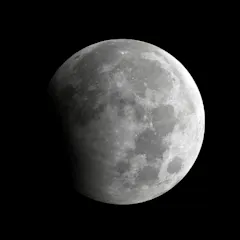
Chandrayaan-3’s successful landing on the Moon made 2023 a big year for lunar exploration, and future years will come with even more discoveries.
Top contributors
-

Associate Professor in Archaeology and Space Studies, Flinders University
-
Professor of Strategy and Security Studies, Air University
-
Associate Professor, Astronomy, University of Regina
-
Professor, Physics and Astronomy, University of British Columbia
-
Associate Dean of Innovation and Engagement, Swinburne University of Technology
-
Associate Professor in Astronomy, Monash University
-
Professor and Associate Dean (Environment and Sustainability in Faculty of Science), The University of Melbourne
-
Emeritus Professor of International Law, Western Sydney University
-
Associate Professor, RMIT University
-
Professor of Planetary Science, University of Arizona
-
Professor, Swinburne University of Technology
-
Professor, Adelaide University
-
Senior Lecturer in International Relations, University of Bristol
-
Professor of computer science, University of Liverpool
-
Professor of International Studies; Adjunct Professor of Law, University of Washington