
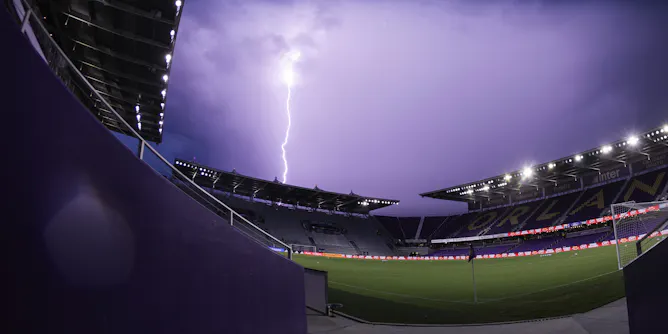
Players have been injured by lightning during games, and a strike to the stands could hurt a lot of fans.
Articles on Stadiums
Displaying 1 - 20 of 26 articles
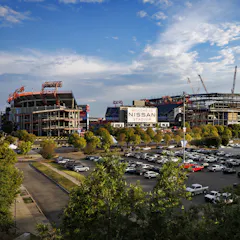
Research has repeatedly found that stadiums generate little economic benefit, while subsidy referendums often fail when put before voters. Yet team owners continue to receive billions in tax dollars.

In 1976, fans could score a ticket to the MLB All-Star Game for $6. In 2026, tickets start at over $200.

Tampa residents, take note: The Battery has delivered for the Atlanta Braves, but not for Georgia taxpayers.
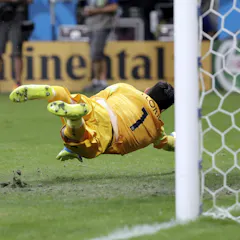
The new playing fields are rolling out in stadiums from Mexico to Canada. Creating the perfect pitch in very different climates requires the right grasses and some creative tricks.
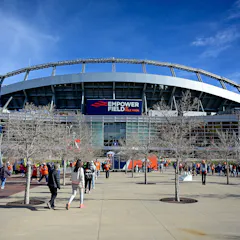
Rarely are sports stadiums financed entirely with private funds.

Two men allegedly brought guns into the MCG during an AFL game, which has triggered serious questions about venue security processes in Australia.

The Saudis have won the right to host football’s biggest tournament. But its bid doesn’t seriously address the environmental issues.
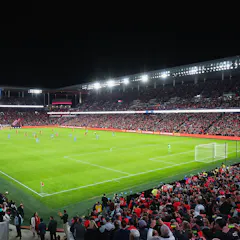
The newest stadium in St. Louis is a case study in ‘patient capital.’
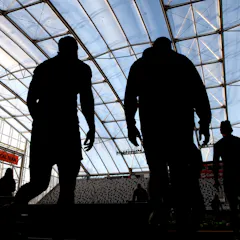
Despite multimillion dollar price tags, rugby stadiums rarely cater to events outside of the sport. So why should communities cover the hefty bill when there is limited benefit to the wider community?
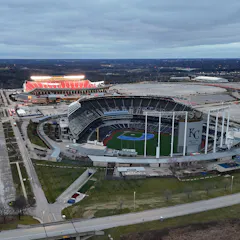
It turns out that handing over taxpayer dollars to billionaire owners tends to be far less popular among regular citizens than among well-connected government officials.

Queensland premier Steven Miles is walking a tightrope in trying to deliver a spectacular yet sustainable, legacy-driven 2032 Brisbane Olympics.
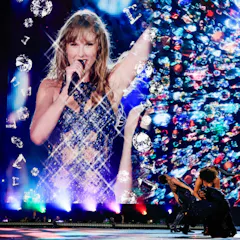
One fan died and others reported burns at the Swift concert. And we’re going to see similar incidents at future concerns if we don’t start planning for extreme weather.

Scientists analyzed 100,000 baseball games, from the days of Mickey Mantle and Willie Mays to Aaron Judge. Here’s what they learned about the climate’s growing role.

Study after study has shown that stadiums are terrible public investments. Taxpayers rarely want to pay for them. So why do governments keep subsidizing them?
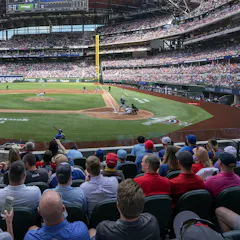
Crowd size matters. When football games had thousands of fans in attendance, COVID-19 case numbers tended to spike within three weeks.
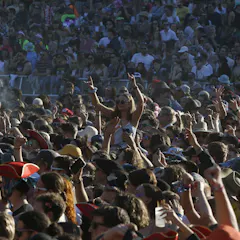
A crowd can exhilarate the ephemeral power within us. Whether a packed stadium or a mosh pit, crowds brought us together in ways that were more than physical.
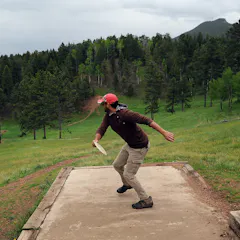
Long after a crisis recedes, residual anxiety can remain and become calcified in cultures, customs and institutions.
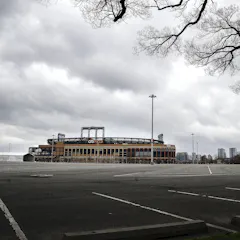
Nearly three-quarters of fans say they won’t attend games until a vaccine has been developed.

In 2002, Mike Veeck, a minor league baseball owner with a knack for bizarre promotions, decided to set the record for lowest attendance – and bar fans from entering the stadium.
Top contributors
-

Professor of Economics, Kennesaw State University
-
Associate Professor and Principal Fellow in Urban Risk and Resilience, The University of Melbourne
-
Professor of Economics and Accounting, College of the Holy Cross
-
Associate Professor of Law, Thompson Rivers University
-
Director of Research, National Center for Spectator Sports Safety and Security, The University of Southern Mississippi
-
Associate Professor of Turfgrass and Soil Sciences, University of Connecticut
-
Professor of Urban Management & Planning, Griffith University
-
Professor of Sociology, West Virginia University
-
Assistant Professor of Geography, Dartmouth College
-
Associate Professor, School of Public Affairs, University of Colorado Denver
-
Professor of Sociology & Criminology and Arts & Sciences Distinguished Scholar, University of Miami
-
Associate Professor of Business, Boston University
-
Associate Professor in Creative Writing, Griffith University
-
Professor of Journalism, Indiana University
-
Professor, Southern Cross University