

Do some people work ‘Monday, Tuesday, and half of Wednesday for yourself, and then Wednesday, Thursday, and Friday for the government’? No, they don’t.
Articles on Taxpayers
Displaying 1 - 20 of 40 articles

Tampa residents, take note: The Battery has delivered for the Atlanta Braves, but not for Georgia taxpayers.

Allegheny County is pouring millions into a new juvenile detention facility, even as evidence mounts that alternatives to detention are more helpful.

Many workers in Scotland – not just its top earners – are going to be paying more tax soon.

Tax compliance is a burden for small and medium businesses in Uganda, with negative consequences.

Medicare Advantage − the private option that costs taxpayers extra and requires prior approval − is the default for some state agencies and corporations.

Rather than finding efficiencies and saving money all around, the private companies that administer the Medicare Advantage option to Medicare are profiting at seniors’ – and taxpayers’ – expense.

In 2025, Congress will need to decide whether to extend the higher standard deduction, which has been in place since 2018.

The vast majority of damage to residential buildings during flooding occurs in basements. Rather than rebuilding identically after a disaster, we need to build better.

Despite multimillion dollar price tags, rugby stadiums rarely cater to events outside of the sport. So why should communities cover the hefty bill when there is limited benefit to the wider community?
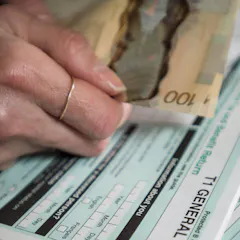
Tax season is fast approaching, but there are limited opportunities for Canadians to influence how their taxes are spent. Here’s how a new innovation could lead to a more democratic tax system.

Politicisation of taxpayer-funded advertising is wasteful and creates an uneven playing field in elections.

Study after study has shown that stadiums are terrible public investments. Taxpayers rarely want to pay for them. So why do governments keep subsidizing them?
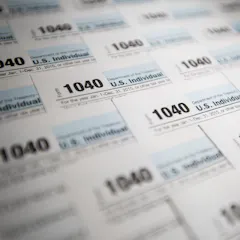
The IRS has yet to finish millions of returns from the 2021 tax season. That doesn’t bode well for 2022.
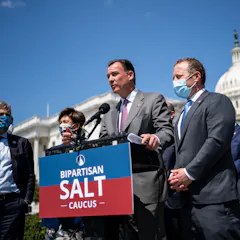
The 2017 tax cuts put a $10,000 cap on the deduction for state and local taxes. The richest households would see the biggest gains from eliminating or raising the cap.
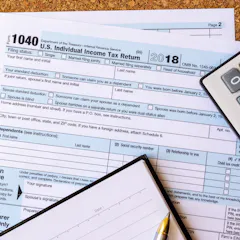
Dozens of prosperous countries save billions of dollars and hours annually by not requiring residents to fill out tax returns, so what is the United States waiting for?
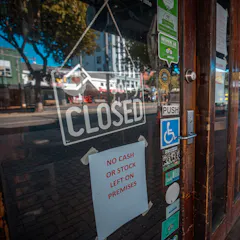
Instead of wage subsidy and business loan schemes, allowing households, workers and employers to borrow against future income could be more efficient and equitable in the long run.

Once paid, tax becomes the property of the government. Pretending otherwise undermines the basic principles of the social contract.

Congress tends to use the tax code to implement policy, which increases complexity and creates loopholes wealthy taxpayers like Trump can exploit.

Because the rich often have complicated deductions that dabble in the gray areas of tax law, it’s simply easier to audit the straightforward taxes of the working poor.
Top contributors
-

Professor Emerita of Law, Vanderbilt University
-
Professor of Law, University of Richmond
-
Research Scientist of Health Policy and Economics, University of Southern California
-
Visiting Professor at the Business School, University of the Witwatersrand
-
Senior Research Fellow, Victoria University
-
Research Fellow, University of Manchester
-
Research Chair in Education and Director of the Centre for International Research on Education Systems, Victoria University
-
Lecturer, School of Taxation & Business Law, UNSW
-
Associate Professor of Business, Boston University
-
Professor of International Affairs and the Vice-Provost and Associate Vice-President (Academic), Carleton University
-
Assistant Professor of Accountancy, Farmer School of Business, Miami University
-
Research Director, The University of Western Australia
-
Professor of Law, University of Colorado Boulder
-
Science Communication Researcher, Stellenbosch University
-
Senior Lecturer, Charles Darwin University