
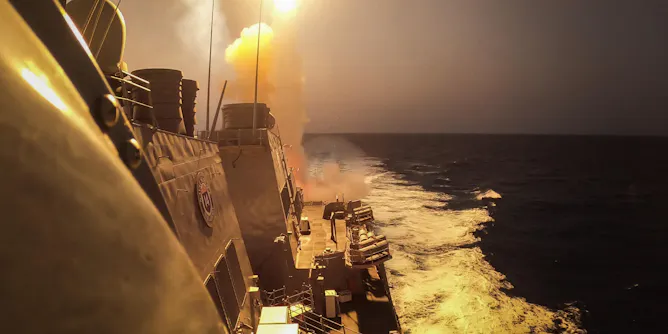
The African shoreline is now much more valuable to outsiders who want to monitor, contain or outflank the waterway opposite them.
Articles on Sudan
Displaying 1 - 20 of 301 articles

At a time when UN peace operations are declining, African organisations are often the first responders to emerging crises.

Congress never built a path from temporary status to permanent residence, leaving many people facing deportation with little recourse.

The next phase of the response must not be about deploying more people into communities simply to deliver interventions.
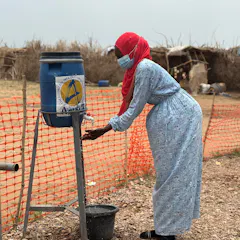
While cholera launched modern epidemiology and has nearly disappeared in many countries, the disease never went away. It has instead retreated to the places least equipped to fight it.

The response to the many problems facing the region has been set back by cuts in humanitarian aid.
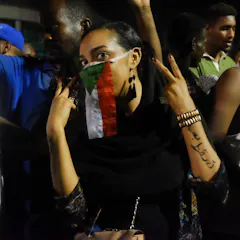
Music created the networks, identities and spaces of trust that made collective political action possible in Sudan’s 2019 revolution.

Most states know that without widely understood and accepted international laws and principles it would be harder to resolve their disagreements peacefully.
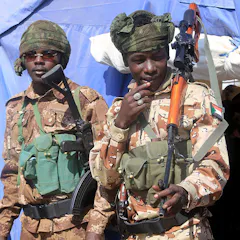
A new peace initiative has put the future of Sudan’s Islamist movement at the centre of post-war politics.
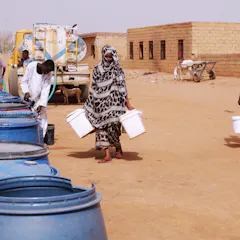
Sudan is one of the most dangerous places in the world to deliver humanitarian assistance. It is also home to one of the most chronically underfunded.
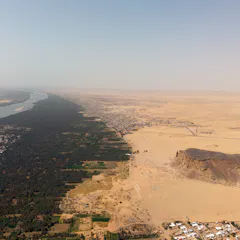
The ancient Kush city of Jebel Barkal rose up in the Nile River Valley starting around 2000 BCE. New research dug deep to learn more about what this landscape was like over the past 4,000 years.

The circular mass graves were filled with the bones of people and animals, often carefully arranged around a key person at the centre.

The flaws in Standard & Poor’s Global’s report could influence investor perceptions and reinforce existing biases against Africa.

We look at Sudan’s long history of civilian-led resistance, and how community networks and youth movements are laying the foundations for re-establishing peaceful rule in a country marked by deep political fragmentation.
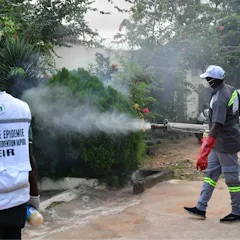
In recent decades, cases have risen sharply in Africa as urbanisation, travel and climate change have expanded mosquito habitats.
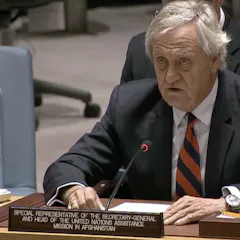
The qualities forged by his intense involvement in the struggle for democratic practices shaped his approach to conflict and strife, wherever it occurred.
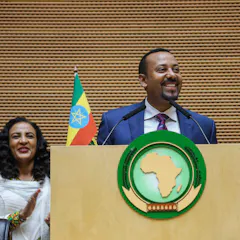
A national dialogue is usually convened during moments of political crisis or transition.
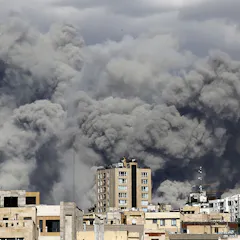
Tehran’s presence in the Horn of Africa and the Red Sea is selective and opportunistic.
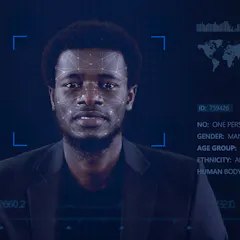
Digital identification is supposed to provide identity to all people. But sometimes it blocks access to essential services.
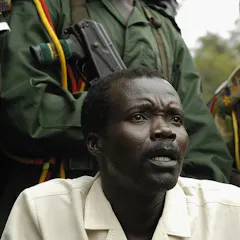
Joseph Kony and his Lord’s Resistance Army have relied on borderlands and declining political will to avoid detection.
Top contributors
-

Professor, Weber State University
-
Senior Research Fellow, Norwegian Institute of International Affairs and Visiting Professor University of Buckingham, Norwegian Institute of International Affairs
-
Associate Professor of History, University of Washington
-
Associate Professor of International Studies, University of Nottingham
-
PhD candidate, University of the Pacific
-
Professor of History, Colgate University
-
Professor of History, Durham University
-
Senior Lecturer in International Law, The University of Western Australia
-
Lecturer in History, Newcastle University
-
Senior Research Fellow, Horn of Africa and Southern Africa, Institute of Commonwealth Studies, School of Advanced Study, University of London
-
Researcher at the Austrian Institute for International Affairs, Österreichisches Institut für Internationale Politik (OIIP)
-
Professor of Architecture and SARChI: DST/NRF/SACN Research Chair in Spatial Transformation (Positive Change in the Built Environment), Tshwane University of Technology
-
Associate Professor of International Relations, University of Trieste
-
Associate Professor of Urban & Environmental Design, University of Khartoum
-
Research Fellow, International Food Policy Research Institute (IFPRI)