
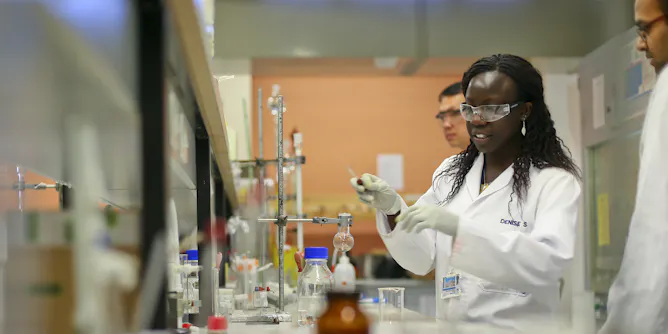
Africa has deep-rooted problems: poverty, disease, corruption and war. Could these be solved through mathematical science?
Articles on Tanzania
Displaying 341 - 356 of 356 articles
Human population groups worldwide are highly homogeneous genetically. They are in fact 99.5% similar and their anatomical features vary in an uncorrelated fashion over the landscape.
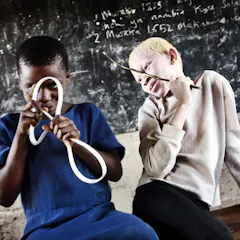
Children living with albinism are very vulnerable to attack, kidnapping, mutilation and murder. In Tanzania, fear is keeping many children away from school and costing them an education.
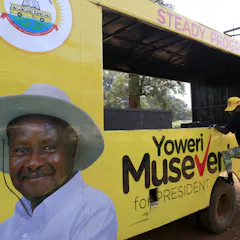
Regular changes of government through free and fair elections that reflect the wishes of the majority of citizens are a critical component of democratisation. But how significant are polls in Africa?
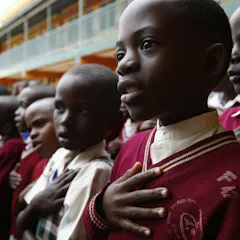
More and more children are attending primary school in Kenya, Uganda and Tanzania. But there are worryingly large gaps in their learning.
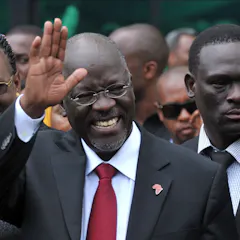
Tanzania’s new president, John Pombe Magufuli, needs to change the country’s lukewarm attitude to the EAC and regional integration, which has cast a shadow over the future prospects of the region.
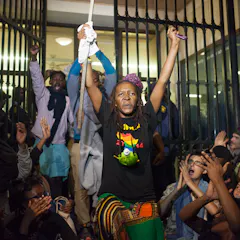
Many universities in East and West Africa lost their autonomy during the 1980s and 1990s and became handmaidens of the state. What insights can their experiences offer for South Africa?

Malawi and Tanzania have created programs to provide sexual and reproductive health services and HIV interventions. But men who have sex with men say it’s still difficult to access care.
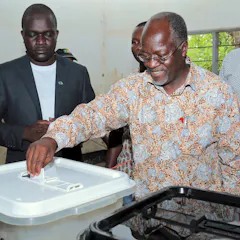
John Magufuli has been announced as president elect of Tanzania.

Higher education can play a key role in pursuing the United Nations’ Sustainable Development Goals. Collaboration will be crucial.
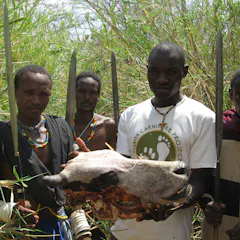
Human and wildlife conflict in Tanzania’s Ruaha region is extremely tense. There are many projects underway to alleviate this tension.
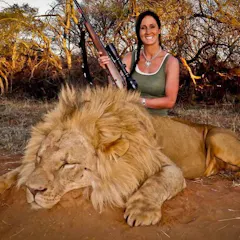
Hunting is a major source of controversy on the African continent. Many nations have strict laws against hunting while others see it as an opportunity to make money.
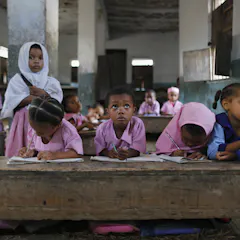
Low-fee non-government schools are a permanent part of achieving education for all. They should be treated as such.
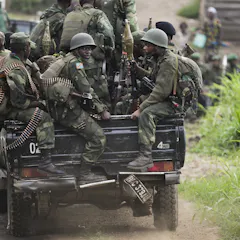
It’s not a surprise that development aid frees up money for countries to spend on defence budgets. Why is the UK so shocked by its own policies?

Sometimes the best way to deal with mountains of data is to turn to the public for help. That’s what Snapshot Serengeti did to classify millions of photos from savanna camera traps in Tanzania.
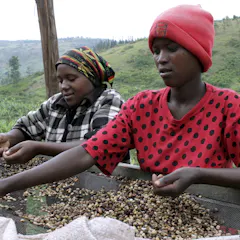
Unless climate change can be mitigated, or farmers can find ways to adapt, the future for coffee production looks bleak.
Top contributors
-

Researcher, United States International University
-
Lecturer, Tumaini University Makumira
-
Assistant professor, University of Sussex
-
Post-Doctoral Research Fellow, SARChI in Higher Education and Human Development Research Group, University of the Free State
-
PhD Candidate, Department of Political Science and Public Administration, University of Nairobi
-
Senior Lecturer in Politics and International Relations, University of East London
-
Professor of Democracy, University of Birmingham
-
Research Associate Plant Systematics, Bayreuth University
-
Associate Professor of International Studies, University of Nottingham
-
Lecturer in Wildlife Conservation
-
Professor of French and Critical Disability Studies, Lancaster University
-
Asso. Professor in Anthropology, University College London, UCL
-
Professor of Disease Ecology and Public Health, University of Glasgow
-
Senior Lecturer in Social Work, Australian Catholic University
-
Researcher, SAMRC/Centre for Health Economics and Decision Science- PRICELESS SA, University of the Witwatersrand