
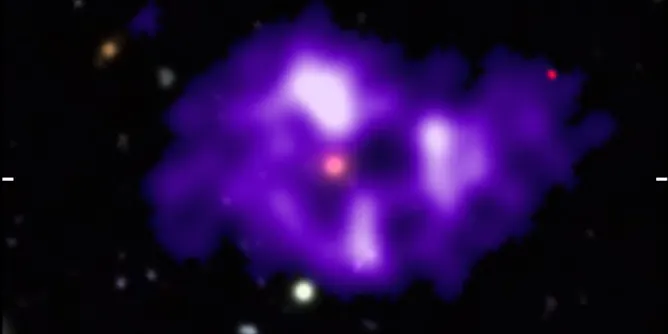
Machine learning is becoming an indispensable tool in astronomy by sorting through enormous datasets from telescopes.
Articles on Telescope
Displaying 41 - 60 of 110 articles
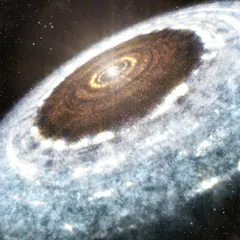
Astronomers have long known where water is first formed in the universe and how it ends up on planets, asteroids and comets. A recent discovery has finally answered what happens in between.
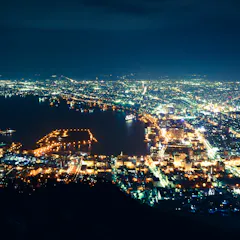
With the help of thousands of citizen scientists, a new study measured exactly how much brighter night skies are getting every year.
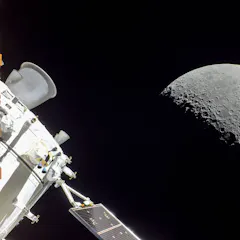
With more than 100 lunar missions planned in coming years, space junk near the Moon could become an issue for humanity. No agency tracks lunar space junk, so two astronomers decided to do it themselves.
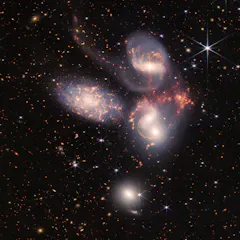
NASA released five new images from the James Webb Space Telescope, revealing incredible details of ancient galaxies, stars and the presence of water in the atmosphere of a distant planet.
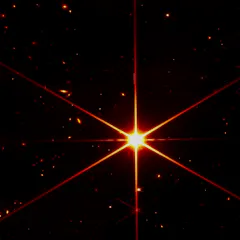
It has taken eight months to test and calibrate all of the instruments and modes of the James Webb Space Telescope. A scientist on the team explains what it took to get Webb up and running.
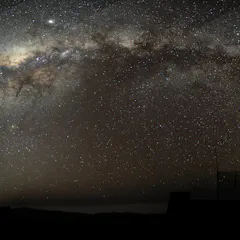
This year, two groups of astronomers plan to send messages containing information about humans and the location of Earth toward parts of space they think may be home to intelligent life.
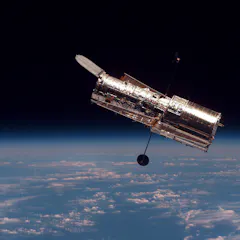
The astronomy and astrophysics decadal survey for the 2020s lays out plans to search for life on distant planets, understand the formation of galaxies and solve deep mysteries of physics.
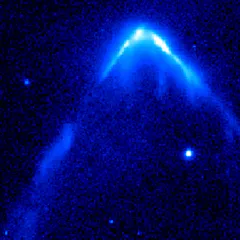
Hypervelocity stars were discovered only 15 years ago and are the closest things in existence to real shooting stars. They travel at millions of miles per hour, so fast that they can escape from galaxies.
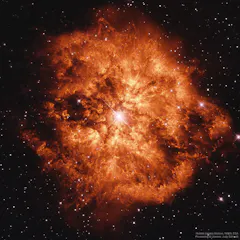
Tracing the cosmic origin of toothpaste, scientists got a glimpse into the surprising chemistry of early galaxies.
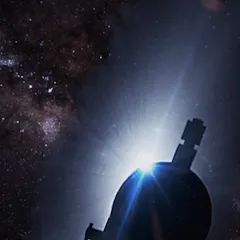
Such a mission could be developed soon, allowing astrophysicists to take selfies of the solar system and use the Sun’s gravity as a lens to peer deep into space.
Astronomers know a lot about what’s in outer space – and think it’s possible it never ends.
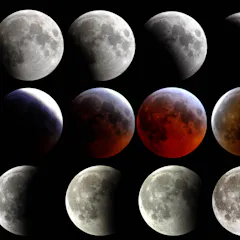
In the early morning of May 26, 2021, there will be a super blood-red lunar eclipse. The show will be spectacular and can all be explained by the orbits of the Earth and Moon.

CC BY-NC-ND7.23 MB (download)
Radio galaxies may be the oldest galaxy systems, providing clues to the evolution of galaxies.
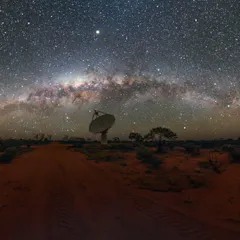
Visitors are discouraged from the remote desert location where powerful telescopes are listening to the universe.
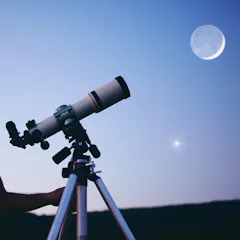
There’s an extensive range of telescopes, mounts and accessories on the market, and trying to pick from it might have you seeing stars. Here’s what the experts suggest.
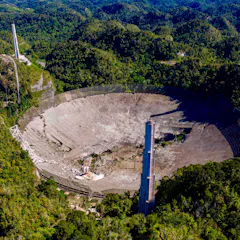
The collapse of the Arecibo Observatory in Puerto Rico was a result of financial neglect – and was a long time coming.
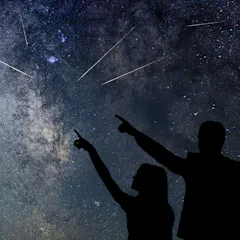
COVID-19 may have messed up school and shut down a lot of entertainment venues. But you can still brighten things up by doing a little stargazing at night, an astronomer says.
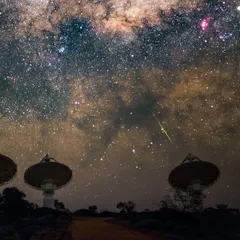
Cosmologists had only been able to find half the matter that should exist in the universe. With the discovery of a new astronomical phenomenon and new telescopes, researchers just found the rest.
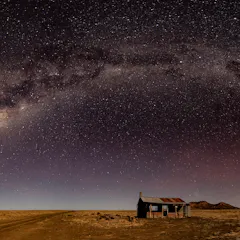
‘The size, the grandeur, the peacefulness of being in the dark’: what it’s like to study space at Siding Spring Observatory
The Conversation, CC BY54.3 MB (download)
Three hours north-east of Parkes lies a remote astronomical research facility, unpolluted by city lights, where researchers are trying to unlock some of the biggest questions about our Universe.
Top contributors
-

Associate Professor in Astronomy, Monash University
-
University Distinguished Professor of Astronomy, University of Arizona
-
Professor of Astrophysics and Royal Society University Research Fellow, University of Hertfordshire
-
Professor in High Energy Astrophyics, Adelaide University
-
Associate Professor, Japan Aerospace Exploration Agency (JAXA)
-
Assistant Professor of Astronomy and Astrophysics, University of Maryland, Baltimore County
-
Senior Astrophysicist, Smithsonian Institution
-
Senior Curator (Astronomy), Museums Victoria Research Institute; The University of Melbourne
-
SKA Postdoc in Observational Cosmology, University of the Western Cape
-
Dean of Science, University of California, Santa Cruz
-
Professor of Astronomy, UMass Lowell
-
Director of the Abrams Planetarium, Michigan State University
-
Co-Director Space Technology and Industry Institute, Swinburne University of Technology
-
Associate Dean for Research and Professor of Astronomy and Planetary Sciences, University of Arizona
-
Assistant Professor of Chemistry, Dickinson College