

Canada’s proposed new environmental assessment law is facing heated, if not necessarily well-informed, opposition. The real question is whether it goes far enough.
Articles on Trans Mountain Pipeline
Displaying 21 - 34 of 34 articles

If we continue to shut Indigenous communities out of the modern economy, critical infrastructure projects will continue to be delayed and natural resources will remain stuck in the ground.

Contrary to what some have suggested, the uncertainty over the Trans Mountain pipeline expansion will be drawn out.
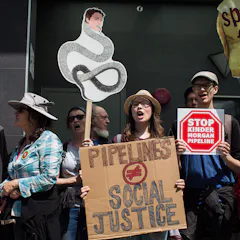
The ruling against the expansion of the Trans Mountain pipeline project doesn’t mean the end of the oil and gas industry in Canada. Other projects and approaches could go forward.
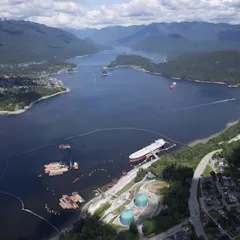
Environmentalists claimed victory when a court ruling put the Trans Mountain pipeline expansion on hold. But delaying or cancelling the project would also impact Canada’s climate change strategy.
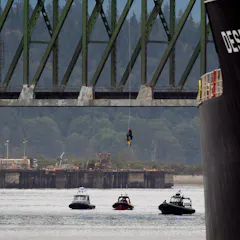
Based on the success of the Clayoquot Sound protests 25 years ago, we can expect the TransMountain pipeline expansion protest movement, and its related civil disobedience, to continue.

The “dig and dump” approach to cleaning oil and gasoline from soil is destructive. Why not nudge the soil’s natural cleaners to do the job?

When the Canadian government announced its pending ownership in the Trans Mountain pipeline expansion, it entered the complex business of pipeline infrastructure.

Canada wants to move towards a green economy and meet its Paris Agreement targets, but it has also just taken ownership of a pipeline. How can the federal government deal with this paradox?

The decision of the Canadian government to purchase the $4.5 billion Kinder Morgan pipeline expansion project doesn’t exactly instil confidence in Canada’s investment climate.

Canada has a long history of building energy pipelines against a backdrop of environmental uncertainty. Decades ago, the opposition came from local groups. Now it’s a global issue.
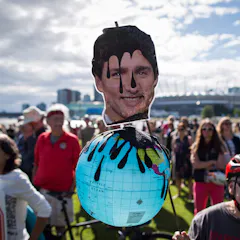
The Trudeau government’s decision to buy the Trans Mountain pipeline from Kinder Morgan is incredibly risky. Here’s why.

Alberta Premier Rachel Notley is fighting British Columbia’s efforts to stop the Trans Mountain pipeline expansion. Here’s what she’s got wrong.
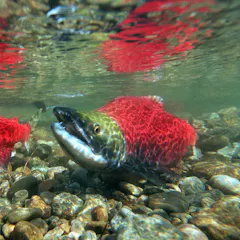
Pacific salmon are ingrained in the culture and economy of Canada. They are also a key link between ocean and land. But what happens if a pipeline failure contaminates their habitat?
Top contributors
-

Professor, Environmental and Urban Change, York University, Canada
-
Professor & Suncor Chair in Strategy & Sustainability, Haskayne School of Business; Research Fellow, School of Public Policy, University of Calgary
-
Professor of Sociology, University of British Columbia
-
Professor, Faculty of Law and School of Environmental Studies; Executive Director Environmental Law Centre, University of Victoria
-
Canada Research Chair in Regional Innovation, University of Saskatchewan
-
Associate professor, York University, Canada
-
Faculty Professor, Adult Learning, Werklund School of Education, University of Calgary
-
Professor of Political Science, University of British Columbia
-
Adjunct professor, Environment and Sustainability, University of Saskatchewan
-
Associate Professor, Forest Resources Management, University of British Columbia
-
Associate Professor in the Department of Geography, Environment, and Geomatics, L’Université d’Ottawa/University of Ottawa
-
Associate Professor, Faculty of Law, University of Calgary
-
Associate professor, University of Guelph
-
Assistant Professor, Department of Political Science, McGill University
-
Associate Professor, University of Saskatchewan