

Road counts over 16 years revealed declines in populations of birds of prey in South Africa.
Articles on Vultures
Displaying all articles

Volcanic rocks might contain much more exciting fossils than previously believed.

You might expect scavengers such as vultures to have a diet high in dangerous bacteria. Our study investigated what defences these animals have to help them stay healthy.
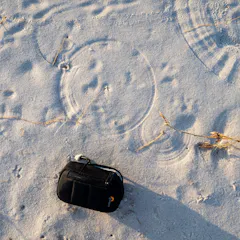
There appear to be two possible explanations for circular patterns with central depressions in Pleistocene deposits on the Cape coast.

New fossils reveal Australia was once home to a much greater diversity of huge eagles and vultures, which died off alongside ‘giant wombats’ and ‘marsupial lions’.
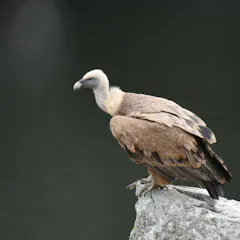
The identification of a vulture that lived more than 50,000 years ago is shedding more light on biodiversity loss and ecosystem change in Australia.
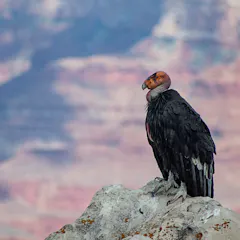
Researchers were surprised to find two female condors had managed to hatch chicks that had no fathers. But virgin birth does not seem to produce healthy birds that could strengthen the population.
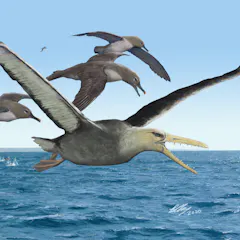
Paleontologists have discovered fossil remains belonging to an enormous ‘toothed’ bird that lived for a period of about 60 million years after dinosaurs.
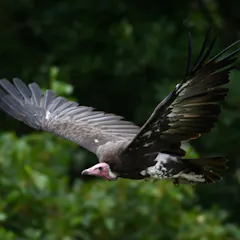
The poisoning incident in Guinea-Bissau represents a loss of around 5% of the estimated national population of Hooded Vultures, which makes up 22% of the entire global population.

Even when birds are not flying in a flock, they may observe each other to sense the world around them.
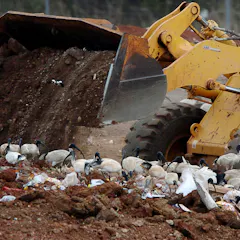
Well-intended efforts to reduce food waste could threaten some birds and animal species, a new paper has warned.
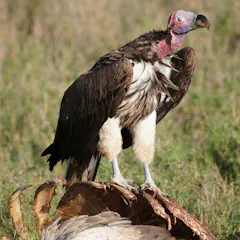
They might keep the environment clean and healthy but most species are in steep decline.
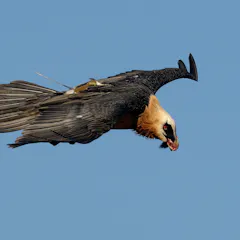
Wind farms are responsible for a large number of bird deaths. Finding a way to ensure that they can co-exist is vital.
Top contributors
-

Adjunct Associate Lecturer in Palaeontology, Flinders University
-
Associate Professor, FitzPatrick Institute of African Ornithology, University of Cape Town
-
Professor of Terrestrial Ecology, Deputy Vice Chancellor, Tropical Environments and Societies, James Cook University
-
Professor of Environmental Management, The University of Queensland
-
Research Associate, African Centre for Coastal Palaeoscience, Nelson Mandela University
-
Senior Research Scientist, South Australian Museum; Flinders University
-
Associate Professor in Vertebrate Palaeontology, Flinders University
-
Honorary researcher, Evolutionary Studies Institute, University of the Witwatersrand
-
Jenny Graves is a Friend of The Conversation.
Distinguished Professor of Genetics and Vice Chancellor's Fellow, La Trobe University
-
Conservation Biologist, Nottingham Trent University
-
Doctoral student at the Percy Fitzpatrick Institute, University of Cape Town
-
Associate Professor of Biotechnology, Mahasarakham University
-
Lecturer, Medical and Health Science Programmes, Mahasarakham University
-
Associate Professor in Immunology, Liverpool John Moores University
-
Professor, Palaeobiology, University College Cork