
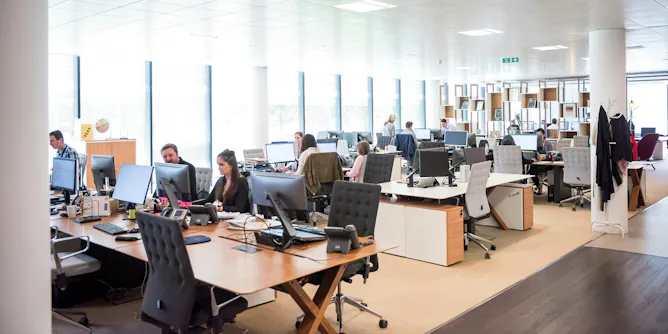
We all know poorly designed chairs cause physical strain. But here’s why poorly designed workplaces are so mentally draining.
Articles on Workplace health
Displaying 1 - 20 of 69 articles

A universal sick leave system would help Canada better manage seasonal illnesses and future outbreaks, protect economic stability and prepare for emerging crises.

Getting more physical activity at work or during commutes might make physical activity goals more feasible for working people. Here are evidence-based ways employers can help.

Return-to-work tensions reflect deeper questions about how different people work best and what modern organisations actually need to succeed.

Left unsupported, endometriosis can bring misery for the women who suffer it – and it can damage their careers and workplace wellbeing.

Understanding what is happening to the health of UK workers is key to helping more people to stay in employment.

The integration of spirituality into business has moved toward the mainstream. But is it a way for companies to gloss over systemic problems in the workplace?

Many federal employees fear they may end up in ethical binds, caught between the instructions of their bosses and their duty to serve the American people.

Leaders who promote a bit of fun in the workplace can help their employees engage and be more innovative and actually want to come to work.

As the weather warms up, offices are cranking up the air conditioning. But it may be an impossible task to find a temperature that suits everyone.

New research sheds light on the benefits of mindfulness exercises and training in the workplace.

Menstruation is a normal part of life but only a minority of workplaces have policies supporting workers who experience pain and discomfort as a result of their period.

The way jobs are structured affects employee mental health, an analysis of more than 18,000 workers shows.

Acknowledging that factors like the built environment, social and health systems, and outdated policies are the problems — rather than people — is a step towards healthier and safer workplaces.

Employers have a duty to address work stressors and make adjustments for workers with long-term illnesses.

Menopause can be a key factor in some women’s decision to retire early. But with the right interventions, workplaces can enable women to manage their symptoms and remain in the workforce.

This Labour weekend we celebrate the eight-hour workday. But with technology blurring the line between job and home, we need to ask why our workplace law hasn’t kept pace with other countries.

The work environment is a social determinant of health. However, work has been underused as a lever to address health inequalities.

Our research shows office noise increases the likelihood of people wanting to reclaim ‘personal space’, along with antisocial behaviour and disagreements.

Much of the knowledge firms can access about supporting employee mental health is based on the experience of large organisations with significant resources.
Top contributors
-

Associate Professor of Organisational Behaviour, Bond Business School, Bond University
-
Professor and ARC Future Fellow, Monash University
-
Senior Scientist, Institute for Work & Health. Professor, Dalla Lana School of Public Health, University of Toronto
-
Adjunct professor, Department of Family Medicine & Department of Psychology and Neuroscience, Dalhousie University
-
Assistant Professor, Dalla Lana School of Public Health, University of Toronto
-
Professor of Psychological Medicine, BMRI & Disciplne of Psychiatry, University of Sydney
-
Adjunct Professor, Department of Obstetrics and Gynecology, Faculty of Medicine, Dalhousie University, Mount Saint Vincent University
-
Lecturer and Program Coordinator, Adelaide University
-
Senior Lecturer, School of Aviation, UNSW
-
Research Officer, Monash University
-
Program Coordinator, Arthur Rylah Institute for Environmental Research
-
Senior Deputy Dean, UNSW Business School, Co-DVC Equity, Diversity and Inclusion, UNSW
-
Professor, Construction Occupational Health and Safety, RMIT University
-
Laureate Professor in Nutrition and Dietetics, University of Newcastle
-
Associate Professor in Urban Ecology and Urban Horticulture, The University of Melbourne