
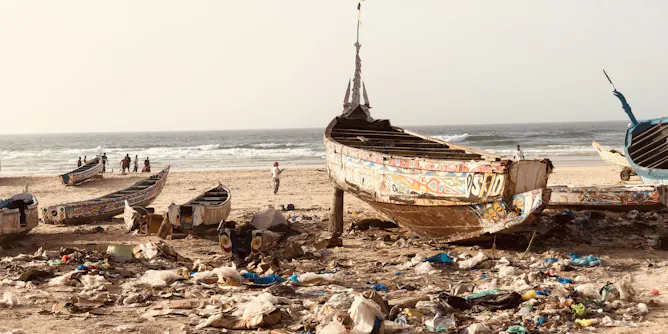
Initiating a circular economy can help coastal west African countries to address plastic pollution with a World Bank fund.
Articles on World Bank
Displaying 41 - 60 of 206 articles
A single International Finance Corporation project, on average, causes 7.6 additional armed conflict events in the year after it is introduced.
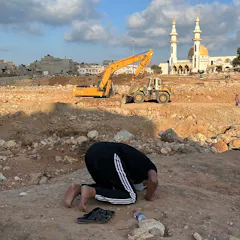
Rich polluters have evaded any notion of compensating poor countries at the UN talks.
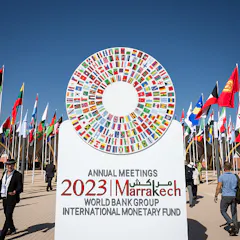
The World Bank and IMF need to continue evolving if they are to remain fit for purpose in the 21st century.

Many people in Gaza are reliant on the United Nations and other international aid groups to meet their basic needs, like food and medical care. A scholar of peace and conflict economics explains why.
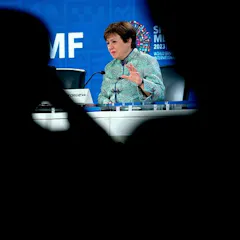
Many sources of finance, including those from the World Bank and IMF, don’t adequately cater for African nations’ specific needs.

The disparate nature of the six prospective members is bound to spark debate about the real nature of Brics.
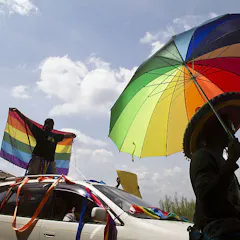
The challenge is to ensure that the bank is making decisions on a principled and predictable basis.
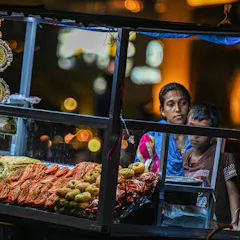
Almost two-thirds of low-income countries are at risk of debt distress – in part because of higher borrowing costs. And that isn’t the only problem.
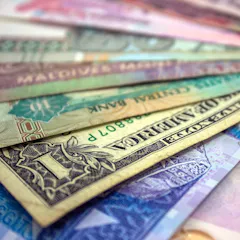
This week’s summit for a “New Global Financing Pact” will look to secure some much-needed climate cash for developing countries, while ensuring their debt remains manageable.
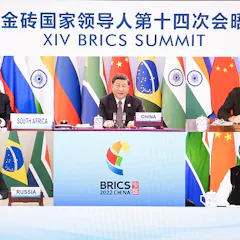
Geopolitics is forcing BRICS countries to balance respect for international law, self-determination, sovereignty and peaceful resolution of disputes with their friendly relations with Russia.
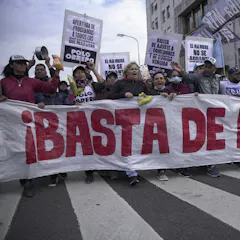
The conditions placed on countries borrowing money from the International Monetary Fund have further disadvantaged these countries economically.

Alongside the global economic outlook, Russian supply and Chinese demand are contributing to ‘a cocktail of uncertainty’ for oil prices.
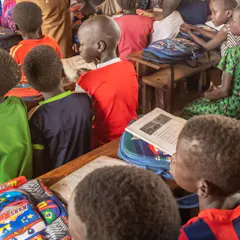
Ethiopia’s unmet refugee education reforms highlight the ways in which bureaucratic structures and interests can shape policy.
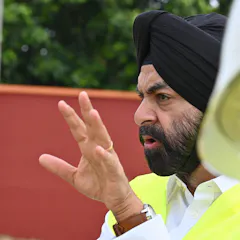
It’s a crucial time for the World Bank, with growing calls for reform and sky-high expectations of what one leader needs to do. A former World Bank official explains the challenges ahead.
Thirty years ago the World Bank recognised that its position was untenable. It put in place mechanisms to make the bank more accountable to ordinary people.
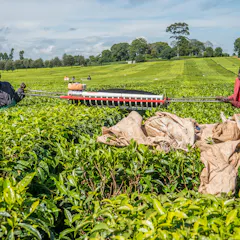
Average farm machinery use in Africa is among the lowest in the world.
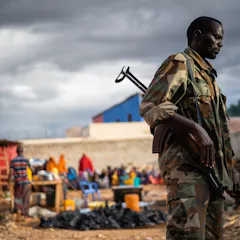
The negative effects of conflict on human capital – particularly nutrition, health and education – are larger than commonly thought.
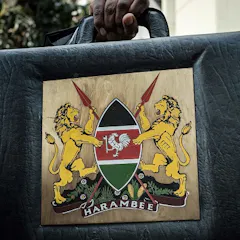
William Ruto is determined to reduce public debt by collecting more taxes to pay for what the country needs.
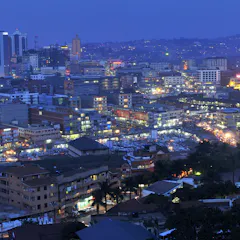
East Africa is one of the fastest urbanising regions in the world, but it’s still in the early phases. There’s a big opportunity to get the region’s cities right.
Top contributors
-

Professor/Senior Research Fellow, Centre for Advancement of Scholarship, University of Pretoria
-
Post Doctoral Researcher, Graduate School of Business (GSB), University of Cape Town
-
Professor of Practice in Climate Policy, University of Oxford
-
Professor of Political Economy, University of the Witwatersrand
-
Professor of Economics & Business, Allegheny College
-
Professor of Law, American University
-
Professor of International Business Strategy & Emerging Markets at the University of Sussex Business School, and the Graduate School of Business, University of Cape Town
-
Associate Professor of Economics, Indiana University
-
Dean of Business School, University of Southern Queensland
-
Professor in The Division of Global Affairs and The Department of Political Science, Rutgers University - Newark
-
School of Social Sciences, Monash University
-
Professor, Faculty of Business and Management Sciences, University of Nairobi
-
Research associate at African Centre for Cities, University of Cape Town
-
Associate Professor of Business, Boston University
-
Professor of International Law, University of Pretoria