

Lockdown and active shooter simulations look and feel very different, though people often lump the two practices together.
Articles on K-12 education
Displaying 1 - 20 of 445 articles
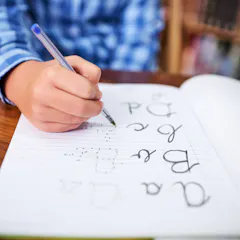
More than 25 states require students to learn to read and write in cursive.

New research shows that YouTube is used not just as an occasional supplement, but as a staple of classroom instruction.
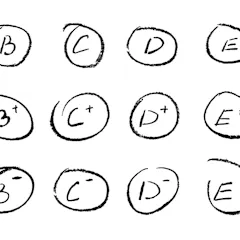
“No-zero” grading policies are becoming more common in US schools. South Carolina is the first state to ban these policies.

Instead of schools trying to replace teachers with AI, teachers could use AI to become better educators.
As schools consider AI guidelines, educators are also thinking about how they can adjust their assignments to accurately measure what students are actually learning.
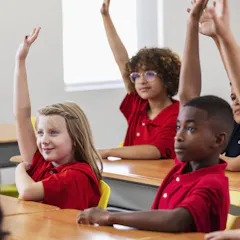
What has the Sunshine State learned from 27 years of school choice?
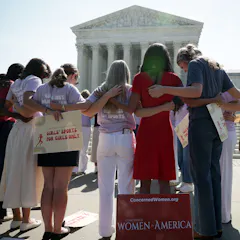
The Supreme Court’s rulings on Little v. Hecox and West Virginia v. B.P.J. focused on transgender students participating on sports teams, but likely has broader implications.

American courts have heard cases over the Bible’s role in classrooms for more than a century. Whether lessons are constitutional depends on their purpose.

Parents and educators sometimes avoid having conversations about grief with children because they don’t know what to say. Here are some tips for how to approach it.

Over 60% of middle and high school students we surveyed from 2021-2024 said they wanted to be social media influencers, or picked their future careers online.
New research shows that for every 10 boys identified with autism, only about two girls in a comparable situation were identified.

Homeschooling trends are on the rise, bucking the narrative that most of its growth was caused by the pandemic.

New research suggests that bullying prevention work should address the broader classroom environment, not just students’ individual characteristics and behaviors.
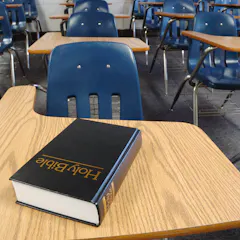
American courts have legislated the Bible’s role in classrooms for more than a century. Whether it’s constitutional depends on the aims of teachers’ lessons.

There are many literacy textbooks available but no clear way to determine which ones are the best – and most likely to turn kids into better readers.

Interviews with parents of students with disabilities show that children were often physically restrained and secluded at school for nonviolent offenses.

School boards have gained attention for taking on controversial issues, such as transgender students participating in sports, but much of their work is administrative.

The Heritage Foundation released a policy document in February 2026 that spells out how states can try to challenge a 1982 Supreme Court ruling that enshrined immigrant students’ right to attend school.

Some new findings show that AI has certain benefits, such as reducing barriers for students with learning disabilities. But overall, more evidence is needed to understand how AI influences learning.
Top contributors
-

Joseph Panzer Chair in Education and Research Professor of Law, University of Dayton
-
Associate Professor of Educational Leadership and Policy, University of Florida
-
Professor of Educational Leadership and Policy Studies, Wayne State University
-
Professor of Criminal Justice, Metropolitan State University
-
Professor of Criminal Justice, Hamline University
-
Professor of Political Science, Fordham University
-
Professor of Law, University of South Carolina
-
Professor of Management, University of North Carolina – Greensboro
-
Dean of College of Education and Human Development, University of Missouri-Columbia
-
Assistant Professor of Educational Leadership, University of Florida
-
Professor of Sociology, Rowan University
-
Professor of Education, University of Southern California
-
Director, Institute for Social and Health Equity, University at Albany, State University of New York
-
Professor of Practice in Education, Clark University
-
Assistant Professor of Educational Leadership, Binghamton University, State University of New York