

Artificial intelligence is attracting attention for its potential to deepen our understanding of climate risks and inform our responses.
Home – Articles, Analysis, Comment
Displaying 51 - 75 of 10681 articles

If we want to teach writing students to engage with AI chatbots ethically and responsibly, we need to first consider what we mean by “ethical.”

Atlantic Canada’s experiences show that reducing international student numbers is not enough to judge whether a policy works. Its impacts on universities, students and communities matter too.

While Below may have some things wrong — giant squid probably aren’t vindictive, for example — a Newfoundland ocean sciences expert praises the Netflix show for stoking an interest in the deep sea.

A compelling imitation, Aristotle argues, is delightful because we love to learn, and imitation teaches us. Is this why droves of people are going to cinemas to watch an almost three hour-long documentary?

Budget 2026 offers targeted relief to low-income households, but its biggest tax incentive rewards business investment in the hope of future growth.

When it comes to Canada’s progress on poverty alleviation, the 2026 federal Budget isn’t helping. It privileges corporate welfare over the needs of Canadians who are struggling with poverty and food insecurity.

Albert Einstein declared time to be an illusion. Modern cosmologists disagree.

After a decade of rage politics, voters in very different countries seem to be reaching again for competence and something closer to normal.

Aging in place means more than asking older adults where they want to live. Communities and governments must provide supports as needs change.

For communities encountering silencing in the wake of forced famine or mass atrocity, the ongoing battles over Holodomor recognition and remembrance offer insight.

Canada’s manufacturing revival depends on skilled immigrant workers, yet tariff-related layoffs and policy gaps are pushing many out of the sector.

Post-referendum, Alberta Premier Danielle Smith seems focused on a united Canada and attempting to stop the NDP’s surge in popularity. But attempts to gerrymander ridings are the newest controversy.
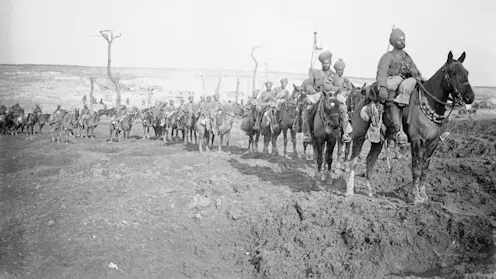
The ‘tears of womenfolk’ in Punjab became the biggest hurdle to military recruitment by December 1924, according to colonial officials.

How the ‘super’ El Niño could trigger a polycrisis: interconnected failures that neither the energy system nor the health-care system can prepare for alone.

New research suggests Canadian opposition to the carbon tax was based on misinformation, partisan politics and serious misconceptions about how much it was costing them at the pumps.

Ending paywalls for Canadian research is a public win. But until funders cap commercial publishing fees, taxpayer money will keep fuelling publisher profits.
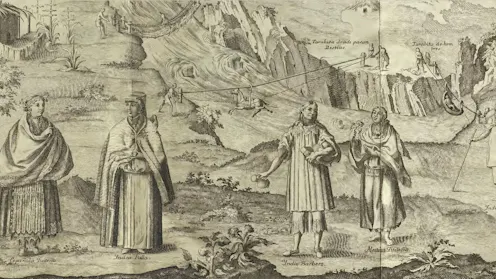
Kant called Indigenous Peoples of the Americas ‘incapable of any culture.’ The source he cited tells a different story, questioning how we read classic authors.

There’s material in Cohen’s contemporary psalms for every human experience, including lament, complaint, joy, doubt, adoration and desperation.

The sociological concept of ‘risk positions’ helps explain why those who profit from risky technologies often aren’t the ones who bear its consequences.

‘World models’ are an emerging technology that could help AI systems anticipate what might happen and use that to act. This is not the same as human ‘thinking.’

The recent Parti Québecois victory is more akin to detecting a faint pulse in a terminally ill patient than a spectacular jolt back to life.

The Art Gallery of Ontario’s ‘Sunday Best’ gathers a century of Black style, from churches to ballrooms, and reveals dressing well as an ethic of dignity and care.

Maintaining the immune system is about maintaining balance — not about supercharging its functions and abilities.

The link between between this transition and mental health is real but more complicated than the ‘meno-boom’ suggests.