

Earth is crossing the 1.5°C limit outlined in the Paris Agreement, beyond which scientists predict catastrophic harm to systems supporting life on our planet.
Articles on 1.5C
Displaying all articles

The answer will determine how hot the planet gets this century.

The usual ‘pre-industrial’ baseline already contains some human-caused warming. Our method uses a much earlier baseline.
Climate scientists call for global leaders to double down on efforts to cut emissions with their full attention and unwavering commitment at the UN’s climate summit, Cop29.
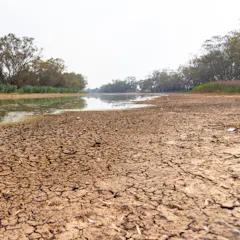
On land, Australia has already passed 1.5°C of warming, bringing lower streamflows, more fire weather and marine heatwaves.
Surpassing 1.5°C of warming can be undone at a later date – using tech, land and resources that don’t exist.
Emissions pathways act as a map of the future, showing us how to get from where we are to where we want to be.
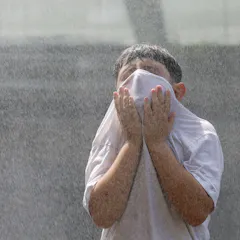
The global average temperature could continue to hover around 1.5°C for several years.
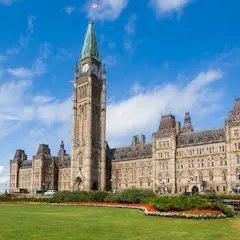
We must resist the temptation to go for a weak 2035 target and use the public consultation process to think creatively about how the net-zero transition can be both transformational and fair for all.
Top contributors
-

Professor of Physical Climate Change; Director of the Priestley Centre for Climate Futures, University of Leeds
-
Professor of Ocean and Earth Observation, University of Reading
-
Climateworks Centre Country Lead, Australia, Monash University
-
Policy Manager (Energy), Climateworks Centre
-
Policy Coordinator - Australia, Climateworks Centre
-
Associate Professor of Political Ecology, Lund University
-
Associate Professor of Human Ecology, Lund University
-
Chief Research Scientist, CSIRO Environment; Executive Director, Global Carbon Project, CSIRO
-
Senior Research Scientist, CSIRO
-
Lecturer, Lancaster Environment Centre, Lancaster University
-
Professor of Climate Science, University of Reading
-
ARC Future Fellow and Associate Professor in Climate Science, ARC Centre of Excellence for 21st Century Weather, The University of Melbourne
-
Assistant Professor, Lincoln Alexander School of Law, Toronto Metropolitan University
-
PhD Candidate, The University of Melbourne