

New mathematical modelling shows the first smallpox epidemic among Aboriginal people in the Sydney region may have spread thousands of kilometres and lasted decades.
Articles on Aboriginal history
Displaying 1 - 20 of 112 articles

The tools reveal how Aboriginal ancestors survived and thrived in the continent’s interior more than 100 years ago.

New research details Aboriginal craftsmanship – along with accompanying wall art – at a remote site in the Cape York Peninsula.

Barak was an Aboriginal leader who witnessed the signing of the controversial 1835 Batman Treaty. He made many works during his life, but many are unaccounted for.

Thousands of years ago, adults and children left their marks on soft rock surfaces deep in this cave in GunaiKurnai Country.

In an extract from her new book, Narungga poet and researcher Natalie Harkin reveals intimate truths about the shameful history of Aboriginal domestic labour.

New research indicates Dargan Shelter was occupied as early as the last Ice Age and repeatedly visited during this cold period.

Coronial findings into the disappearance of Dhäkiyarr Wirrpanda were handed recently – 91 years after he was last seen.

Archaeologists and Wurundjeri Woi-wurrung people are shedding new light on a series of enigmatic earth rings located in southeastern Australia.

By limiting the syllabus to events post-1788, the NSW Education Standards Authority indirectly sends students the message that Australia’s ‘history’ began at colonisation.
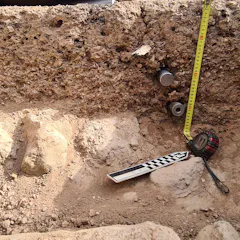
Our research at the site – which was traditionally restricted to women – has also uncovered tools previously only associated with male crafters.

Many First Nations celebrate the time when boats from across the Indonesian archipelago were not intercepted by Australian authorities.
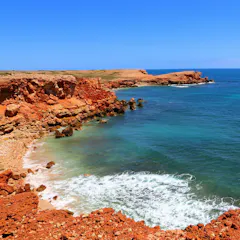
Barrow Island off the coast of Western Australia holds a unique record of First Nations people. For millennia, they lived on vast plains that are now drowned by the sea.

For a decade, debate has raged over Dark Emu’s account of Aboriginal agriculture. But ancient food production in Australia is more complex than labels like farming or hunter-gathering suggest.
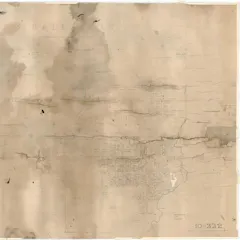
The river wasn’t merely a physical entity – it was a symbol of spiritual and cultural significance, serving as the life force which flows through Country.
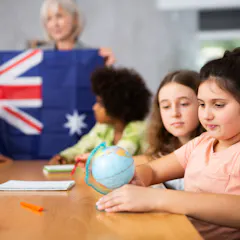
For over 100 years, the Victorian school curriculum has failed to give generations of students the chance to learn about Indigenous political movements.
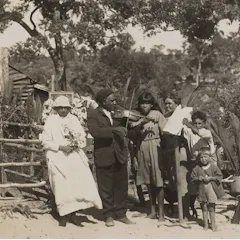
Western music was often taught to Aboriginal people as preparation for assimilation into white Australian society – but Aboriginal people continued to play the violin even when not prescribed.
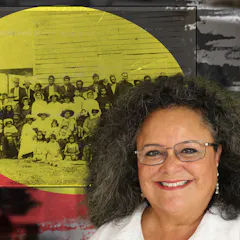
When Shauna Bostock began researching a book on her family, she thought it would be limited to her Aboriginal ancestry. But then a late-night phone call led her down a surprising path.
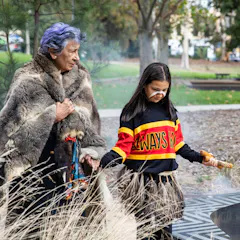
Non-Indigenous Australians need to actively seek the truth about past violence and injustice against Indigenous Australians.
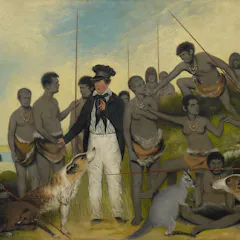
The office of the Protector of Aborigines was established in an effort to hear to the ‘wants, wishes and grievances’ of Aboriginal people. It failed almost immediately.
Top contributors
-

Professor of Archaeology and Biological Anthropology, School of Social Science, The University of Queensland
-
Sean Ulm is a Friend of The Conversation.
Director, ARC Centre of Excellence for Indigenous and Environmental Histories and Futures, James Cook University
-
Distinguished Professor, Charles Sturt University
-
Laureate Professor in Archaeology, The University of Western Australia
-
Professor, School of Humanities, Languages and Social Science, Griffith University
-
Professor, Director of Centre for Rock Art Research + Management, The University of Western Australia
-
Matthew Flinders Professor of Global Ecology and Node Leader in the ARC Centre of Excellence for Indigenous and Environmental Histories and Futures, Flinders University
-
Sir John Monash Distinguished Professor, Monash University. Deputy Director ARC Centre of Excellence for Indigenous and Environmental Histories and Futures, Monash University
-
Research scientist, Griffith University
-
Professor in History, University of Tasmania
-
Michael Bird is a Friend of The Conversation.
JCU Distinguished Professor, ARC Centre of Excellence for Indigenous and Environmental Histories and Futures, James Cook University
-
Partner Investigator, ARC Centre of Excellence for Indigenous and Environmental Histories and Futures, James Cook University
-
Senior Research Fellow, Indigenous Land & Justice Research Group, UNSW
-
Professor of Evolutionary Biology, Griffith University
-
ARC Future Fellow, La Trobe University