

As sea ice melts, more of the Arctic Ocean opens up. A former ambassador explains how this treaty creates time for scientists to figure out what lives there.
Articles on Arctic Ocean
Displaying 1 - 20 of 35 articles

Human activity from ships, snowmobiles, machinery and aircraft is contributing to making Arctic waters louder.

A polar scientist explains the changes hunters who rely on the ice are seeing off Utqiagvik, and how those shifts are echoed in satellite data and climate models.

As the Arctic Ocean loses sea ice due to climate change, fisheries access is increasing and large-scale exploitation is on the horizon. Here’s how to manage the uncertainty and the risks.
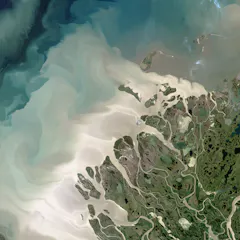
A new study shows how thawing permafrost and intensifying storms will change how water moves into and through Arctic rivers.
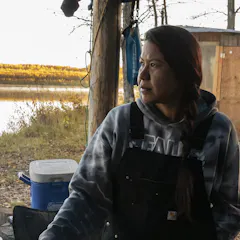
The early heat melted snow and warmed rivers, heating up the land and downstream ocean areas. The effects harmed salmon fisheries, melted sea ice and fueled widespread fires.
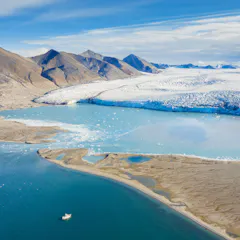
To fully understand the extent of climate-related dangers the Arctic – and our planet – is facing, we must focus on organisms too small to be seen with the naked eye.

A short history of predicting an ice-free Arctic – and why you should listen to this one.
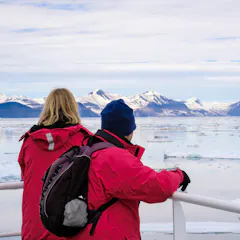
Arctic sea ice algae contaminated with microplastics have serious consequences for ecosystems and the climate.

By analyzing small samples of killer whale fat, scientists can learn about the diets of different killer whale populations. This has implications for our understanding of changing ecosystems.

A particularly stormy winter has pushed perennial sea ice into the Arctic melt zone.

Russia is attempting to claim more of the Arctic seabed, an area rich in oil, gas and minerals. It’s also expanding shipping and reopening Arctic bases. Here are two things the U.S. can do about it.
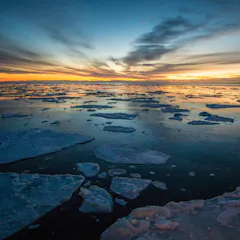
A transcript of episode 5 of The Conversation Weekly podcast, including stories on the Arctic Ocean and new archaeological finds in Tanzania’s Olduvai Gorge.

Plus, new discoveries about early humans in Tanzania’s Olduvai Gorge. Listen to episode 5 of The Conversation Weekly podcast.
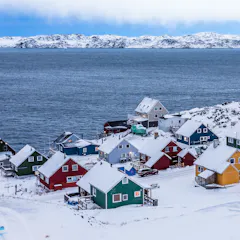
Microplastic pollution is a global issue, but where do they come from and how are they transported across the ocean? A new study finds polyester microfibres are common throughout the Arctic Ocean.

Whales are rediscovering their old haunts in the Arctic and Southern oceans after centuries of hunting.
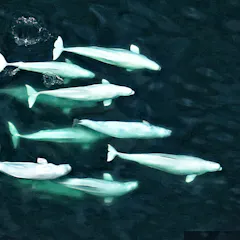
Belugas use sound to communicate, navigate the dark marine environment and find food. But climate change is opening up Arctic waters to more sound, and could affect the health and survival of belugas.
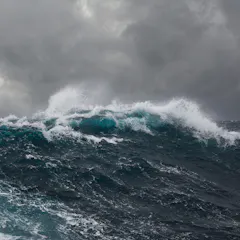
Oceans 21 is a Conversation international series examining the history and future of the world’s ocean.
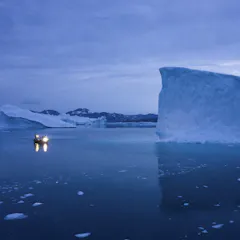
The Arctic has been a remote place for much of its history. But climate change is bringing global problems and opportunities to its door.

The Laptev Sea is one of the Arctic’s biggest nurseries of new sea ice in winter, but Siberia’s record summer heat may have halted production.
Top contributors
-

Professor of Physical Oceanography, Bangor University
-
ARC Future Fellow in Marine Ecology, The University of Western Australia
-
Vice Dean for Research, Arctic and Marine Biology, University of Tromsø
-
Lecturer, College of Humanities, University of Dar es Salaam
-
Professor of Glaciology and Earth Observation, University of Bristol
-
Associate professor and Research Chair in Marine Fisheries Ecosystems Dynamics, Memorial University of Newfoundland
-
Director of Humanities Research Centre and Senior in the Department of Archaeology and Heritage Studies, University of Dar es Salaam
-
Professor of Anthropology and Archaeology, University of Calgary
-
Research scientist in physical oceanography, Ifremer
-
Professor emeritus, School of Earth, Atmosphere and Environment, Monash University
-
Senior Lecturer in Physical Oceanography, Bangor University
-
Postdoctoral research fellow, Department of integrative biology, University of Windsor
-
Adjunct Assistant Professor, School of Earth and Ocean Sciences, University of Victoria
-
Postdoctoral Researcher in Marine Ecology and Climate-Impact Sciences, Memorial University of Newfoundland
-
Associate professor, Singapore Management University