

Botswana has significantly expanded income support for older people but it’s left them without the care they need.
Articles on Austerity
Displaying 1 - 20 of 290 articles

Argentina’s firebrand president – and his programme of austerity – face an even tougher electoral test in October.

Austerity sounds like it should be about governments cutting costs and spending less. But it’s more about who controls ever-expanding public spending – and who doesn’t.

Keir Starmer is right to highlight the decline of social cohesion, but wrong about the reasons for it.

Austerity has become the global default response to tough economic times. But New Zealand should be prioritising investment over cuts to foster long-term growth.

The UK tax system is still heavily based on earnings from work, but household wealth is now six times GDP.

Recent research shows labour markets are slower to bounce back from the effects of austerity than economists previously assumed.

A new book outlines the ways in which austerity has been the biggest driver of shorter life expectancy in Britain.

Despite interest rates coming down, New Zealand’s economy is being pushed further into recession by government austerity measures. Basic macro-economic analysis shows why.

Spending to rebuild would be the politically sound move at this juncture.

Children are becoming poorer in the UK – more so than in other countries.

Deregulation, cost-cutting and outsourcing were not ‘failures’ of government, but flagship policies that were carefully planned and coordinated.

Austerity means choosing not to invest in citizens, contrary to the mandate of South Africa’s constitution.
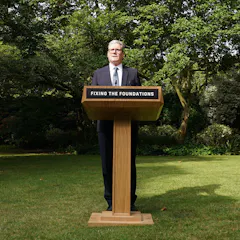
The prime minister is preparing the ground for a difficult budget but blaming his predecessors will only get him so far.

Rampant inflation and stagnant wages have led to a record low in the level of Argentina’s beef consumption.

Both major parties have pledged to increase recruitment to England and Wales’s police forces. But more needs to be done to rebuild trust with communities.

The next government should restore the value of benefits to cover the costs of living.

Austerity Britain has translated into worse lives for many people: tougher working conditions, minimal statutory services and a retraction of the local state at a time when people need it.

Ever since the welfare state was established in 1948, Britain’s elected leaders have grappled with how to pay for and deliver social care.

In my view, Sunak’s plan positions young people as a problem.
Top contributors
-

Professor Emeritus of Economics, SOAS, University of London
-
Halford Mackinder Professor of Geography, University of Oxford
-
Professor of Economics and Political Economy, University of Leeds
-
Professor of Management, University of Essex
-
Senior Lecturer in Economics, University of Sheffield
-
Senior Lecturer in Politics, York St John University
-
Emeritus Professor of Economics, and Emeritus Fellow of Merton College, University of Oxford
-
Associate Professor in International Macroeconomics, Cambridge Judge Business School
-
Professor of Applied Economics, Massachusetts Institute of Technology (MIT)
-
Associate Professor in Economic Policy, UCL
-
Professor of Citizen Participation, University of East Anglia
-
Professor of Economics, University of Aberdeen
-
Senior Lecturer in Economics, The Open University
-
Honorary Professor, Department of Economics, University of Stirling
-
Professor of International Relations, Australian National University