
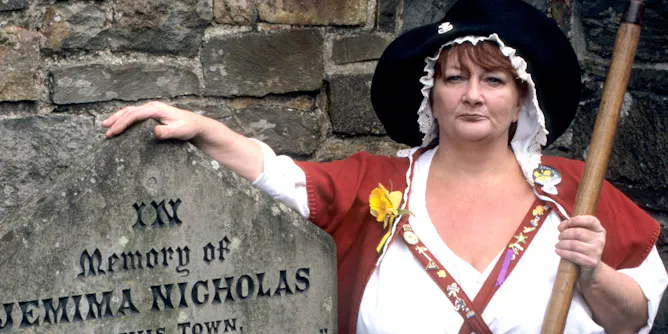
The last invasion of Britain involved bungled military plans, sozzled soldiers and a legendary Welshwoman wielding a pitchfork.
Articles on British history
Displaying 61 - 80 of 159 articles
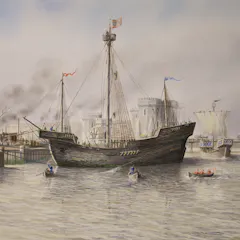
The Newport medieval ship is the most complete section of a 15th-century European vessel discovered to date.
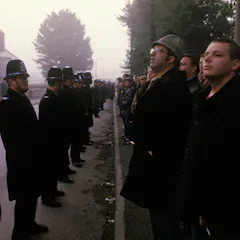
Workers have gradually lost all powers to take industrial action when they feel conditions are unfair.

In the Charitable Corporation Scandal, a group of politically connected directors leveraged the company’s altruistic image to attract investors – before raiding the funds to prop up other ventures.

By the fourth festive season into the war, rationing was biting – but good news from the front and the generosity of US soldiers helped keep morale buoyant.

Many still speculate about what George Canning would have achieved had he not died 119 days into his premiership.
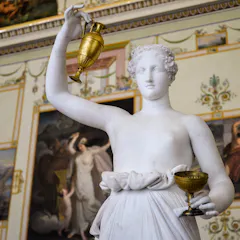
Western fashion, laundering and style reflected the racialized politics dramatically shaped by profound global transformations bound up with slavery, colonialism and modernization.
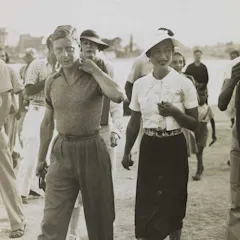
A cautionary tale for the UK press .
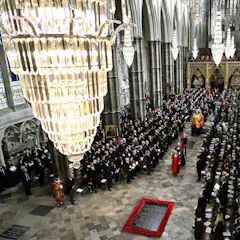
A scholar of British history explains how the ornate church and its significance to the monarchy have changed over centuries.
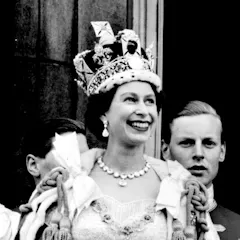
Other queens were just teenagers when they ascended the throne.
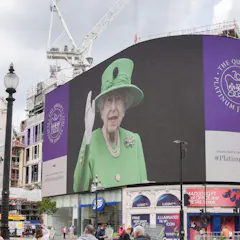
Britain has gone through unimaginable change culturally and politically during Elizabeth’s 70-year reign.
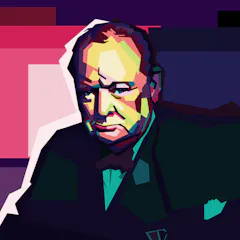
Tariq Ali’s scathing new book assessing Winston Churchill’s life and legacy paints him as a racist opportunist but overstates Churchill’s enduring influence on politics today.
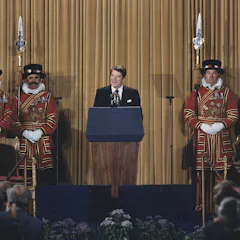
Reagan was the first US president to address the UK parliament. What he said still carries weight for Anglo-American relations decades on.
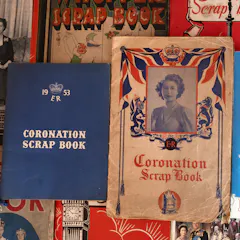
Scrapbooks on the Royal Family are more meaningful objects for our families, and our own communities, than we might first expect.
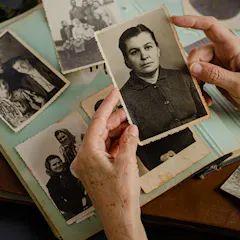
Understanding how our ancestors may have benefited from industrialisation and colonialism could help us become more climate-friendly citizens.
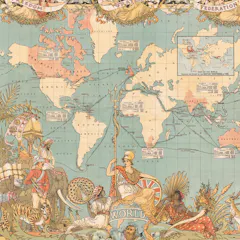
From the tax we pay to the wine we drink, many policies in Britain today have their roots in imperialism.
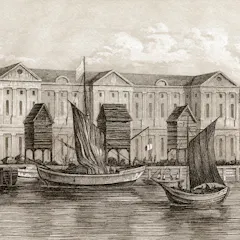
Warring countries have ben imposing sanctions on their enemies for hundreds of years. They have met with mixed success.
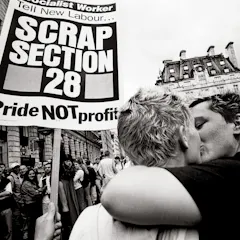
Opposition to the controversial law reflected the British national character, reminiscent of comedies like the Carry On films.
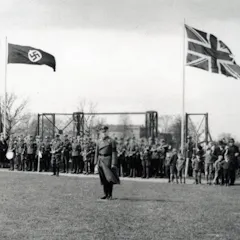
Even after the notorious Kristallnacht pogrom in 1938, some headmasters thought pupil exchanges with Nazi Germany were a good idea.
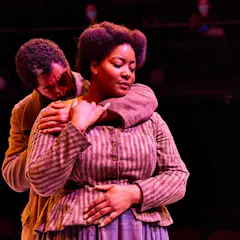
Black British women have been staging plays in recent years about Britain’s role in slavery, a history the country is too eager to forget.
Top contributors
-

Principal of South College, Durham University
-
Senior Lecturer in Contemporary British History, Newcastle University
-
Senior Lecturer (Associate Professor) in Political Communication, University of Liverpool
-
Lecturer in Politics, Edge Hill University
-
Emeritus Professor of Roman Archaeology, University of Birmingham
-
Lecturer in Intelligence and Security Studies, Brunel University of London
-
Visiting Fellow in History, Anglia Ruskin University
-
Professor of History, The Open University
-
Professor of History & Director of the Dresher Center for the Humanities, University of Maryland, Baltimore County
-
Associate Professor in History of Art, University of Nottingham
-
PhD Researcher (Conceptual History of Meritocracy), University of Nottingham
-
Researcher in Early Modern History, University of Southampton
-
Professor of Organisation Studies, University of Bristol
-
Lecturer in eighteenth-century history, The Open University
-
Senior Lecturer in History, University of Aberdeen