
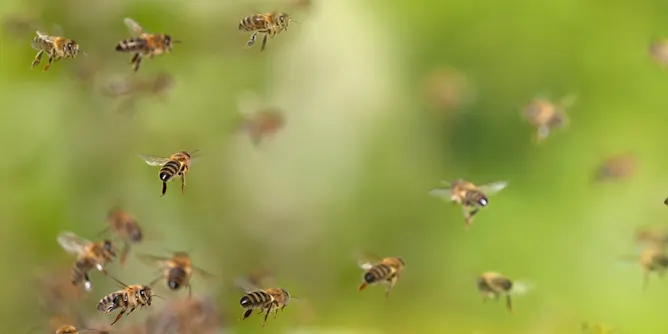
Ahead of world bee day on May 20, the author looks at how other animals rely on bees for food and shelter and even transport.
Articles on Bumblebees
Displaying 1 - 20 of 24 articles

The ability of queen bumblebees to breathe and survive underwater could play an important — and previously overlooked — role in the resilience of threatened bee populations.
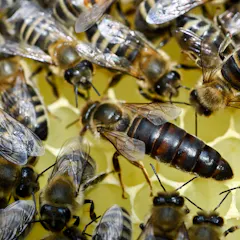
A queen’s main job in the hive is to lay eggs and pass genes on to offspring. But many bee species do just fine without queens or big colonies.
Studies have struggled to capture how pesticides affect bees outside of a lab.
Inert ingredients are added for purposes other than killing pests and are not required under federal law to be tested for safety or identified on pesticide labels.
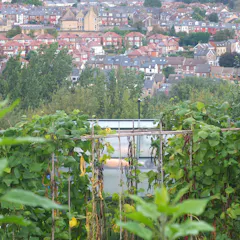
Maintaining a diversity of insects may be key for crop pollination in cities.
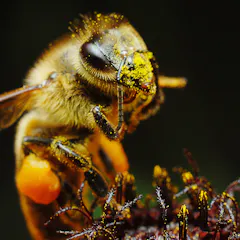
We all know bees are vital pollinators. But they’re also art critics, social learners, dancers and so much more.
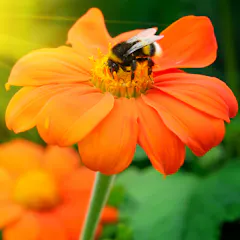
Seventy-two per cent of native bumblebee species in North America are cutting their winter hibernation short by timing their emergence to earlier spring onsets.
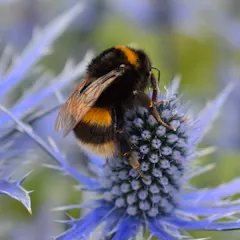
We take it for granted that we can compare multiple memories when faced with a tough choice. But not every animal’s mind works that way.
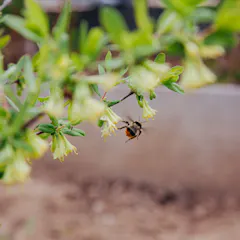
Up to 85% of the nectar available to pollinating insects in a city comes from gardens. What we plant – whether in an allotment or a window box – can make a huge difference.
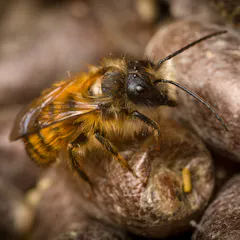
First ever feeding experiments reveal that solitary bees need to carb-load – and can be picky when it comes to dieting.
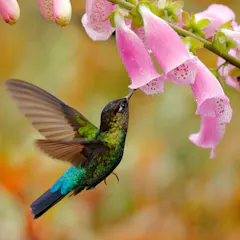
We studied how foxgloves taken to the Americas less than 200 years ago have changed compared to natives in Europe.
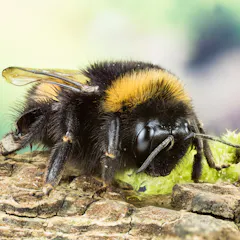
Chemicals banned in the EU were recently granted an exemption for limited use in the UK.

While long-term exposure of lower levels of radiation for wildlife around Chernobyl is still being debated, new research provides insight into the effects on bumblebee populations.
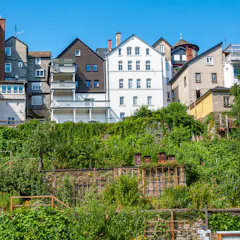
Urban green spaces can be a rich habitat for diverse pollinators, if they’re managed properly.
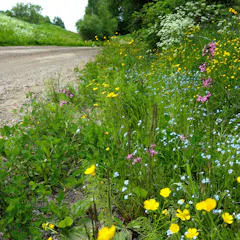
Temporary reductions in carbon dioxide during the pandemic won’t turn the tide on climate change or biodiversity loss, but summon the need for action.

One bee may lay thousands of offspring in late spring. Give her room to build a nest and manage her reproductive duties.

‘Bee-washing,’ marketing claims that purport to help bees, can diminish the important distinction between a honey bee and native bee.
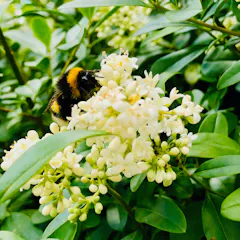
A new study has found that European and North American bumblebee populations have shrank by a third since 1970.
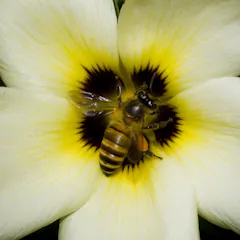
Bees innocuously buzzing ‘round the birdbath may be a barometer for burgeoning bee invasions.
Top contributors
-

Associate Professor in Ecology, Northumbria University, Newcastle
-
Lecturer in Ecology, University of New England
-
Ph.D. Candidate, School of Environment and Forest Sciences, University of Washington
-
Postdoctoral fellow, University of Guelph
-
Associate Professor in Entomology, University of Sydney
-
PhD Candidate in Conservation Biology, L’Université d’Ottawa/University of Ottawa
-
PhD Student in Animal Psychology, Queen Mary University of London
-
Professor of Ecology, University of Bristol
-
Research Affiliate in Human Ecology, University of California, Davis
-
Postdoctoral Research Fellow, University of Texas, at Austin, The University of Texas at Austin
-
Senior Lecturer in Zoology, University of Hull
-
Lecturer, School of Life and Environmental Sciences, University of Sydney
-
Research fellow, Lund University
-
Senior Research Fellow, Centre for Biodiversity and Environment, UCL
-
Post-doctoral Research Assistant in Molecular Ecology, Aberystwyth University