
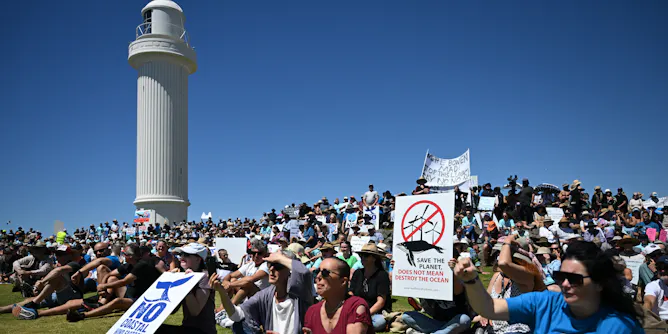
Australia’s clean energy transition cannot succeed unless the government opens debate and decision-making to many more voices.
Articles on COP27
Displaying 1 - 20 of 101 articles
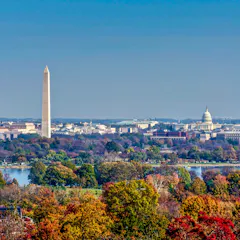
Research shows cities are delivering on their climate pledges. More than mayors, the real force behind these local transitions are nonprofit organisations.
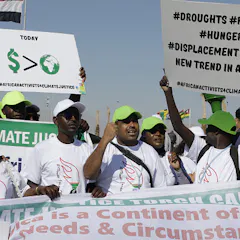
Kenya, Malawi, Gabon, Nigeria and Togo are already interested in scaling carbon credit production.

Has climate action bogged down? Hardly. Nations are redoubling their efforts in visible and less visible ways.
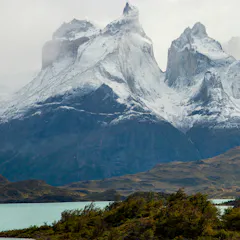
Mountain environments are rich in plant and animal species, but the dual threat of human habitation and climate change means urgent action is needed to protect them.
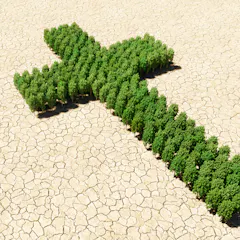
The majority of the world’s population identifies with a religion – could their faith be used to save the planet?
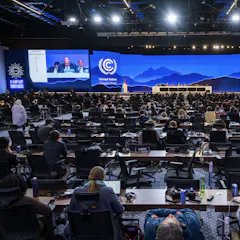
African leaders must take radical actions to strengthen the continent’s voice and participation in future events.
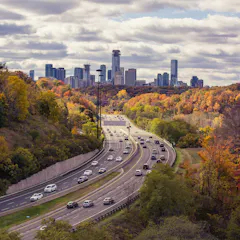
We cannot think of nature as something set aside in wildernesses, far from human activity. We need to conserve some elements of nature everywhere, including in the cities we live in.

People are starting to notice the weather and climate, and to understand climate change better than ever before.
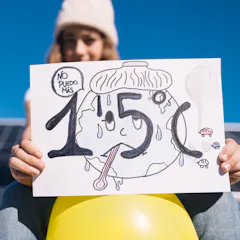
There is no safe limit to global warming – there is only what people deem to be acceptable damage.
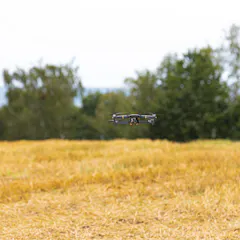
Digital technologies have the potential to yield positive results, if co-developed and used ethically with Indigenous communities.

As we set conservation goals for the next decade, we need to evaluate what worked and what didn’t in our efforts to meet the 2020 biodiversity conservation targets.
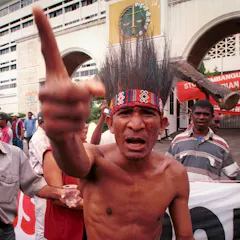
Energy transition minerals are essential to tackling climate change. But First Nations people must have a genuine say in where and how this happens.
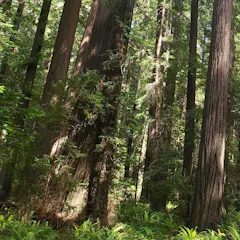
Millions of dollars have gone into California’s forest carbon offset program – with little new carbon storage to show for it, a new study suggests.
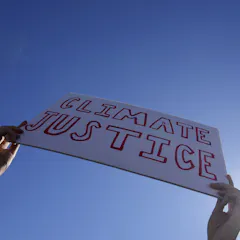
There have been 27 UN COP meetings. Despite these negotiations, the planet is on target to exceed emission thresholds for global warming. Given these failures, why continue with this process?
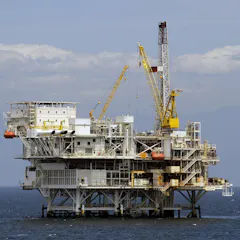
Stopping the expansion of offshore oil and gas extraction is a critical but often overlooked step towards achieving global climate targets and protecting our oceans and planet.

We can be much better at exploiting finance and economics to tackle climate change.
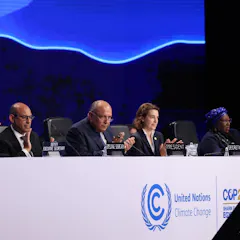
The absence of norms defining the common good and the insufficient place of scientific arguments in the democratic debate weaken the capacity of liberalism to face global threats.
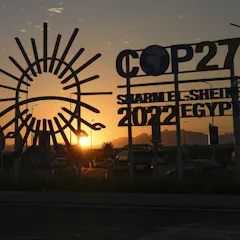
The historic agreement on a loss and damage fund was overshadowed by lack of progress on phasing out fossil fuels.

The best thing to do is to stop emitting carbon. However, preserving a safe climate will likely require us to go further.
Top contributors
-

Research Associate, Institute for Climate Risk and Response, UNSW
-
Researcher in Climate and Inequality, University of the Witwatersrand
-
Professor of International Relations, The University of Queensland
-
Pro Vice-Chancellor, Climate, Sustainability and Inequality and Director, Southern Centre for Inequality Studies, University of the Witwatersrand
-
Professeur en droit, Section de droit civil, Université d’Ottawa (Canada), membre du Conseil scientifique de la Fondation France Libertés, L’Université d’Ottawa/University of Ottawa
-
Professorial Fellow, University of Canberra
-
Professor at Vancouver Island University & Postdoctoral fellow, Centre d’études en gouvernance et du Centre de droit de l’environnement et de la durabilité mondiale, L’Université d’Ottawa/University of Ottawa
-
Professeur au Département des sciences juridiques, Université du Québec à Montréal (UQAM)
-
Professor of Law, The University of Melbourne
-
Professor and Engineering X Lead on Waste, Royal Academy of Engineering, Stellenbosch University
-
Specialist, CGIAR
-
Postdoctoral Scholar in International Environment and Resource Policy, The Fletcher School, Tufts University
-
Medical scientist, National Institute for Communicable Diseases
-
Professor of Physical Climate Change; Director of the Priestley Centre for Climate Futures, University of Leeds
-
Professor of Practice in Climate Policy, University of Oxford