

Civil society can play a role by holding political authorities accountable.
Articles on Democracy2021
Displaying all articles

President Tshisekedi’s government no longer has the excuse that it’s being hampered by the dead hand of his predecessor Joseph Kabila’s cabal.
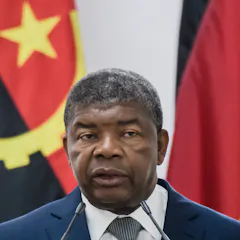
The optimism Angolan president João Lourenço’s election generated four years ago has dwindled as electoral promise after another have failed to materialise.

The extent of democracy capture varies markedly between countries. It’s much higher in states such as Zimbabwe, where the government has never changed hands.

Guineans have experienced military rule before, and they know that the consequences can be dangerous.
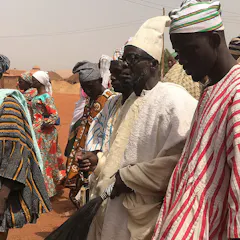
Chieftaincy conflicts in northern Ghana have hindered development in the country.

A monarch with absolute powers is just as dangerous as self-serving politicians in a democracy.

Whatever its flaws, it doesn’t mean the government action plan should be ignored or opposed. Rather, more needs to be done to achieve its goals.

Zambia’s new president will have to balance austerity and the high expectations of the many unemployed young people and struggling people who voted for him.
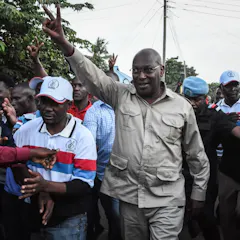
Despite the relative political stability over the years, Tanzania needs a new constitution to address contemporary challenges and strengthen institutions.

The disturbance in Ghana’s parliament during the election of a speaker has raised questions about its current democratic system.
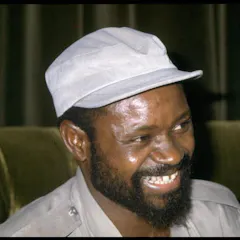
Frelimo, which governs Mozambique, has squandered the enormous political capital it enjoyed at independence. It now remains in power through violence, intimidation, harassment, and threats.

After 1994 efforts were made to embed democracy. The focus was on policy and institution-building. What was missing was ensuring all South Africans were on board.

There is more support for democracy among African people than is often recognised. Yet this can be undermined by election rigging and is lower in countries like Lesotho, Mozambique and South Africa.

Ethiopian history shows that the demands of its young people can’t go unaddressed for long.

President Muhammadu Buhari’s Twitter shutdown will be hard to enforce and could have dire consequences for Nigeria’s fragile democratic institutions and economy.

The recent spate of military takeovers, most recently in Chad, highlights a developing trend by armed forces in Africa which overtly subvert constitutional governance.
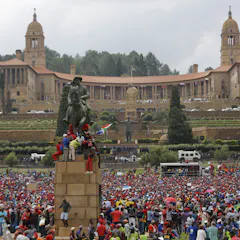
To build a political culture that supports democracy in South Africa, civic education needs to move beyond voter education.

The legitimacy of SWAPO, the former liberation movement that has governed since 1990, has been eroded amid growing corruption and a deepening economic crisis.

For those keen to advance democracy and freedom in Uganda, the starting point is to take in the lessons of history.
Top contributors
-

Research Fellow, Department of Peace Studies, University of Cape Coast
-
Professor of Democracy, University of Birmingham
-
Reader in Law, SOAS, University of London
-
Fellow, Centre for Federalism and Governance Studies, Addis Ababa University
-
Associate Professor of Anthropology, Bryn Mawr College
-
Lecturer, University of the Witwatersrand
-
Professor of political theory and global ethics, Michigan State University
-
Research Fellow, Department of labour and Human Resource, University of Cape Coast
-
NRF/British Academy Postdoctoral Research Fellow under the SA-UK Bilateral Chair in Political Theory, University of the Witwatersrand
-
Professor, Center for Federal Studies, Addis Ababa University
-
Professor of Public Affairs, Tshwane University of Technology
-
Associate Professor of Political Science, Michigan State University
-
Head of Department, Public and Environmental Law Department, University of Limpopo
-
Lecturer, School of Law, Hawassa University
-
Senior Research Fellow, Institute for Development Studies, University of Cape Coast