

Africa has a chance to host a climate conference that makes an impact.
Articles on Development finance
Displaying 1 - 20 of 41 articles

There have been notable examples of rating agencies differing significantly in their decisions on African institutions and countries.
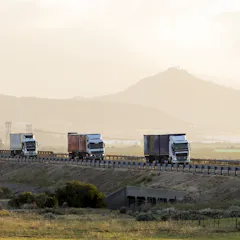
Diesel has become South Africa’s shadow infrastructure system by compensating for failures in electricity generation and freight rail.

Economic conditions for ordinary Mozambicans are deteriorating. Poverty has risen, public services are unreliable and there are few decent job opportunities.
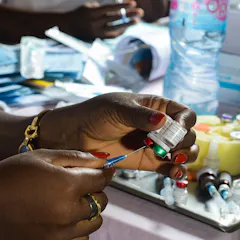
Malaria is still endemic in Africa.
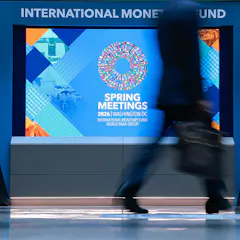
The IMF is not a neutral arbiter on any discussions relating to preferred creditor status. It is itself a direct beneficiary of the creditor hierarchy.

Chinese-funded infrastructure projects in African cities are driven by the national elites and therefore do not necessarily lead to community-level improvements.

African countries face unfair trade rules, delayed decisions and weak support, leaving them exporting raw goods and losing out economically.
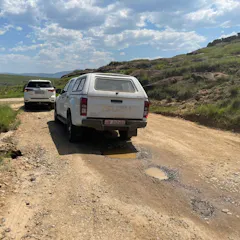
Infrastructure reflects political choices.
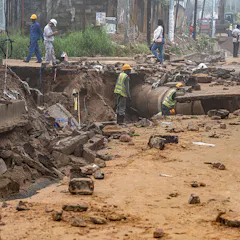
The most important thing to do is to lower the cost of capital for African countries.
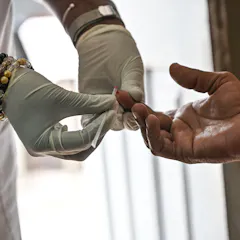
African countries must not sign away their health data or release their pathogens in exchange for donor funding.

Polluting companies in South Africa have had to pay a tax on their carbon emissions since 2019. This gives them a good incentive to reduce emissions.
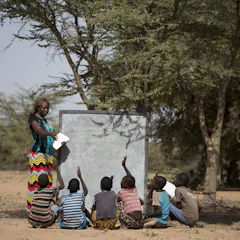
Public finance is the means through which societies either raise living standards or entrench dependence.
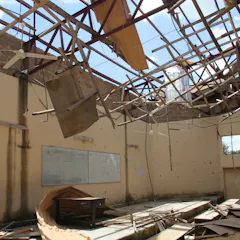
International scholarships make up most of the foreign aid to higher education in conflict-affected countries.
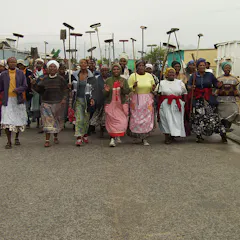
Social transfers don’t operate in a vacuum. They can strengthen trust or erode it, build cohesion or fuel resentment.

The aim was to increase the city’s own source revenue by improving fairness, transparency, and compliance while modernising outdated systems.

Tensions over the role that credit rating agencies play in assessing African countries have broken into the open.
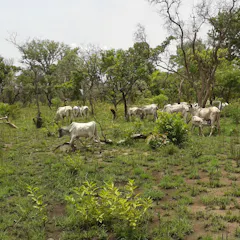
Benin’s smallholder dairy farmers need development finance to plant shady trees on the land where their cattle graze, to improve cattle health.
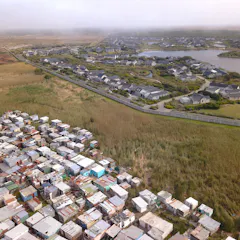
Tax records of the past can inform about governance, markets and inequality today.
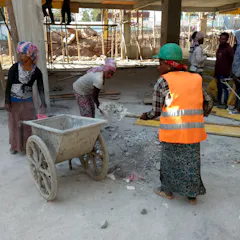
Ethnicity can be consciously adjusted in response to the risks women face in public spaces.
Top contributors
-

Director, Columbia Center on Sustainable Investment, Columbia University
-
Instructor, Harvard Extension School, Harvard University
-
Senior Academic Researcher in Global Development Policy, Boston University
-
Post Doctoral Researcher, Graduate School of Business (GSB), University of Cape Town
-
Professor of Economics, University of the Western Cape
-
Coordinatrice du projet de recherche sur la finance et le climat, Agence Française de Développement (AFD)
-
Senior Research Fellow in Climate Change Risks, University of Cape Town
-
Assistant Professor of International Economics, Government, and Business, Copenhagen Business School
-
Professor of Global Development Policy and Director, Global Development Policy Center, Boston University
-
Senior Fellow, Department of Agricultural Economics, Stellenbosch University
-
Professor of Development Finance & Insurance, University of Cape Town
-
Professor of Finance & Deputy Head of School, Wits Business School, University of the Witwatersrand
-
Lecturer, University of Southampton
-
Director of the Bureau for Economic Research, Stellenbosch University
-
Vice Dean and Faculty Director, ESG Inititative; Deloitte & Touche Professor of Management, University of Pennsylvania