

The gene that codes for p53 is the most frequently mutated in cancer. Researchers are targeting different parts of its complex pathway to restore its ability to stop cancer.
Articles on DNA mutations
Displaying 1 - 20 of 27 articles

Alcohol is linked to six types of cancer, a new report shows.
A new theory on the causes of cancer could change our approach to the way we treat the disease.

Multicancer early detection tests are among the priorities of the Biden administration’s Cancer Moonshot. The tests show promise, but questions remain about when and how to use them.
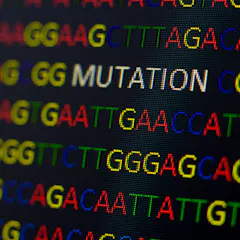
DNA sequencing has allowed researchers to catch new COVID-19 variants hours after receiving the first positive test sample.

Every cancer is different. Grouping cancer mutations by their structure and function could help make treatments more personalized.

The same dose of a drug can have varying degrees of effectiveness and safety depending on how well the liver can metabolize it.
Genome sequencing technologies have transformed biological research in many ways, but have had a much smaller effect on the treatment of common diseases.
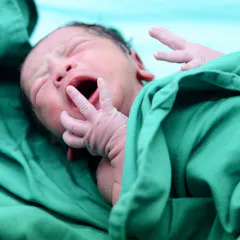
The concept of three-parent babies defies what we learned in health class. But how and when is the third parent involved? At what stage? Jennifer Barfield gives us an update on the birds and the bees.

Why was one gene mutation that affects hair, teeth, sweat glands and breasts ubiquitous among ice age Arctic people? New research points to the advantage it provided for ancestors of Native Americans.

New research shows just 1% of E. coli bacteria’s genetic mutations are lethal.
A core idea in molecular biology is that one gene codes for one protein. Now biologists have found an example of a gene that yields two forms of a protein – enabling it to evolve new functionality.
Comparing genomes of more than 200,000 people, researchers identified genetic variants that are less common in older people, suggesting natural selection continues to weed out disadvantageous traits.
Some animals seem to have missing genes – but the reality is a lot more intriguing.

Releasing just 100 mice carrying a faulty gene designed to stop them reproducing can remove an entire population of 50,000, a new study shows, paving the way for new eradication efforts.

Two US researchers have traced the majority of cancers to DNA replication errors during our natural cell replacement. Their finding asks for a renewed inquiry into the role of “chance” in cancer.
New genetic technologies are letting us look at flu evolution right where it starts: within individual people, while they’re sick.

Converting a DNA sequence into an audio could help us learn something useful about it, like where mutations occur.
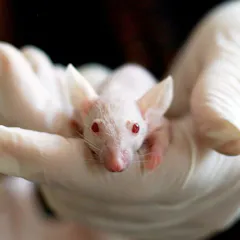
A new research paper reports dangerous side effects in CRISPR-edited mice. Some scientists are pushing back, placing blame for the unwanted mutations on the experiment, not the technique.

How do scientists figure out when evolutionary events – like species splitting away from a common ancestor – happened? It turns out our DNA is a kind of molecular clock, keeping time via genetic changes.
Top contributors
-

Lecturer, California State University, Long Beach
-
Professor, School of Biosciences, The University of Melbourne
-
Professor of Animal Evolution & Systematics, University of Cape Town
-
Co-head, Gilson/Crabb Laboratory & Senior Research Officer, Burnet Institute
-
Professor of Biological Sciences, Columbia University
-
Senior Lecturer in Forensic Genetics, University of Huddersfield
-
Professor of Applied Mathematics, Adelaide University
-
Senior Lecturer, School of Biological Sciences, Adelaide University
-
Postdoctoral Research Fellow in Biological Sciences, Columbia University
-
Doctoral Student in Genome Sciences, University of Washington
-
Senior Lecturer in Molecular Biology, Western Sydney University
-
Director of the Wildlife Crime Research Hub, Australian Research Council Industry Laureate Fellow, Adelaide University
-
Assistant Professor, Assisted Reproductive Technologies, Colorado State University
-
Former President of the Indonesian Academy of Sciences, Professor of Biochemistry and Molecular Biology, and Principal Scientist, Eijkman Institute for Molecular Biology
-
Ph.D. Student in Biological Sciences, Columbia University