

People restoring Africa’s ecosystems need climate services that combine forecasts with Indigenous knowledge and information about land, water and livelihoods.
Articles on early warning systems
Displaying all articles
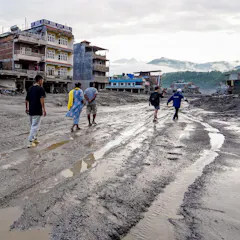
How do you warn people downstream about fast-moving hazards that can change form and cross borders?

AI models could spot volcanic eruptions earlier – and new research says the lives saved make the occasional false alarm worth the price.
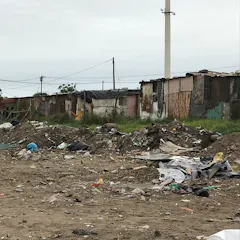
For many isiXhosa-speaking residents, disaster warnings arrive too late, or in language that is difficult to understand.

Scientists can warn of a risk of floods days in advance. But forecasts often aren’t definitive enough to trigger action.
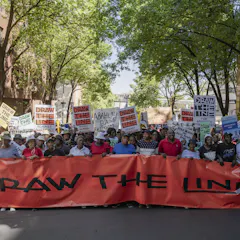
For the first time, countries now have a shared way to understand whether the world is actually improving at adapting to climate impacts.

South Africa’s G20 presidency is a chance to lobby for investment in drought-tolerant crops, better irrigation, and early warning systems.

Where governance is weak and food supplies are unreliable, climate change causes child wasting and can be a warning sign of conflict to come.

The DRC illustrates how millions of people in fragile, violent and conflict-affected parts of the world are at risk of disaster.

Could South Africa’s flooding in 2022 have been foreseen? It has long been a challenge for scientists and engineers around the world.

To answer this question, it’s important to understand how PVMBG of the Ministry of Energy and Mineral Resources classify the physical events of Semeru and the corresponding alert level.
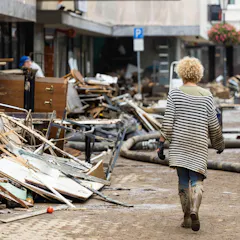
I helped forecast disaster – but nothing prepared for me what happened next.

Extreme heatwaves aren’t systematically monitored in most countries in sub-Saharan Africa. This leads to unnecessary and premature deaths which are often unrecorded.

New Zealand has several volcanic areas that remain popular tourist destinations. A new early-alert system for eruptions would help operators determine when it is safe to visit an active volcano.
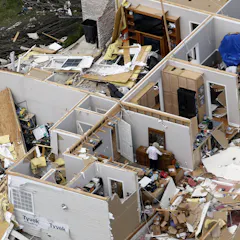
In the Southeast US, tornadoes strike at night more often than in other regions. This poses special challenges for getting early warnings to the public.
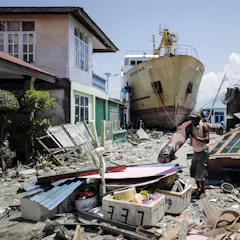
The early warning system installed after the 2004 Boxing Day tsunami hasn’t lived up to expectations.

Indonesia’s tsunami early warning system failed to provide adequate warnings to people in Palu.

While the Montecito, California mudslides took 20 lives, landslides kill far more people in developing countries. Tighter construction standards and early warning systems could help reduce their toll.

Early warning systems are available for things like tsunamis and diseases. Why not for animals as well?
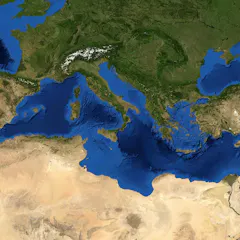
The sea straddles two tectonic plates and is lined by large towns and cities. We need to take the tsunami threat seriously.
Top contributors
-

Senior Scientist in Disaster and Climate Risk at Earth Sciences NZ & Senior Research Fellow (adjunct), Humanitarian Emergency and Disaster Management, Charles Darwin University
-
Professor of Earth Sciences, University of Auckland, Waipapa Taumata Rau
-
Professor of Earth Sciences and Environmental Studies, USC Dornsife College of Letters, Arts and Sciences
-
Affiliate Full Professor of Environmental & Societal Futures and Conservation Biology, University of Washington, Bothell
-
Senior Lecturer in Environmental Fluid Mechanics, University of KwaZulu-Natal
-
Senior Lecturer in Engineering Science, University of Auckland, Waipapa Taumata Rau
-
Professor of Geography, University of Tennessee
-
Senior Research Associate, Institute for Environment and Human Security (UNU-EHS), United Nations University
-
Senior Lecturer in Climate Change, University of Waikato
-
Senior Lecturer in Climate Science, Imperial College London
-
Assistant Professor of Geography, Middle Tennessee State University
-
Regius Professor of Meteorology and Climate Science, University of Reading
-
Disaster Risk Expert, University of Reading
-
Senior Researcher at the Feinstein International Center, Tufts University, and Research Associate at the Refugee Studies Centre, University of Oxford
-
Reader in Physical Geography and Natural Hazards, Coventry University