

Côte d’Ivoire’s 27 December legislative elections will be a test of the country’s democratic resilience.
Articles on Electoral violence
Displaying all articles
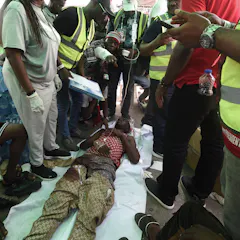
Elections in Nigeria are marked by violence. The 2027 polls risk repeating the deadly cycle.
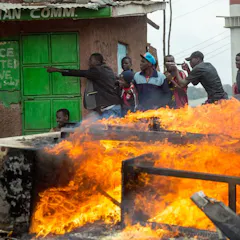
Kenya has formalised local peace committees, which support dialogue around causes of conflict and promote trust.

Venâncio Mondlane finds himself at the centre of one of Mozambique’s worst political crises.
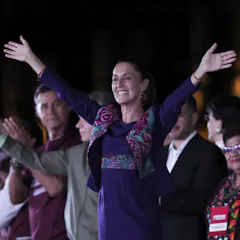
After historic win, President-elect Claudia Sheinbaum will face pressure to address her country’s gender violence.

Electoral violence has marred the run-up to the June 2 vote. But despite fears over personal safety, support for democracy endures.

Nelson Chamisa defines himself as a social democrat who believes in providing substantial welfare to support healthcare and basic education.
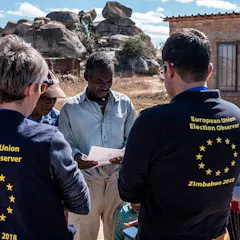
Observers regularly face dangers owing to political instability, insecurity, violence and other crises in some countries.
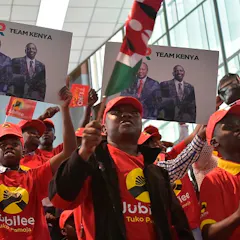
The fluidity of the country’s short-lived coalitions is a major cause of instability in Kenya.

Electoral violence, low voter turnout, ethnic politics and voters’ suppression were notable features of the 2023 general elections in Nigeria.
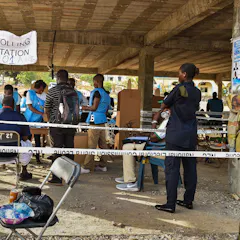
Though public opinion surveys offer some hope, there are several concerns for democracy’s consolidation in West Africa.
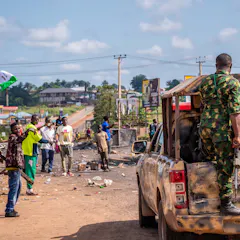
Africa’s powerhouse is about to elect its president in a highly volatile climate. Scholars have noted that each election gives way to violence, resulting in a high death toll.
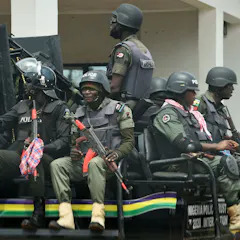
Attacks on electoral materials and election commission officials in the south-east region of Nigeria could have serious implications for the overall success of 2023 presidential election.

The country’s courts have already exhibited a significant level of maturity in rulings touching on the executive.
Top contributors
-

Associate Professor of Political Science and Director of the Center for Mexican American Studies, University of Texas at Arlington
-
Assistant Professor of Political Science, University of Texas at Arlington
-
PhD, Research Fellow at IFRA-Nigéria, University of Ibadan
-
Cornelius Vanderbilt Professor of Political Science and Director of LAPOP, Vanderbilt University
-
Lecturer, University of Reading
-
Associate Professor, Department of Political Science, California State Polytechnic University, Pomona
-
Senior Lecturer, Department of Political Science, University of Nigeria
-
Professor of Political Science, Vanderbilt University
-
Consultant, University of Cape Town
-
Professor, Department of Political Sciences, University of South Africa
-
Senior Statistician and Research Lead, Vanderbilt University
-
Jan Smuts Professor of International Relations and Director of the African Centre for the Study of the United States (ACSUS), University of the Witwatersrand
-
Professor of Political Science, University of Nigeria
-
Research Fellow, Obafemi Awolowo University, Regional Coordinator, Institute for Security Studies
-
Professor of International Politics, Lancaster University