
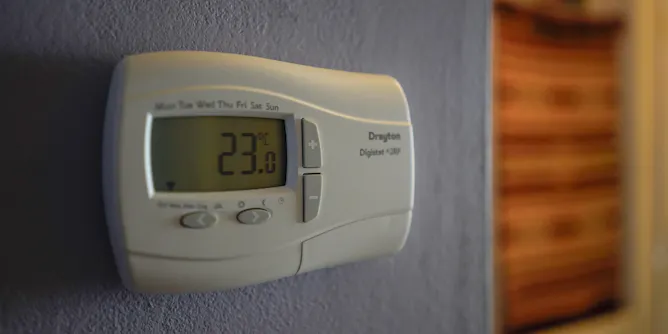
Policies that encourage the use of low-carbon technology like heat pumps can help motivate residents to decarbonize their homes.
Articles on Emissions
Displaying 121 - 140 of 413 articles
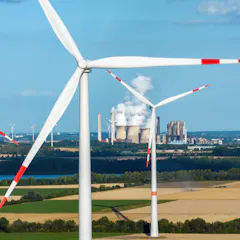
It’s far easier to see how the stock market is doing than it is to find out the global price of carbon. That has to change.

New research explores why Canadians want SUVs, what they like about them and what might steer drivers towards lower-emitting cars.
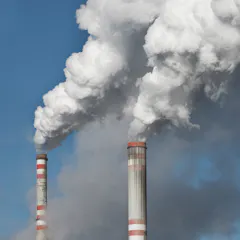
The UK is focusing on carbon capture and storage technologies but the future is uncertain.

Has climate action bogged down? Hardly. Nations are redoubling their efforts in visible and less visible ways.
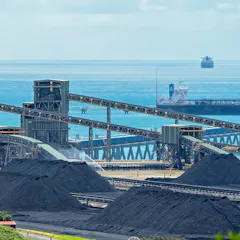
The good news is the world’s coal use has peaked – and will soon rapidly decline. Australia is leading the way, and the rest of the world must soon follow.

Stopping the expansion of offshore oil and gas extraction is a critical but often overlooked step towards achieving global climate targets and protecting our oceans and planet.
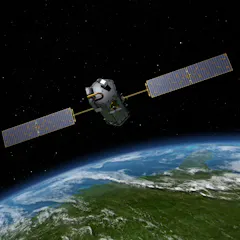
Tracking CO2 emissions with satellites can help to support emission reduction efforts under the Paris Agreement.

Carbon offsetting is often met with scepticism, but a new report suggests that if correctly designed it can be an important part of the net zero transition.

The barriers and benefits to reviving the UK textile industry.

A new biodiversity index captures the climate risk for nearly 25,000 marine species and their ecosystems and lays the groundwork for climate-smart approaches to management and conservation.

Much of the debate regarding the environmental cost of childbearing is underpinned by one influential study. Given the global commitment to net zero, should this be revisited?

The culpability for Pakistan’s catastrophic floods rests with the government and wealthy polluter countries.

Cryptocurrency has a substantial carbon footprint. Ethereum have taken steps to address this, but will others follow suit?

Online life produces a surprising amount of emissions that need to be tackled alongside physical e-waste.

The emission reduction targets outlined for Canadian fertilizer use will not lead to food shortages and food insecurity.
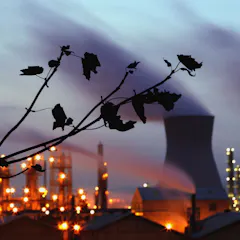
Most claiming to be compatible with the climate agreement show a strong continuing reliance on natural gas and coal.
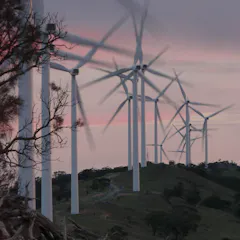
The important change sends a direct signal for more investment in renewable energy, and comes not a moment too soon.

Almost 35 years after the US Senate was first warned about climate change, it has passed a bill. Here’s what it means for Australia.

Labor’s new tax cut is a far cry from what’s needed to meet Australia’s target of 89% new car sales being electric by 2030.
Top contributors
-

Professorial Fellow, University of Canberra
-
Chief Research Scientist, CSIRO Environment; Executive Director, Global Carbon Project, CSIRO
-
Senior Research Fellow and Associate Professor, Melbourne Climate Futures initiative, The University of Melbourne
-
Professor, Crawford School of Public Policy and Director, Centre for Climate and Energy Policy, Australian National University
-
Senior Lecturer, Griffith Business School, Griffith University
-
Adjunct professor, UNSW
-
Climateworks Centre CEO, Monash University
-
Professor of Transport Technology and Sustainability, Swinburne University of Technology
-
Senior Industry Fellow, Environment and Planning, RMIT University
-
Associate Professor in Property, Construction and Project Management, RMIT University
-
Professor of Law, Deakin University
-
Professor of Engineering, Australian National University
-
Honorary Fellow, Melbourne Climate Futures, The University of Melbourne
-
Senior Research Associate, Renewable Energy & Energy Systems Analyst, UNSW
-
Professor, School of Economics, The University of Queensland