

Algal blooms are not maintenance failures requiring paint or treatment with hydrogen peroxide and nanobubbles. They are ecological warning signs.
Articles on Eutrophication
Displaying all articles

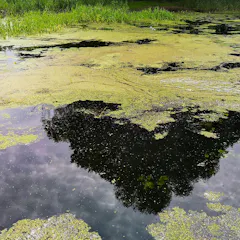
South Africa’s rural wastewater treatment plants release polluted water if they aren’t maintained properly. Microalgae that purify the water could be a solution.
There’s more than one way to be resilient.
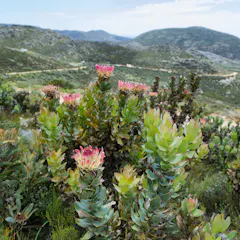
More than 700 million hectares of land in Africa has been degraded by human activity. Everyone can get involved in restoring the ecology.

Increasing awareness of the dangers ‘forever chemical’ road salts pose to our fresh water systems highlights the urgent importance of finding new approaches to de-icing our roads.

Farmers are contending with huge spikes in fertilizer prices. The Biden administration is paying US companies to boost synthetic fertilizer production, but there are other, more sustainable options.

Cleaning up the Great Lakes was a big job when the US and Canada undertook it in 1972. Today it’s far more challenging.

Around the world, fragile coastal ecosystems are under intense pressure, and understanding and managing their complex interactions requires an integrated and interdisciplinary approach.
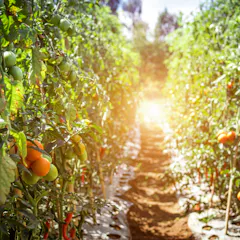
This transformation provides lessons for the rest of world, for shifting away from chemical agriculture towards a healthier system for people and the planet.

Scientists are predicting major algae blooms in Lake Erie and large dead zones in the Chesapeake Bay and Gulf of Mexico this summer. Nutrient pollution from industrial corn farming is a major driver.

Feeding pigs seaweed could make them, us and the planet healthier without contributing to antibiotic resistance in bacteria.

Drastic oxygen losses in the world’s oceans millions of years ago coincided with mass extinctions. Scientists see this as a warning about how climate change could affect oceans today.
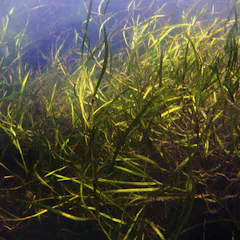
An ambitious plan to cut the flow of nutrients into the Chesapeake Bay has produced historic regrowth of underwater seagrasses. These results offer hope for other polluted water bodies.
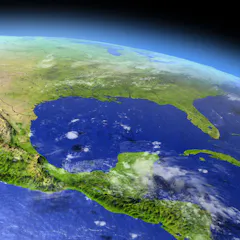
Oxygen-free areas will continue to grow until we stop pumping excess nutrients into the oceans.

Excess nutrients from farm fields cause widespread water pollution across the U.S. Bioreactors – essentially, ditches filled with wood chips – are emerging as a way to reduce nutrient pollution.

Lakes contain most of the fresh water on Earth’s surface. Recent research at Lake Tahoe in the Sierra Nevada mountains shows that climate change could alter lake chemistry, threatening these sources.

Australian farmers take pride in their efficient and productive farming systems, competing in the global economy and without many of the large subsidies given to their counterparts in Europe and North…
Top contributors
-

Research Assistant Professor of Crop Sciences, University of Illinois Urbana-Champaign
-
Professor of Marine Science and Vice President for Science Applications, University of Maryland Center for Environmental Science
-
Emeritus Professor of Marine Science, Virginia Institute of Marine Science
-
Assistant Professor of Environmental Engineering, University of California, Davis
-
Senior Scientific Officer, Institute of Marine Sciences, University of Portsmouth
-
Associate Professor, College of Charleston
-
Assistant Professor of Earth, Ocean and Atmospheric Science, Florida State University
-
Adjunct Professor, La Trobe University
-
Professor of Hydrogeology, Department of Earth & Environmental Sciences, University of Waterloo
-
Research Associate, Geography & Environmental Management, University of Waterloo
-
Directeur de recherche, Institut de recherche pour le développement (IRD)
-
Chercheur en dynamique littorale, Institut de recherche pour le développement (IRD)
-
Senior scientist, South African National Biodiversity Institute
-
Knowledge Mobilization Specialist, Water Institute, University of Waterloo
-
PhD Student in Earth and Environmental Sciences, University of Waterloo