
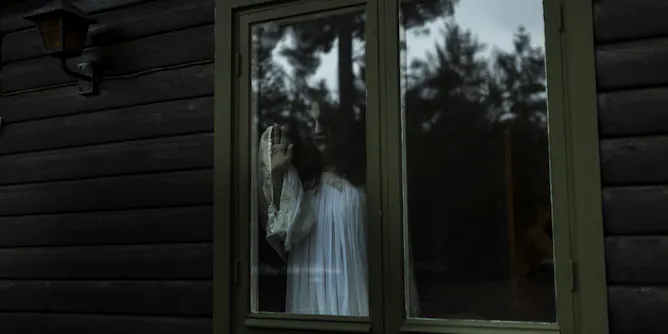
From phantom ships carrying enslaved people to an apparition in a Maine lake, ghost stories have revived memories of injustices that might otherwise have been forgotten.
Articles on Fear
Displaying 1 - 20 of 149 articles

Political campaigns often use fear to play on voters’ existing prejudices and stereotypes. What that means for your vote is less predictable.

Scary movies create tension in that space between perception and recognition, as your brain tries to determine what, exactly, you’re seeing.

The show presented itself as a crusade to protect children. But its appeal may have had as much to do with the pleasures of being able to play judge, jury and executioner from your living room couch.

While meditation has been shown to have health benefits, it may not always be the right practice for all people.

Programs took different approaches to helping young viewers grapple with the horrors of the 9/11 terrorist attacks – lessons that still apply in today’s media environment.

True crime’s popularity can be explained by human psychological mechanisms and social needs.

Courage is widely considered a fundamental human virtue. A professor of psychology and a university president break down the components of courageous action.

Undertone crosses the boundary between listener and participant, resulting in a work which fulfils its promise of terror.

For many adults, anxiety may be the only visible symptom. When it fades, underlying ADHD, which may have been masked for years, finally becomes clear.

Complacency about the serious challenges the world is facing is not an option. But the idea that we are almost at the point of no return via the Doomsday Clock isn’t helpful.

Technology is not the boss. We can decide how to use it.

As businesses race to adopt AI, you might worry that the experience and expertise you’ve built up has become a lot less valuable. But you still have more control over your future than you think.

Science now suggests this may be closer to the truth than researchers originally thought

After mass violence such as the Bondi beach terror attack, distress does not stop with those directly affected.

This technology was developed in response to the stark disparity in how urban safety is experienced by women and men.
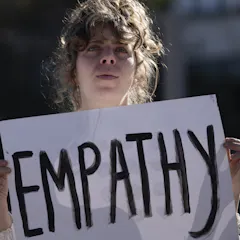
Empathy affords us a more accurate understanding of others’ experiences and emotions. Just like pain, it can be hard to bear – but that’s also the source of its strength.

A fear of space can combine with suspicions about governments, leading us to embrace conspiracy theories.

The neck’s vitality and vulnerability are rooted in a quirky evolutionary history.

Recent generations may have taken safety for granted, but today’s youth are growing up in an era of compounded crises – and being safe is their priority.
Top contributors
-

Professor of Psychiatry, Wayne State University
-
Professor of Psychology, Skidmore College
-
Senior Lecturer in Psychology, University of the Sunshine Coast
-
Professor, University of the Witwatersrand
-
Professor and Chair, Department of Journalism, Stellenbosch University
-
Professor of Physiology and Neurobiology, Dean of Faculty Affairs, Geisel School of Medicine, Dartmouth College
-
Cornelia H. Dudley Professor of Psychology, Knox College
-
Professor of Religion, Boston University
-
Associate Professor of Psychology, Laurentian University
-
Adjunct Professor of Sociology, University of Pittsburgh
-
Fellow, Keele University
-
Associate Professor of Practice Communication Studies, University of Nebraska-Lincoln
-
Postdoctoral Researcher in Neuroscience, University of Sussex
-
Lecturer of Psychology, Cardiff Metropolitan University
-
Vice Chancellor's Research Fellow in Ecology and Entomology, Edith Cowan University