
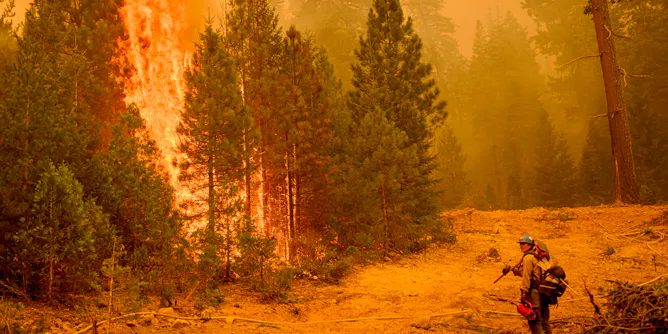
Wildfire strategy tends to break into three distinct camps today, each focusing heavily on one approach over the others. Successful management requires them all.
Articles on Firefighting
Displaying 1 - 20 of 35 articles
The most effective wildfire risk reduction happens long before the first 999 call.

Spain spends huge sums on controlling and putting out wildfires, but often overlooks prevention.

The Gironde wildfires reveal how logistics are key in firefighting. Emergency operations in the French region are twofold: providing relief and evacuating large populations.
The fires facing Spanish and French firefighters are harder to put out – and much more intense.

Buying more planes will not help Canada tackle wildfires if there is not a thought-out plan for their use well ahead of a fire.

The challenge is not firefighting capacity nor convincing people to help; it is coordinating efforts to prioritize safety and efficiency.

Water systems are vulnerable to melting plastic components, toxic contamination and failures that can leave firefighters without flowing water.
Fire seasons on both sides of the Pacific overlap for seven weeks a year – and changes in Australia’s climate are driving the problem.
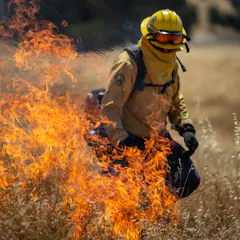
Uncertainty from Washington along with staff and budget cuts have created turmoil for the US Forest Service’s fire management efforts.
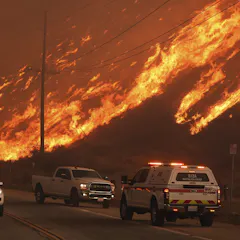
Fire spotters used to watch with binoculars from forest towers. Now, technology can help forecast fire behavior, but human experience is still essential.

When authorities fight fires, they focus on human life and property. But animals are part of communities too – and disaster preparation should reflect this

As bushfire seasons grow longer and more intense, Australia needs new weapons in its firefighting arsenal.

A Canadair CL-415, known as a Super Scooper, collided with a drone during wildfire emergency response operations in Los Angeles, Calif. on Jan. 9.
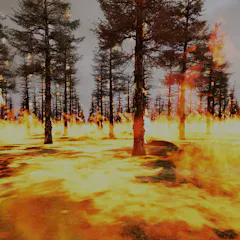
iFire allows firefighters and emergency responders to virtually teleport into a burning landscape and train for the real thing.
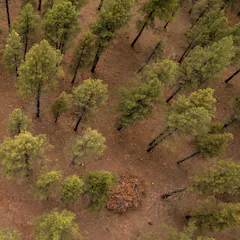
Forest thinning and controlled burns take away fuel for fires, but the US can only treat so many acres. Which ones to choose?
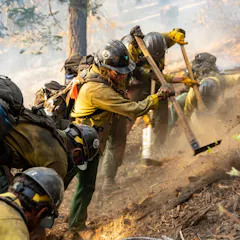
Twenty-five years of research show what it takes to fuel wildland firefighters through an average day, and the toll the long seasonal work takes on their bodies.

In one finding, fire authorities chose to save a few farm sheds over 5,000 hectares of national park. Clearly, our fire management needs a reset.
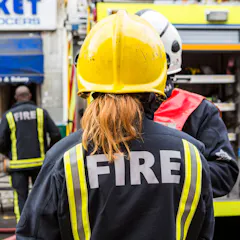
With extreme weather events becoming more common, the fire and rescue service will need to change its approach.
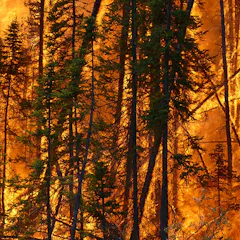
Fire weather reason – when wildfires are most likely to strike – has expanded almost everywhere.
Top contributors
-

Director of the Southern Fire Exchange, University of Florida
-
Assistant Professor of Environmental and Radiological Health Sciences, Colorado State University
-
Director, Bushfire Research Centre of Excellence, Australian National University
-
Postdoctoral research fellow, Australian National University
-
Professor of exercise and work physiology, University of Montana
-
Professor of Engineering, University of California, Merced
-
Fellow in Natural History, Australian National University
-
Affiliate Assistant Professor, University of Washington
-
NERC Independent Research Fellow in Climate Science, University of East Anglia
-
Tenured Scientist (IMB-CSIC, Spain) & Honorary Associate Prof. (SU, UK), Swansea University
-
Professor of Conservation Biology, Charles Darwin University
-
Research Ecologist, United States Forest Service
-
PhD Candidate, Edith Cowan University
-
Associate Director of the Huntington-USC Institute on California and The West, USC Dornsife College of Letters, Arts and Sciences
-
Senior Lecturer in Computer Science, RMIT University Vietnam