

Residential school denialism is the rejection or misrepresentation of basic facts about residential schools to undermine truth and reconciliation efforts.
Articles on Genocide
Displaying 201 - 220 of 345 articles

Variations on the myth of “good intentions” are invoked as a tool against the truth that the legacy of the IRS tells. Here’s why that needs to stop.

The recent discovery of the bodies of Indigenous children being found in Canada reminds us of the dark history of Australia’s treatment of young First Peoples and children here in Australia.
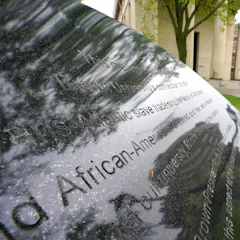
From Germany to Georgetown, the Global North has a lot to learn about reckoning successfully with past human rights wrongs.
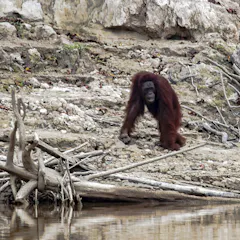
Environmental destruction remains an unofficial crime, but activists and scholars want it recognised.

Non-Indigenous Canadians are right to feel shame about Indian Residential Schools. But what comes next?

Acts of genocide were strategically implemented by church and the Canadian government to remove Indigenous people from their land and, in turn, their culture.

Ending the Canadian genocide of Indigenous peoples is a legal obligation, requiring honest, active decolonization. The lawyer who wrote the MMIWG’s inquiry’s legal analysis of genocide explains.

An Indigenous lawyer makes the case that what happened to Indigenous children who went to residential schools is genocide and the case should be tried by the International Criminal Court.
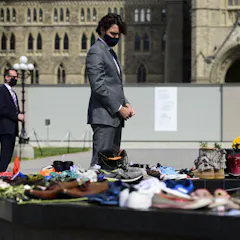
Canada has officially recognized eight genocides that have happened around the world. It has not done the same for its own treatment of Indigenous children who they sent to Indian Residential Schools.
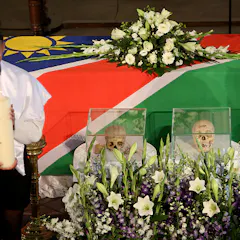
German’s commitment of €1.1bn for development projects in Namibia over 30 years is too cheap a price to pay for remorse.
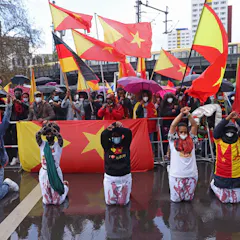
Establishing whether a genocide is happening in Ethiopia requires an independent and objective investigation – which probably won’t happen.
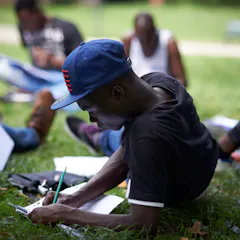
Governments and agencies should prepare second chance opportunities for formal education as emergency situations may last for several years and create a backlog of education.

A scholar of the Rwandan genocide argues that while a genocide and a pandemic are very different, the experiences of Rwanda’s survivors may provide lessons on how to heal from pandemic trauma.
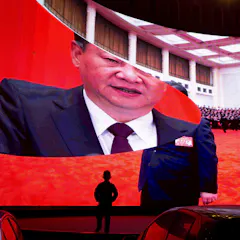
Rights-based pressure on China over its treatment of Uyghurs is necessary, but other nations could also present best practices for the ethical treatment of racialized minorities in their own countries.
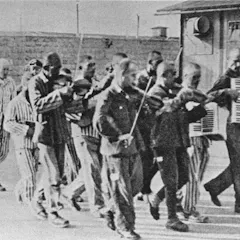
Music is supposed to transcend the mundane and horrific. Yet it has also served as an accompaniment to torture and punishment.
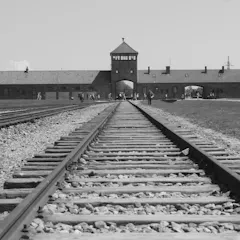
The study of the Holocaust, as the ultimate example of genocide, allows teachers to raise the universal message of human rights abuses and mass violence.
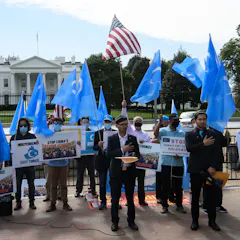
When your ‘friend’ and biggest trading partner is accused of genocide you can’t ignore it. But meaningful change will take more than words.
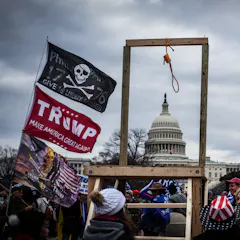
The crowds that stormed the US Capitol on Jan. 6 were not just engaged in an effort to support Trump. The symbols they carried were of an extreme form of anti-Semitism.
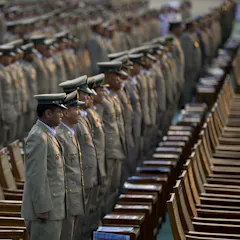
Foreign companies are failing to heed the UN call to stop doing business with Myanmar’s blood-stained military elite.
Top contributors
-

Extraordinary Professor, Department of Political Sciences, University of Pretoria
-
Co-Director, Institute for Genocide and Mass Atrocity Prevention, and Professor of Public Administration, Binghamton University, State University of New York
-
Distinguished Professor of Anthropology; Director, Center for the Study of Genocide and Human Rights, Rutgers University - Newark
-
Professor in Political Science, Arnold Bergstraesser Institute
-
Professor of Law, University of Waikato
-
Associate Professor International Law, Roskilde University
-
Co-Director, Institute for Genocide and Mass Atrocity Prevention, Binghamton University, State University of New York
-
Postdoctoral Research Associate, King's College London
-
Professor Emeritus, Department of Political Science, Wilfrid Laurier University
-
Professor, Lancaster Law School, Lancaster University
-
Professor of Anthropology, University of the Western Cape
-
Adjunct Professor of Mass Atrocities Prevention, Georgetown University; University of Connecticut
-
Senior Lecturer in Politics and International Relations, University of Dundee
-
Assistant Professor of Law, Osgoode Hall Law School, York University, Canada
-
PhD student of law, Universidade do Estado do Rio de Janeiro (UERJ)