

This theme of this year’s Holocaust Remembrance Day encourages us to ask difficult questions of ourselves and society.
Articles on Genocide
Displaying 161 - 180 of 345 articles
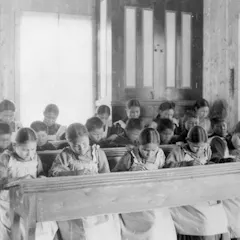
Canada’s recent resolution to label the Indian Residential School system as genocide (and not cultural genocide) is not a mere alteration of words, it is a significant and consequential change.
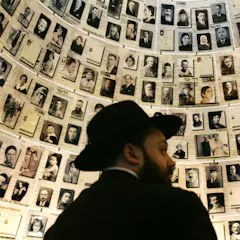
There isn’t one, clear-cut way to prevent genocide. But there are effective methods of prevention that governments can take.
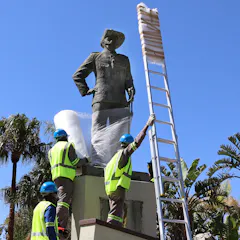
The erasure of indigenous people living in Windhoek before the German colonisers arrived has angered activists.
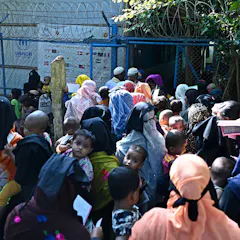
The international response to the refugee crisis in Ukraine has been impressive. But humanitarian aid is falling short to help refugees in other countries such as Bangladesh, Yemen and Ethiopia.
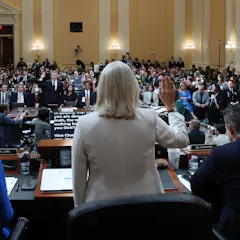
While the Jan. 6 committee investigating the US Capitol attacks has limited legal powers, it can help craft an accurate narrative of American democracy and history.
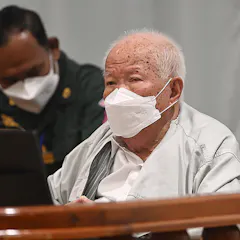
Many Khmer Rouge leaders died before they could be indicted, and attempts to prosecute other suspects were blocked by the Cambodian government. Now, attention is turning to the tribunal’s legacy.
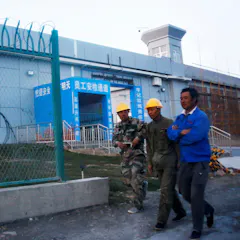
The report shies away from the issue of ‘genocide’, but is still a landmark document with evidence of widespread abuse of Uyghur people.
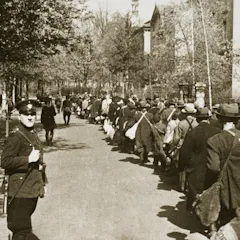
Holocaust scholars long relied on documents and survivor testimonies to help reconstruct the history of that tragic event. Now, they’re turning to wordless witnesses to learn more: pictures.

Visiting Indigenous people on their land was a step in the right direction, but the pope’s visit was full of tensions over both what was said and what wasn’t.
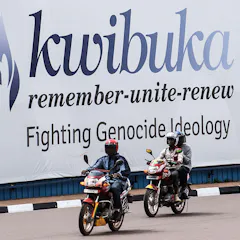
In 2003, Rwanda adopted a policy of ethnic non-recognition. However, for 100 days in a year, it centres ethnicity in the country’s psyche.
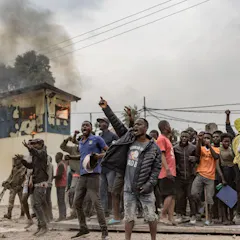
The UN mission is being held responsible for something the Congolese state should be doing.
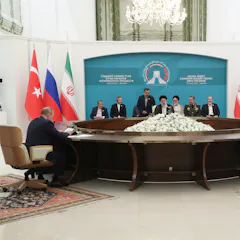
A digest of the week’s coverage of the war against Ukraine.

People must learn more about the history and legacies of residential schools and day schools and understand their relationship to Canada’s colonial project.

You can love a country and still hold it to account. I love Canada. But I won’t stand for the anthem at a sporting event or elsewhere, especially not when my kids are watching.
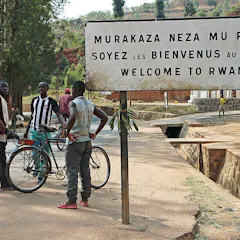
Colonisation, genocide and changes in official languages have resulted in the hybridisation of languages. A mix of Kinyarwanda, French and English is dubbed kinyafranglais.
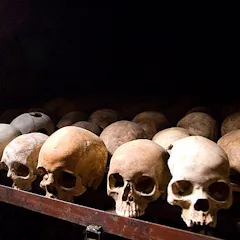
What happens when a writer asks us to consider the perspective of the perpetrator rather than the victim?

Atrocities are made easier when one country’s troops are taught to despise the people they are invading.
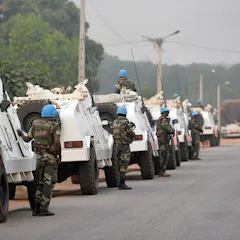
Peacekeeping missions grab the headlines when they’re associated with tragedy and death – but that isn’t their full story.

Studying medication use in a traumatized population of immigrants required pharmacists to listen to and learn from trusted community health workers.
Top contributors
-

Extraordinary Professor, Department of Political Sciences, University of Pretoria
-
Co-Director, Institute for Genocide and Mass Atrocity Prevention, and Professor of Public Administration, Binghamton University, State University of New York
-
Distinguished Professor of Anthropology; Director, Center for the Study of Genocide and Human Rights, Rutgers University - Newark
-
Professor in Political Science, Arnold Bergstraesser Institute
-
Professor of Law, University of Waikato
-
Associate Professor International Law, Roskilde University
-
Co-Director, Institute for Genocide and Mass Atrocity Prevention, Binghamton University, State University of New York
-
Postdoctoral Research Associate, King's College London
-
Professor Emeritus, Department of Political Science, Wilfrid Laurier University
-
Professor, Lancaster Law School, Lancaster University
-
Professor of Anthropology, University of the Western Cape
-
Adjunct Professor of Mass Atrocities Prevention, Georgetown University; University of Connecticut
-
Senior Lecturer in Politics and International Relations, University of Dundee
-
Assistant Professor of Law, Osgoode Hall Law School, York University, Canada
-
PhD student of law, Universidade do Estado do Rio de Janeiro (UERJ)