

Snow and ice loss warms the land surface and air, setting off a feedback loop of further ice loss. This destabilises the landscape, with potentially hazardous impacts.
Articles on Glacial retreat
Displaying all articles

Earth’s climate system is connected across hemispheres. When the Atlantic Meridional Overturning Circulation weakens and Europe cools, warming in New Zealand and southern mid-latitudes accelerates.
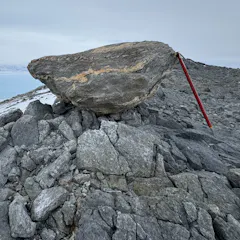
When landslides or glaciers bring rocks to the surface, cosmic rays bombard them, smashing common atoms into rarer forms and acting as a chronometer of the changing Earth.

Some 7,000 years ago, West Antarctica’s ice sheet retreated, most likely driven by warmer ocean currents slipping under the ice. This could happen again – unless we cut emissions fast.

Geoengineering proposals to cool the ocean would indeed reduce ice loss from West Antarctica’s glaciers, but not enough to stop sea-level rise or allow the ice sheet to regrow.
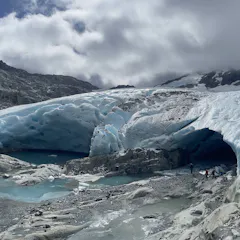
An estimated 13 trillion litres of ice has already been lost from glaciers in New Zealand’s Southern Alps since 1978. Several are now approaching extinction.

The culpability for Pakistan’s catastrophic floods rests with the government and wealthy polluter countries.
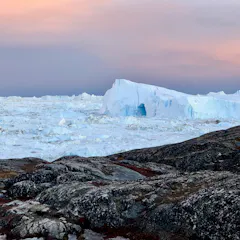
Greenland’s glaciers have retreated so far that they can no longer support the ice sheet that feeds them. The ice sheet system has reached a new normal of consistent annual ice loss.
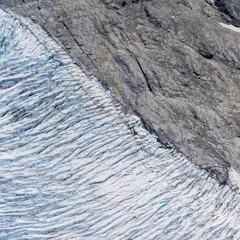
For the first time, scientists have been able to quantify how much climate change contributed to glacial melt, using more than 40 years of data from New Zealand’s retreating glaciers.

Auckland’s extreme drought and the rapid retreat of glaciers in the Southern Alps both highlight how important long-term observations are for water management policy and planning.

New research shows that ocean and air temperatures both contributed to the melting of Antarctica’s Ross Ice Shelf in the past, but melting from below by a warming ocean became more important over time.
Top contributors
-

Research Fellow, Antarctic Research Centre, Te Herenga Waka — Victoria University of Wellington
-
Senior Lecturer in Physical Geography, Te Herenga Waka — Victoria University of Wellington
-
Principal Scientist & Programme Leader of Southern Hemisphere Climates and Environments, National Institute of Water and Atmospheric Research (NIWA)
-
Ice Sheet & Climate Modeller, Te Herenga Waka — Victoria University of Wellington
-
Assistant Director Polar Rock Repository, Byrd Polar and Climate Research Center, The Ohio State University
-
Palaeoclimatologist, Australian Antarctic Division
-
Professor of Glaciology, Te Herenga Waka — Victoria University of Wellington
-
Research Associate (in process), Canterbury Museum
-
Postdoctoral Research Fellow, Te Herenga Waka — Victoria University of Wellington
-
Postdoctoral Climate Science Researcher, The Ohio State University
-
Chief Investigator in Antarctic environmental science, Monash University
-
Lecturer (Assistant Professor), Humanitarian and Conflict Response Institute, University of Manchester
-
Associate Professor in Geochemistry, Te Herenga Waka — Victoria University of Wellington
-
Senior Research Fellow, Antarctic Research Centre, Te Herenga Waka — Victoria University of Wellington
-
Meteorologist/forecaster, National Institute of Water and Atmospheric Research (NIWA)