

Our colleagues from editions of The Conversation around the globe share their favourite solutions-focused stories.
Articles on Global
Displaying 1 - 20 of 21 articles

All five African countries surveyed – Nigeria, Egypt, Kenya, South Africa and Tanzania – were ranked in the top six most forgiving nations.

Taking up a hobby like art, dance or music classes could have significant hidden benefits.

A review of countries’ new climate pledges shows who is leading efforts to protect the climate their economies were built on and who is sliding.

Coolness has changed. Today it’s about being extroverted, hedonistic, adventurous, open, powerful and autonomous.

The elite university sued the Trump administration after the government revoked its ability to enroll international students.

People in countries with the most chain grocery stores per person buy more unhealthy food and are more likely to be obese.
If the World Health Organization doesn’t reform, other member countries may also jump ship.
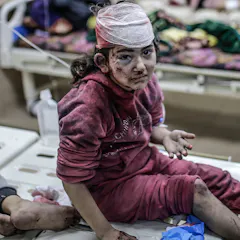
Antimicrobial resistance is yet another catastrophic legacy of war, threatening human health and security for generations to come.

Using films like “The Matrix,” a sociology course examines how factors beyond our control shape the world we live in − in fact and in an imagined future.

Real wisdom is about a balance between thoughtful reasoning, social understanding and emotional awareness.

As the COVID-19 pandemic exposes the risks of an interconnected world, Indian thinkers offer timely insights on how to understand our global community and act more wisely.

Michael Haneke’s allegorical 2009 film showed how a peaceful society can be shattered within a single generation. It’s a lesson for us now in a world drifting toward populism and violence.

Imaginaries of gangs as inherent forms of brutal anarchy promote particular political agendas and obscure the ways gangs can reveal the underlying dynamics of the contexts within which they emerge.

When an elected leader turns autocratic, the economy tends to suffer. That’s because, in a functioning democracy, economic policy is made jointly, with lawmakers playing a key role.

Schools and students are often targeted during times of armed conflict. Abducted children can be recruited as soldiers and schools are ideal locations for military headquarters.

A plague outbreak in Madagascar has killed 170 people. Here’s what you need to know about treatment options and chances it will spread.

The humanitarian crisis in the Middle East is getting worse by the day. A survey of aid workers provides a glimpse into life on the ground, and clues to why the humanitarian sector is ailing.

The first Renaissance struggled with the same doubts and uncertainties and blinding possibilities that we face today. Any gains we make will have to be achieved amid relentless shocks.

Cooperatives like Murray Goulburn and Fonterra and dairy farmers need to accept that lower milk prices will be the new normal in a more competitive global market.
Top contributors
-

Fellow, Researcher on China and Globalization, University of Oxford
-
Senior Lecturer, School of Management, Te Kunenga ki Pūrehuroa – Massey University
-
Professor of Infectious Diseases, Monash University
-
Professor of Globalisation and Development; Director of the Oxford Martin Programmes on Technological and Economic Change, The Future of Work and the Future of Development, University of Oxford
-
Professor of Sociology, Elon University
-
Sir Graeme Harrison Professorial Chair in Global Value Chains and Trade, Lincoln University, New Zealand
-
Lecturer, Macquarie Law School, Macquarie University
-
Professor of Philosophy and Department Chair, Colorado State University
-
Professeur, Chaire d'excellence A*Midex, Aix-Marseille Université (AMU)
-
Associate Professor of Political Science and Global Studies, Boise State University
-
Associate Professor of Global Affairs, George Mason University
-
Professor of International History, Graduate Institute – Institut de hautes études internationales et du développement (IHEID)
-
Research Associate, Department of Psychology, University of Waterloo
-
Professor in Philosophy and Director of the African Centre for Epistemology and Philosophy of Science, University of Johannesburg
-
Professor of Dairy Production Systems, Te Kunenga ki Pūrehuroa – Massey University